Digital revolution begins with cleaner data

VOV.VN - Vietnam is carrying out broad data-cleansing efforts across government agencies and businesses to build a more transparent and efficient governance foundation.

Data is often described as the new oil of the digital economy. But if that oil is mixed with impurities, the machinery it fuels will eventually break down.
The country is reviewing and standardising datasets covering population records, land administration and motor vehicles, while tightening controls over SIM registration and social media users. The objective is to ensure data that is “accurate, sufficient, clean and up to date.”
Not a one-off campaign
The “Project on developing applications of population data, identification and electronic authentication” (Project 06) is the largest initiative of its kind. Tens of thousands of local police officers have verified and updated citizen identification records, aiming not only to collect information but to ensure accuracy and regular updates.
A shared national data system is gradually taking shape, helping reduce administrative paperwork. The cleaner the data, the simpler the procedures.
According to the National Data Steering Committee under the Ministry of Public Security, the national land database has been deployed in all 34 provinces and centrally governed cities, with 3,289 of 3,321 communes synchronising data to the central system.
The national financial database has integrated eight specialised databases. The national insurance database has verified more than 100 million citizen records, while the banking sector manages over 22 million individual credit records.
Data infrastructure is being strengthened with improved connectivity and integration. Cybercrime has fallen by 59%, 17 million improperly registered SIM cards have been handled, and artificial intelligence cameras have been deployed in traffic management.
However, data cleansing is an ongoing process. Data security and privacy protection remain major challenges during verification. Fragmented sectoral databases continue to create “data silos,” complicating integration and cleansing efforts.
Experts note that clean data is an asset, while poor-quality data is a liability. Data cleansing is a necessary foundation for the artificial intelligence era, as even the most advanced AI systems will produce flawed results if trained on inaccurate inputs.
Speaking at a recent International Conference on the Data Economy, Raymond Gordon, President of British University Vietnam, said data governance challenges are global. Vietnam, however, has favourable conditions to develop a data economy if it designs appropriate institutions and builds public trust.
He stressed that data integrity is closely linked to social integrity and national competitiveness. A data-driven economy, with artificial intelligence playing a central role, requires a workforce capable of using data effectively. Developing data talent will be decisive for long-term national development.
Moving beyond data fragmentation
At the first meeting of the National Data Steering Committee in January 2026, Prime Minister Pham Minh Chinh acknowledged progress but pointed to institutional bottlenecks, limited data connectivity and sharing, and uneven data quality and standardisation.
Data centre infrastructure has yet to meet the demands of artificial intelligence development. A shortage of high-quality human resources and cybersecurity risks are constraining the formation of a data market and autonomous AI capability.
The Government leader instructed ministers to take direct responsibility for ensuring databases are “accurate, sufficient, clean, up to date, unified and shared”; accelerate the completion and integration of remaining databases; and finalise full verification of records against the national population database.
The Government aims to build a national data ecosystem and data economy linked to administrative reform, while safeguarding data security and national data sovereignty, strengthening legal frameworks and enhancing supervision to protect critical national information systems.
Ultimately, individuals and organisations must take responsibility for their digital footprint to ensure that data flows remain secure and transparent.
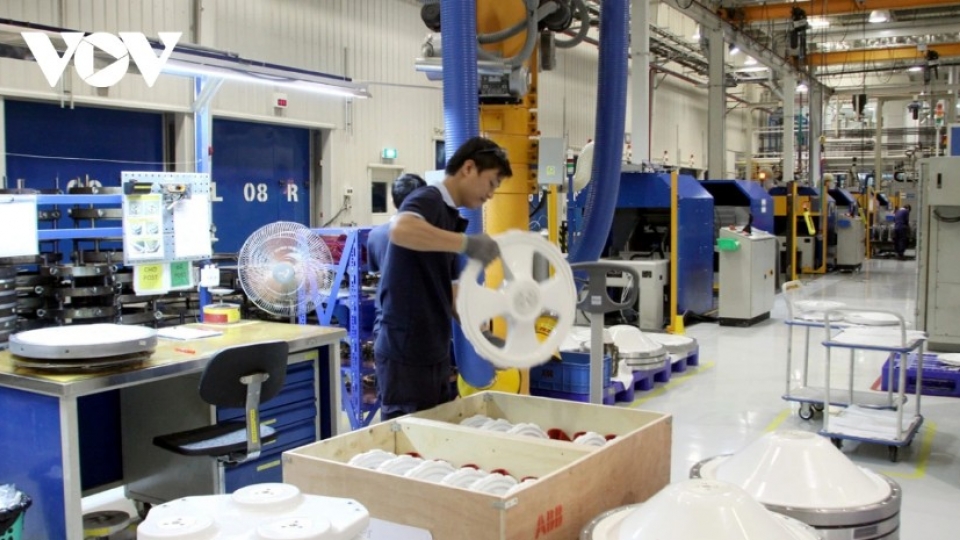
Digital and green transformation changes industrial structure
VOV.VN - Digital and green transformation processes are assessed as reshaping industries by gradually reducing the share of extractive sectors while increasing the proportion of processing and manufacturing.