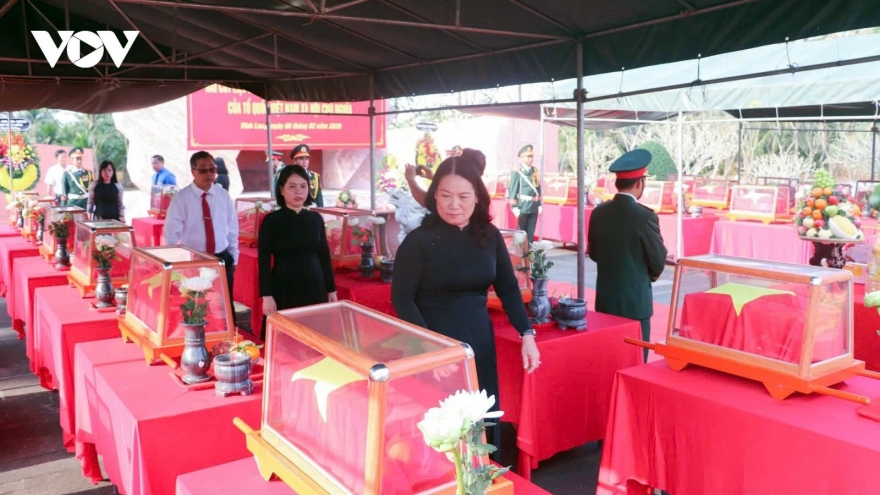
Deputy PM urges greater use of technology in search for fallen soldiers’ remains

Deputy Prime Minister Pham Thi Thanh Tra emphasised the need to apply scientific and technological advances to enhance the effectiveness of the search, recovery, and identification of fallen soldiers’ remains while addressing a ceremony on April 2 to launch a nationwide 500-day campaign to accelerate the mission.
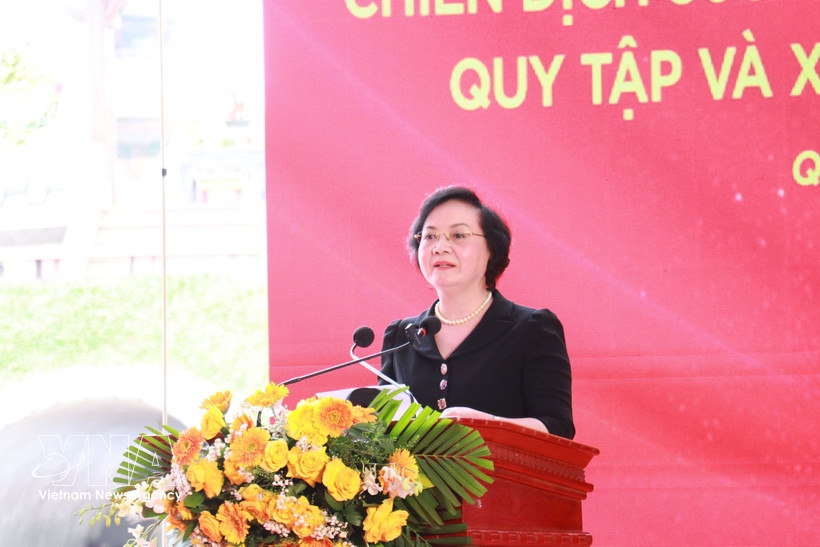
Speaking at the event, held at the Quang Tri Ancient Citadel special national relic site, Tra stressed that this work is not merely a professional task but a profound expression of the nation’s tradition of gratitude and a sacred political responsibility of the Party, the State, and the people towards those who sacrificed their lives for the country.
She underscored that the mission is also a call from the heart, requiring stronger determination and urgency to bring fallen soldiers back to their homelands, families, and rightful identities. Ministries, sectors, and localities were urged to treat the campaign as a top political priority, develop detailed implementation plans, and establish strict monitoring and supervision mechanisms.
Highlighting key directions, the Deputy PM called for renewed approaches with a strong emphasis on digital transformation and technological application. These include building and standardising databases, digitising information for better connectivity and sharing, expanding the use of digital mapping in identifying search areas, and applying biotechnology, particularly DNA testing, to improve accuracy and shorten identification timelines. She also stressed the importance of enhancing the capacity of forensic institutions.
The armed forces must act as the core force in implementing the campaign, especially in identifying key areas and deploying specialised units. At the same time, greater efforts were encouraged to collect and verify information from veterans and historical witnesses, alongside raising public awareness and mobilising broad societal participation, Tra stated.
She further highlighted the need to strengthen international cooperation, particularly with Laos and Cambodia, as well as with global partners in information exchange, technical support, and experience sharing.
Tra called on all ministries, sectors, localities, armed forces, socio-political organisations, the business community, and the public to act with the highest sense of responsibility, deepest compassion, and strongest determination to jointly fulfill this sacred mission, striving to achieve the campaign’s goals and shorten the waiting time for martyrs’ families.
The campaign aims to recover approximately 7,000 sets of remains, complete DNA sampling for unidentified graves nationwide, and conduct DNA analysis on around 18,000 samples. It also includes the development of a national gene database for martyrs and their relatives, as well as intensified mine clearance in key areas. The campaign runs from March 15, 2026, to July 27, 2027, coinciding with the 80th anniversary of War Invalids and Martyrs’ Day.
Despite notable progress in recent years, with nearly 7,000 remains recovered between 2021 and 2025, authorities acknowledged that significant challenges remain, including around 175,000 missing martyrs and over 300,000 unidentified graves.
Earlier, the Deputy PM paid tribute and offered incense and flowers to fallen heroes and martyrs at the central memorial of the Quang Tri Ancient Citadel, the Road 9 National Martyrs Cemetery, the Truong Son National Martyrs Cemetery, the memorial site dedicated to the 16 youth volunteers who sacrificed their lives at Long Dai ferry, and the memorial to Heroic Martyr Le Thi Tuyet in Vinh Dinh commune.
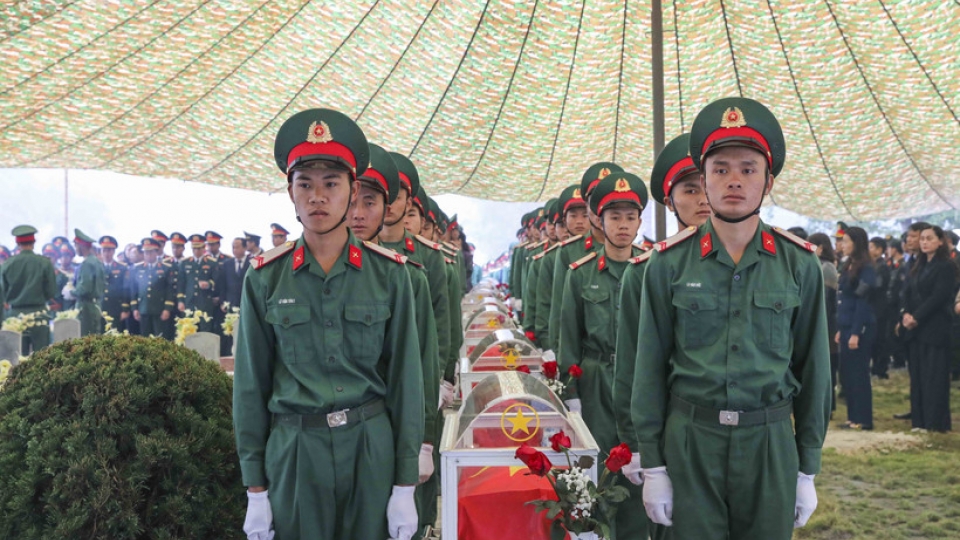
Remains of Vietnamese fallen soldiers, experts repatriated from Laos
A memorial and burial ceremony was held on December 31 at Tong Khao Martyrs’ Cemetery in Thanh Nua commune, the northern province of Dien Bien, for the remains of 10 Vietnamese volunteer soldiers who laid down their lives in Laos during wartime.