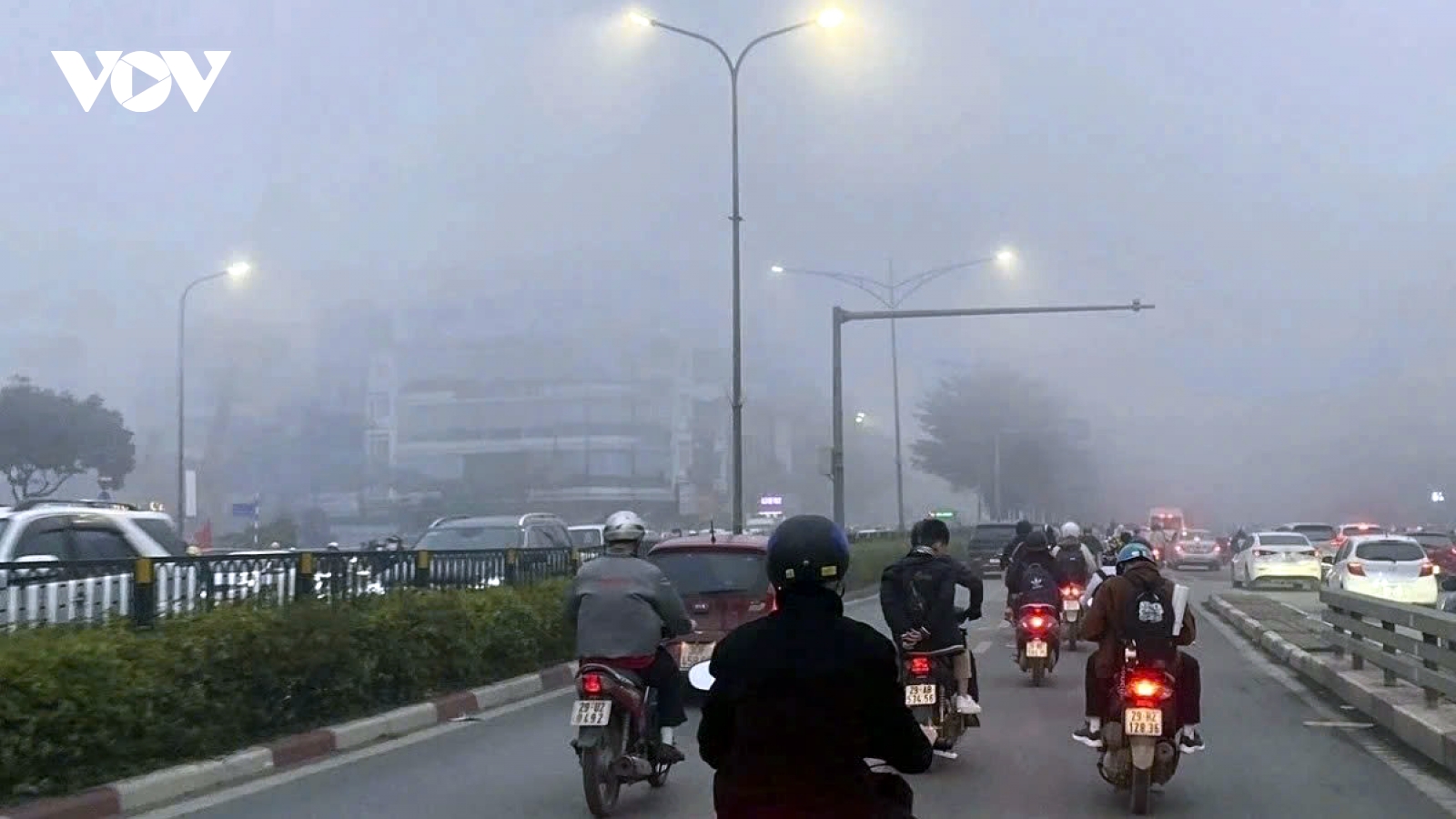
Air pollution worsens in Hanoi as experts warn of health risks

VOV.VN - Air quality across the capital city of Hanoi deteriorated into poor and unhealthy levels on February 6, with several monitoring stations recording hazardous readings, prompting health warnings from experts and authorities.
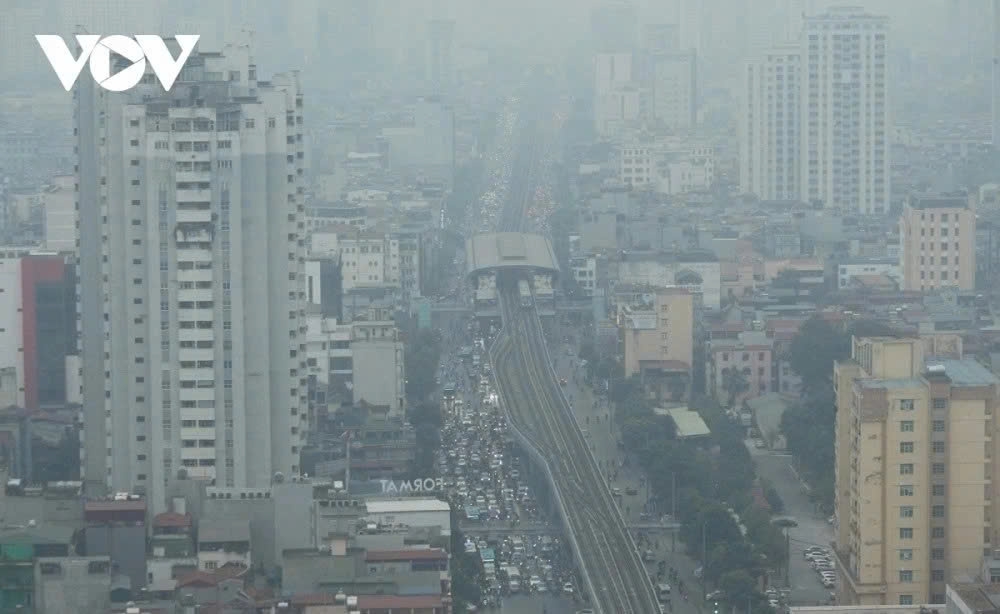
Data from the Northern Environmental Monitoring Centre showed that at 8 a.m., the station at 556 Nguyen Van Cu Street recorded an Air Quality Index (AQI) of 124, while the station at Hanoi University of Science and Technology registered 133 – both classified as “poor”.
More severe conditions were reported at the Nhan Chinh Park–Khuat Duy Tien station, where AQI reached 188, a level considered “unhealthy” and potentially harmful to the general population, particularly children, the elderly and people with respiratory or cardiovascular diseases.
Several other locations recorded even higher readings in the purple category, including Quang Khanh with an AQI of 517, ISPH Ha Dong at 312 and Dong Truc commune in Thach That district at 287, according to publicly available monitoring data.
Environmental specialists attributed the pollution to stagnant weather with low wind speeds and high humidity, which limits the dispersion of pollutants, combined with heavy traffic and post-holiday economic activity.
They also pointed to emissions from construction sites, industrial facilities, diesel-powered vehicles and the open burning of household waste in suburban and peri-urban areas, all of which contribute to elevated concentrations of fine particulate matter (PM2.5).
Residents are advised to limit prolonged outdoor activities, wear masks capable of filtering PM2.5 when travelling and closely monitor air quality updates. For hazardous AQI levels, experts recommend people stay indoors, keep windows closed and ensure a clean indoor environment.
Hanoi has ranked among the world’s 10 most polluted cities in recent days, highlighting the urgency of addressing air quality.
City authorities are rolling out emergency measures for the 2025–2026 period, including tighter controls on construction dust, vehicle emissions, waste burning and industrial discharges, alongside road-washing, expanded monitoring and plans for low-emission zones. The goal is to reduce PM2.5 concentrations and mitigate health impacts on residents.
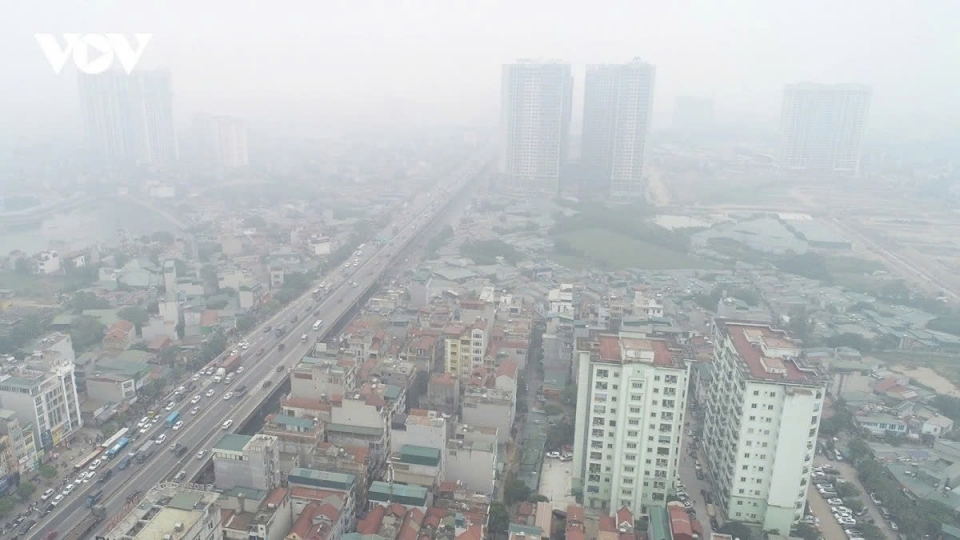
Air pollution worsens, residents advised to limit outdoor activities
VOV.VN - Several northern provinces of Vietnam recorded hazardous air quality levels on January 27, prompting authorities to advise residents to limit outdoor activities as fine particulate pollution worsened, according to environmental monitoring agencies.