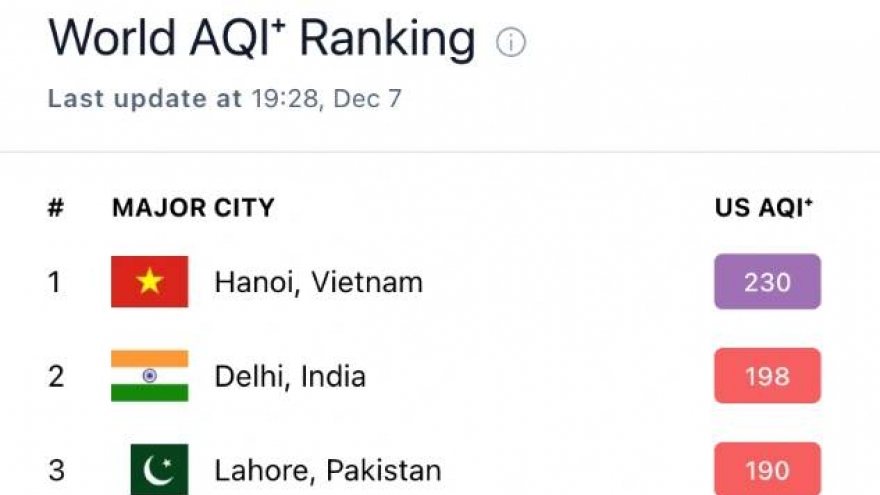
Air pollution worsens, residents advised to limit outdoor activities

VOV.VN - Several northern provinces of Vietnam recorded hazardous air quality levels on January 27, prompting authorities to advise residents to limit outdoor activities as fine particulate pollution worsened, according to environmental monitoring agencies.
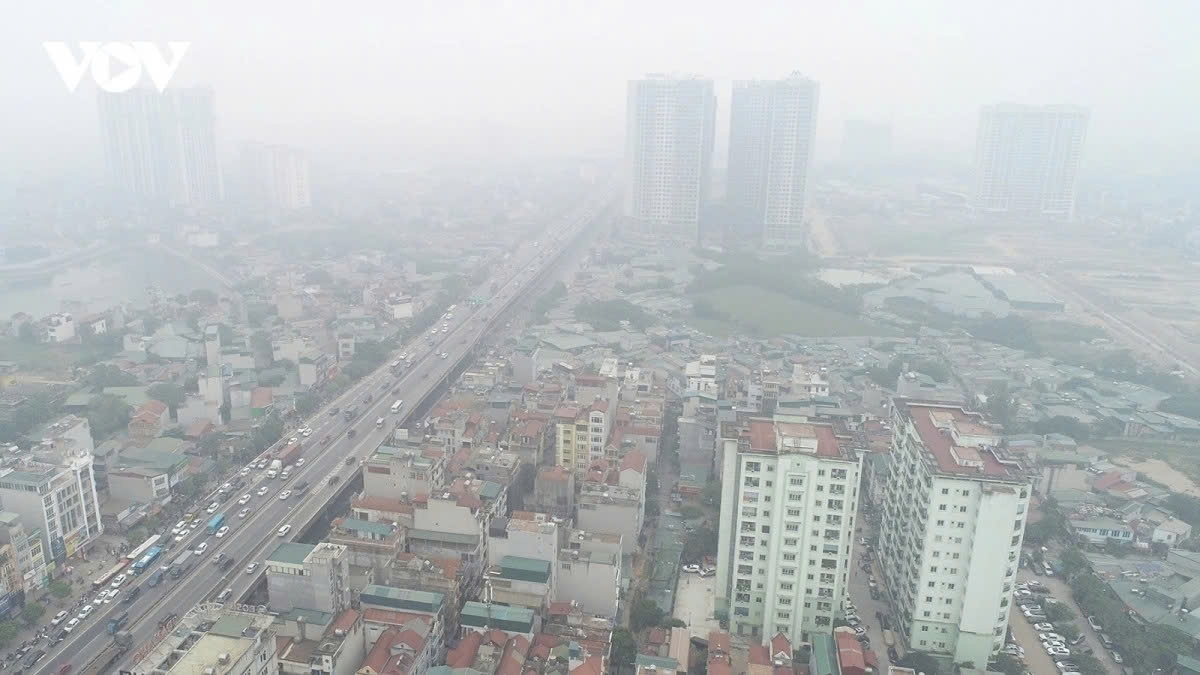
Data from the air quality monitoring application of the Department of Environment under the Ministry of Agriculture and Environment showed red-level pollution warnings in Hanoi, Thai Nguyen, Bac Ninh, Hai Phong, Hung Yen and Ninh Binh early in the morning.
In Hanoi, several monitoring stations reported very unhealthy air, with the Air Quality Index (AQI) reaching 158 on Nguyen Van Cu Street, 152 in the Nhan Chinh Park–Khuat Duy Tien area, 198 at Hanoi University of Science and Technology, and 138 in Bac Tu Liem commune, according to the city’s environmental monitoring portal.
Authorities said stagnant weather conditions, high humidity and weak winds, combined with increased traffic ahead of the Lunar New Year holiday, have contributed to deteriorating air quality and reduced visibility across the capital and parts of the Red River Delta.
Air pollution in Hanoi and neighbouring provinces is largely driven by high concentrations of PM2.5 fine particles, said Le Hoai Nam, deputy head of the Department of Environment. He noted that during late 2024, Hanoi experienced four prolonged pollution episodes, with average PM2.5 levels nearly double the recommended threshold.
Road transport accounts for about 12-15% of fine particle emissions, while dust from road surfaces contributes around 20-30%, Nam said. Open burning and ineffective handling of agricultural residues are also significant sources.
The Ministry of Health has warned that exposure to polluted air increases the risk of respiratory diseases, asthma, cardiovascular conditions and stroke. People in vulnerable groups, including children, the elderly and those with heart or lung diseases, are advised to stay indoors when AQI levels reach red (151–200) or purple (201–300) categories.
Vietnam typically sees more frequent air pollution episodes from October to March due to unfavourable meteorological conditions, with levels often peaking in the period leading up to the Lunar New Year.
Hanoi’s repeated ranking among the world’s most polluted cities has sounded alarm bells over mounting environmental pressure in the capital. In response, municipal authorities have rolled out a series of coordinated measures aimed at tightening control over emission sources, improving air quality and enhancing residents’ quality of life.
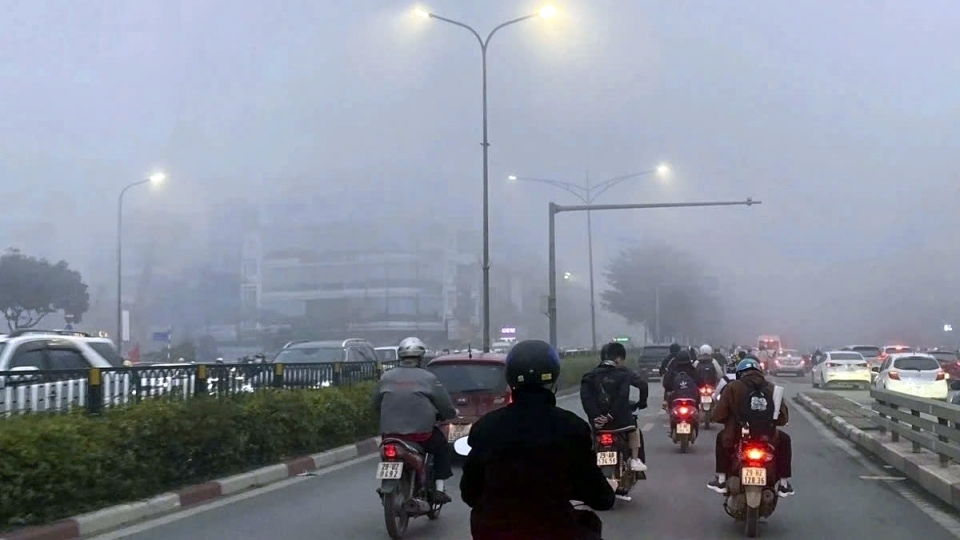
Severe air pollution hits northern Vietnamese localities
VOV.VN - Air pollution intensified and spread across northern Vietnam on January 9, with Hanoi, Hung Yen, Hai Phong and Thai Nguyen recording poor to very poor air quality levels, according to official monitoring data.