


Air pollution returns to Hanoi as capital ranks third worldwide

VOV.VN - Air pollution has returned to Hanoi as Vietnam’s capital ranked the world’s third most polluted major city on October 26, with its air quality index (AQI) reaching 172 on IQAir amid the onset of the annual pollution season.
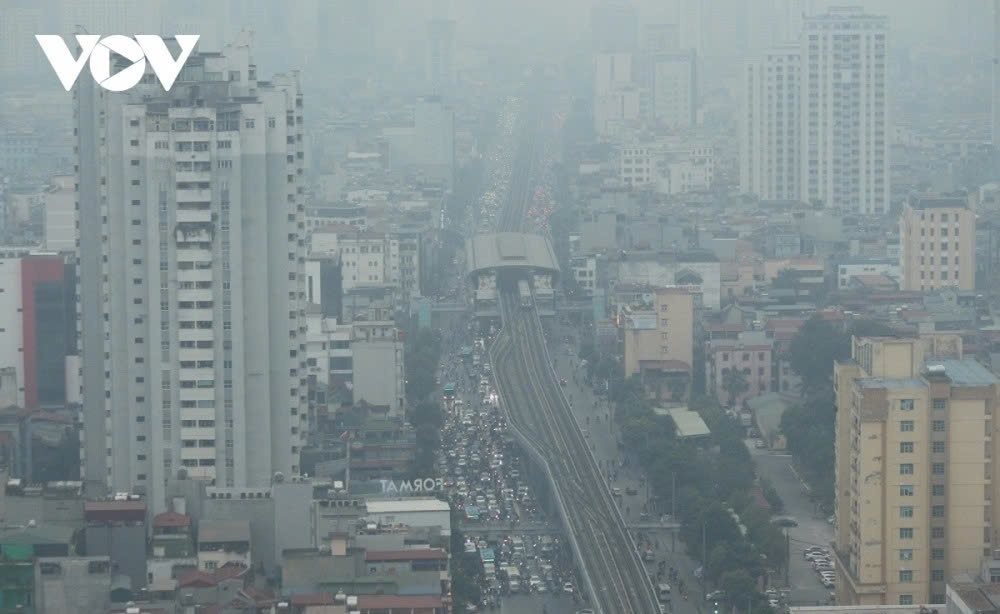
The ranking highlights Hanoi’s recurring struggle with deteriorating air quality towards the end of the year, when dry weather and unfavourable atmospheric conditions combine with emissions from traffic, construction activities and open burning. Hanoi has climbed to the top of IQAir’s global pollution rankings during previous episodes, including in January and October 2025.
At around 7am on October 26, IQAir ranked Hanoi seventh among the world’s most polluted major cities, with an AQI of 164. The index rose to 172 at 8:30am, moving the capital up to third place, before returning to 164 at 10am, ranking sixth globally. The reading fell within the platform’s “unhealthy” category, indicating potential health effects for the general population and greater risks for sensitive groups.
Pollution levels were also elevated at several monitoring locations across the city. At Quang An in Tay Ho Ward, the AQI at one point exceeded 200, while readings reached 181 on Lo Duc Street in Cua Nam Ward and 198 in Phu Thuong. Vinh Tuy also recorded unhealthy air quality.
Seasonal pollution returns as dry weather sets in
The deterioration comes after air quality improved during a rainy September. Hanoi’s air pollution season typically begins around October and can extend into March or April, although the weather conditions driving pollution vary throughout the period.
Weather conditions can make the problem worse. Low rainfall, weak winds and temperature inversions reduce the atmosphere’s ability to disperse pollutants, allowing fine particulate matter, particularly PM2.5, to accumulate near ground level. When these conditions persist, pollution can build up over several days.
However, weather alone does not explain Hanoi’s recurring air quality problems. The city’s Department of Agriculture and Environment has identified several contributing sources, including traffic emissions, construction and road dust, industrial activity and uncontrolled open burning.
Construction work can generate dust through excavation, demolition and the transport of building materials, particularly when sites lack adequate dust barriers and suppression measures. Burning crop residues and other materials in the open also releases smoke and fine particles, adding to the pollution burden during the harvest season. These emissions can have a greater impact when weather conditions prevent pollutants from dispersing.
The city’s pollution challenge is therefore both seasonal and structural - unfavourable weather can trigger severe episodes, while emissions from multiple sources continue to place pressure on air quality.
Hanoi steps up measures ahead of the pollution season
In response to the seasonal risk, the Hanoi People’s Committee issued a plan on October 15, 2026 to strengthen emissions controls, improve forecasting and prepare for pollution episodes before they become severe.
Under the plan, the city’s Department of Agriculture and Environment will coordinate air quality monitoring and forecasting, drawing on environmental and meteorological data to provide warnings of potential pollution episodes five to seven days in advance. Authorities will then review major emission sources and update assessments as the forecast approaches.
The response measures include tighter controls at construction sites and industrial facilities, action against high-emission vehicles and uncontrolled outdoor burning, and more intensive cleaning of roads where dust accumulates. The city is also considering real-time construction-site dust monitoring and technologies that can automatically suppress dust when specified thresholds are exceeded.
Hanoi has previously introduced measures to address recurring winter pollution, but the return of unhealthy air quality underscores the challenge of sustaining improvements. While forecasts can help authorities and residents prepare for individual episodes, lasting progress will depend on reducing emissions at source and enforcing controls across transport, construction, industry and open burning.
With the annual pollution season under way, the capital’s latest position in IQAir’s global ranking is a reminder that short-term improvements have yet to resolve its longer-running air quality problem.
Air pollution worsens in Hanoi as experts warn of health risks
VOV.VN - Air quality across the capital city of Hanoi deteriorated into poor and unhealthy levels on February 6, with several monitoring stations recording hazardous readings, prompting health warnings from experts and authorities.


