AI creates opportunities for breakthrough while raising fears of labour displacement

VOV.VN - Artificial intelligence (AI) is bringing profound changes to the global labour market as it becomes increasingly integrated into manufacturing, finance, media and business management.
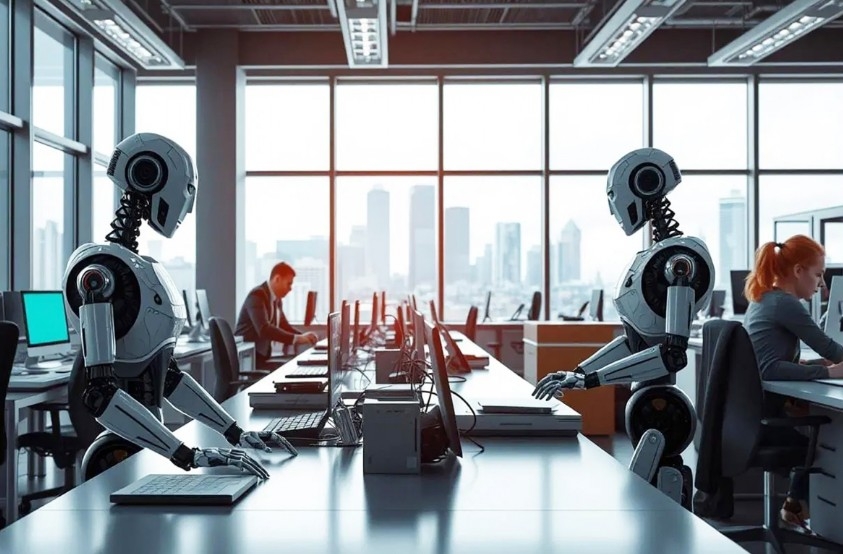
While businesses are using AI to improve productivity, many employees are also facing growing pressure to adapt as the risk of labour displacement rises alongside rapid technological change.
According to the World Economic Forum (WEF), around 83 million jobs could be displaced by automation in the coming years. In Vietnam, labour-intensive sectors such as textiles, footwear and food processing are expected to face significant disruption from AI and robotics.
However, many experts believe AI is also creating new employment opportunities if workers can adapt in time and receive retraining to work effectively alongside technology.
Dao Viet Anh, a representative of Microsoft Vietnam, said concerns over AI replacing human labour are emerging across many sectors, particularly in technology and white-collar professions. According to him, the impact of AI is no longer a distant prediction but is already becoming visible in recruitment and business operations.
Many companies have begun changing operating models, streamlining organisational structures and restructuring workforces by applying AI to data processing, planning, system operations and workflow management. Waves of layoffs at technology firms since late 2024 have further highlighted AI’s growing impact on the labour market.
“Fields such as media, data processing and system development are already being greatly affected as businesses prioritise improving efficiency through technology,” Dao Viet Anh pointed out. However, he noted that AI is currently changing the way people work rather than completely replacing human roles.
He added that after an initial period of concern, many people have gradually adapted and begun using AI as a tool to support their work, improve productivity, save time and expand career opportunities. Society is also increasingly viewing AI as a digital assistant rather than solely a threat.
At the same time, rapid technological change is forcing workers to continuously update their skills to avoid falling behind. One of the most important skills in the AI era is the ability to filter and verify information, alongside stronger information security skills as AI-generated content becomes increasingly difficult to distinguish between real and fake, Anh went on.
He warned that AI could become a “double-edged sword” if users lack the ability to identify misinformation or are drawn toward misleading and harmful information online.
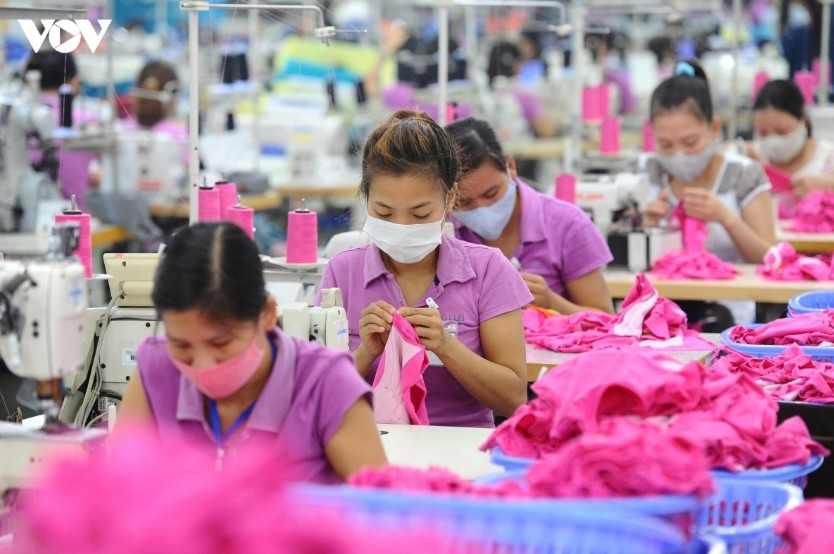
From an economic perspective, Nguyen Minh Phong, former head of the Economic Research Department at the Hanoi Institute for Socio-Economic Development Studies, stated that the Fourth Industrial Revolution is entering an accelerated phase with AI emerging as one of its central drivers.
AI is not only reshaping economic structures but also transforming labour structures, workforce organisation and skill requirements. The risk of being replaced by AI is no longer limited to low-skilled labour but has expanded to many professional roles, including management, administration, data processing and programming. As AI becomes increasingly integrated with robotics and automation technologies, the global labour market is expected to undergo even greater disruption, Phong continued.
However, he noted that AI is also opening up new professions, particularly for people with creativity, critical thinking and the ability to conduct broad analysis in complex contexts.
He said AI could also alter labour relations and wage structures as businesses gradually replace part of their workforce with AI systems or robots, directly affecting workers’ bargaining power and some traditional labour rights.
Phong also warned that AI is creating challenges not only for workers but also for social welfare systems, as many policies have yet to keep pace with technological development. In this context, workers need to proactively improve digital skills and AI literacy to adapt to a rapidly changing labour market.
Looking ahead, he said AI will continue driving deeper polarisation in the labour market. Those capable of adapting, mastering technology and continuously updating their skills will have greater opportunities for advancement, while workers slow to change risk being left behind.
“AI can become a golden opportunity, but it can also trigger a powerful labour shake-up. The key is for people to change proactively before technology forces them to change,” Phong emphasized.

Vietnamese, Austrian experts discuss AI, cybersecurity cooperation
VOV.VN - A delegation from the National Cybersecurity Association (NCA) and representatives of Vietnam’s Ministry of Public Security recently held in-depth working discussions with the Austrian Institute of Technology to boost cooperation in cybersecurity, data and artificial intelligence (AI).