
Development goals for 2026-2030: Vietnam has sufficient capacity for breakthrough stage

VOV.VN - Economic experts say the development goals and indicators for the 2026-2030 period outlined in the draft Political Report to the 14th National Congress of the Communist Party of Vietnam are fully achievable. The country has prepared the necessary conditions for this pivotal stage of development.
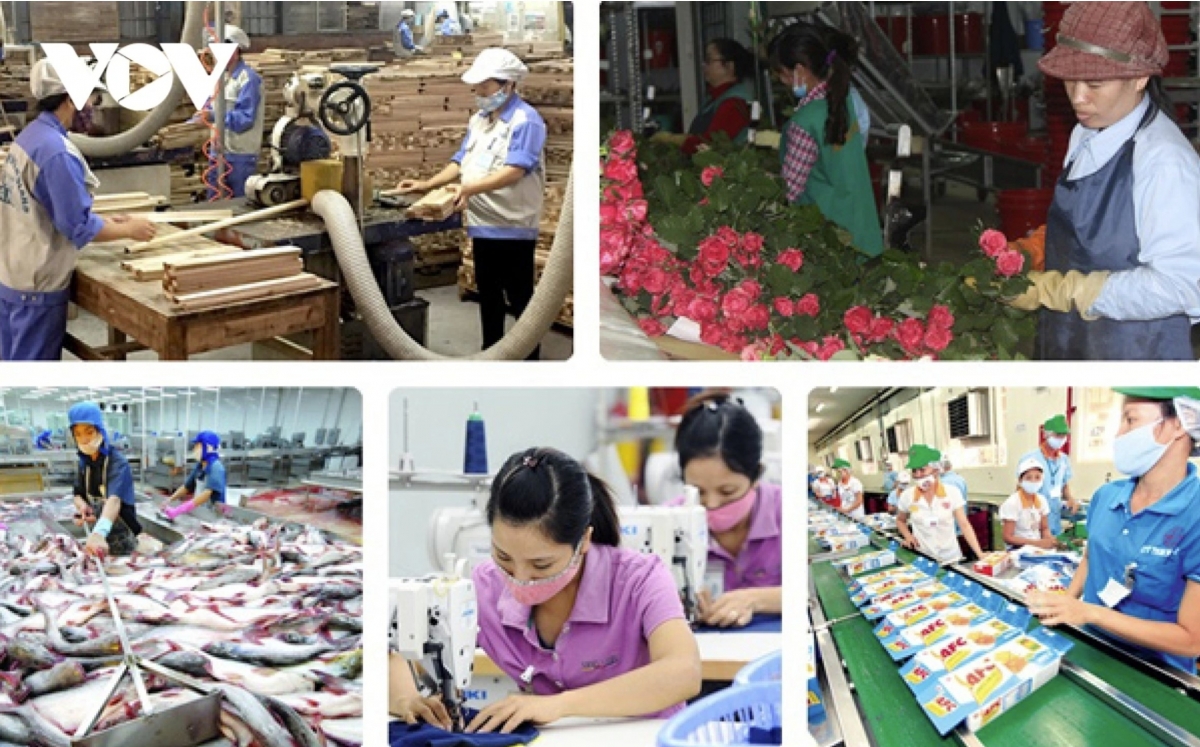
The draft Political Report sets an average economic growth target of over 10% a year for 2026-2030, aiming for GDP per capita of about US$8,500 by 2030, alongside higher productivity and growth quality, comprehensive digital transformation, and the goal of Vietnam basically becoming a modern-oriented industrialized country.
The draft report states clearly that a new growth model will be established, focusing on improving productivity, quality, efficiency, added value and competitiveness of the economy.
Science, technology, innovation and digital transformation are identified as the main drivers, creating new productive forces and high-quality modes of production, with data economy and digital economy at the core. The strategy calls for accelerating digital, green, energy, structural and human resource transformation; identifying new growth drivers while renewing traditional ones with science and technology at the center; and forming strong growth poles, key economic regions, urban centers and new-generation economic zones on par with regional and global standards.
Breakthrough phase for the country
According to Associate Professor Dr. Nguyen Thuong Lang of the Institute of Trade and International Economics, National Economics University, the targets set for 2026-2030 are entirely feasible.
“The economic outlook for 2026–2030 can be confidently described as a breakthrough phase, marking Vietnam’s transition from a lower-middle-income country to an upper-middle-income one. These indicators reflect a strong aspiration to fundamentally change the country’s development status in terms of scale, growth pace and quality, while maintaining basic balances, meeting sustainable development standards, activating new growth drivers and placing people at the center,” he said.
By 2030, GDP is projected to reach about US$900 billion, up from US$514 billion in 2025, with GDP per capita rising to US$8,500. Lang noted that the expanded economic scale would help improve Vietnam’s position in the global economy and demonstrate the country’s strong resolve in entering a new development stage centered on people.
In terms of growth pace, average annual growth is expected to be maintained at no less than 10% throughout 2026-2030. This would require a substantial increase in total social investment. With an ICOR of 4, average annual investment growth would need to reach at least 40%. Public investment would continue to play an important role, accounting for about 20-22%, with its scale expanding, while private and foreign investment would make up 78–80%, also increasing significantly to meet rising capital demand.
Regarding growth quality, the renewed growth model envisages the manufacturing and processing sector accounting for 28% of GDP. The digital economy would serve both as a new growth driver linked to innovation and as an indicator of growth quality, with a share of about 30%, nearly double that of 2025.

The contribution of total factor productivity (TFP) is expected to rise to 55% by 2030, from 45% in 2025, reflecting the increasingly prominent role of science and technology in the growth model. Labor productivity growth of 8.5%, together with an annual reduction of 1-1.5% in energy consumption per unit of GDP, indicates higher levels of modern equipment, more efficient energy use and stronger sustainability. Progress in industrialization would also be evident in an urbanization rate of 50%.
On macroeconomic stability, Nguyen Thuong Lang said basic balances would be maintained, with total asset accumulation at around 35–36% of GDP, strengthening strategic autonomy and self-reliance. Final consumption would account for about 61-62% of GDP, budget revenue mobilization during 2026–2030 would reach 18% of GDP, the budget deficit would stand at about 5% of GDP, inflation would be controlled, and unemployment kept low.
These indicators point to a solid domestic balance, with internal strength playing a decisive role in national standing, serving as a foundation for maintaining external balance and enabling proactive, substantive international integration while both mobilizing external resources and leveraging national advantages.
Conditions in place for a pivotal development stage
Nguyen Thuong Lang expressed optimism about achieving these targets, saying Vietnam has made substantial and practical preparations for entering a breakthrough development phase.
“First, institutional improvements, particularly the issuance of a series of major resolutions, have created a turning point in development thinking. These include Resolution 57 on breakthroughs in science and technology development, innovation and national digital transformation; Resolution 59 on international economic integration in a new phase; Resolution 66 on improving the legal system; Resolution 68 on private sector development; and other resolutions across various fields. Administrative streamlining has reduced ministries and agencies, merged provinces, eliminated district-level administration and implemented a two-tier local governance model, alongside downsizing the civil service. At the same time, there have been strong efforts to improve the business environment, cut unnecessary business conditions, apply special mechanisms to selected localities, and establish two international and regional financial centers in Ho Chi Minh City and Da Nang.
“Second, a number of major infrastructure projects have been completed, including expressways, energy facilities, airports, seaports and social housing.
“Third, priority has been given to investment in high-quality human resources, including training at least 100,000 artificial intelligence engineers by 2030 to meet the needs of science, technology and innovation development.
“Fourth, GDP growth in 2025 reached a relatively high rate of 8.02%, in line with the set target, alongside the over-fulfilment of all planning indicators approved by the National Assembly. This has strengthened confidence in the Party’s leadership, the Government’s effective management, and the strong consensus of the business community, the public and the international community. Together, these factors are creating important momentum and building sufficient internal strength to meet the development targets for 2026-2030,” he said.
According to Nguyen Thi Huong, Director General of the General Statistics Office under the Ministry of Finance, the positive growth performance in 2025 shows that Vietnam’s economic resilience and adaptability are gradually being reinforced, providing a solid foundation for growth in 2026 and beyond.
However, she cautioned that entering the 2026-2030 period, the domestic economy will face many uncertainties, with opportunities intertwined with challenges. Maintaining and achieving high growth in the coming years will require exceptional efforts across the entire economy and the simultaneous fulfillment of multiple critical conditions, including macroeconomic foundations, growth resources, development quality and policy management capacity.
She stressed that maintaining macroeconomic stability is a prerequisite. Controlling inflation, ensuring public debt safety, maintaining major economic balances, and managing fiscal and monetary policies in a flexible and prudent manner will help create a favorable environment for investment, production and business activities, enhance economic resilience, and support sustainable growth.
At the same time, mobilizing and efficiently using resources for growth plays a key role. Public investment should continue to act as a catalyst, focusing on critical infrastructure sectors, accelerating disbursement in line with schedules, especially for nationally important projects, improving capital allocation efficiency and avoiding fragmented and wasteful investment. Conditions should also be created for private investment to develop and become a major growth driver. Foreign direct investment should be attracted selectively, linked to technology transfer, environmental protection and stronger linkages with the domestic economy.
In addition, economic growth needs to gradually shift from a model heavily reliant on capital and labor to one based on higher productivity, more efficient resource allocation and economic restructuring toward a modern and sustainable orientation. Breakthroughs in labor productivity and investment efficiency should be achieved through stronger application of science and technology and digital transformation, particularly in high-technology sectors, thereby increasing value added and improving growth quality.
“To achieve high economic growth in the coming years, it is necessary to ensure macroeconomic stability, mobilize and use resources effectively, enhance growth quality, improve institutions and strengthen economic adaptability, thereby securing high growth alongside stability and sustainable development in the medium and long term,” Huong said.
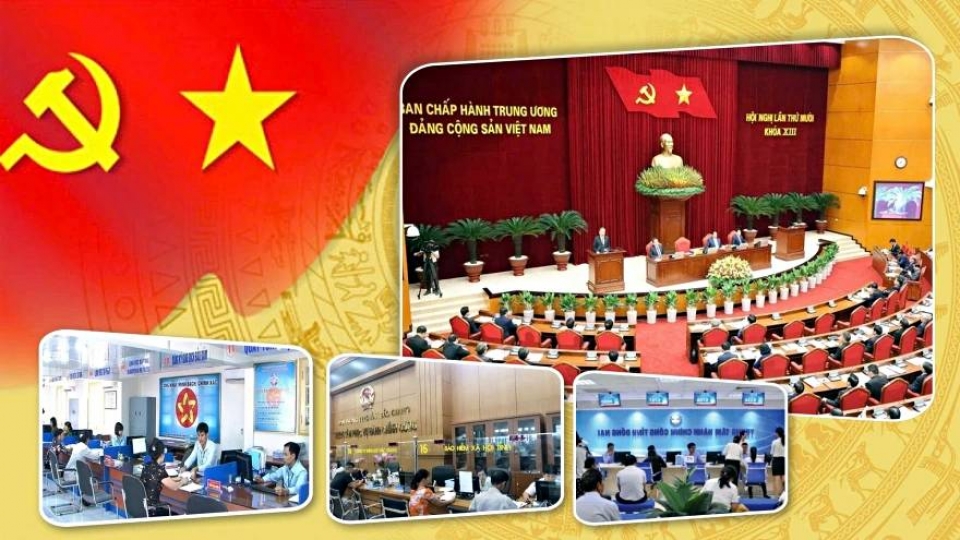
Vietnam looks to 14th Party Congress to drive long-term development goals
VOV.VN - The coming 14th National Congress of the Communist Party of Vietnam (CPV) is widely viewed as a historic milestone, as it will not only review past achievements but also serve as a powerful call to action that reignites national aspirations for development.
