Personnel training overhaul must support Party’s strategic decisions: Party chief

Party General Secretary To Lam has called for continued fundamental reform of personnel training, stressing a practical, effective, and modern approach closely tied to the requirements of following the Party’s strategic decisions.
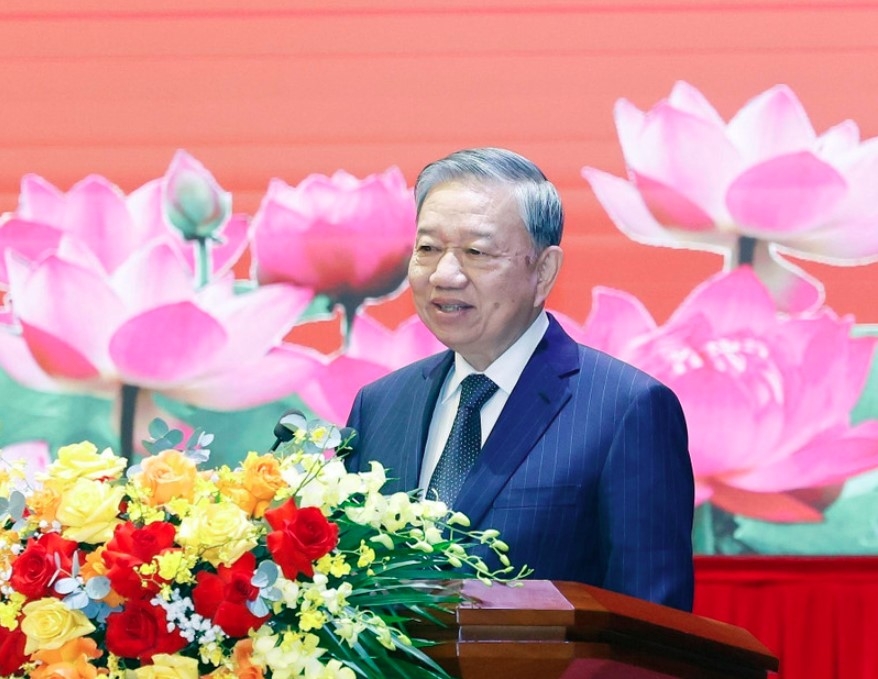
The focus must extend beyond knowledge transfer to developing full-spectrum governance skills, including policy design, cross-agency coordination, risk management, digital leadership, consensus building and resource mobilisation, General Secretary Lam addressed a hybrid conference in Hanoi on December 30 to review the Ho Chi Minh National Academy of Politics (HCMA)’s activities in 2025 and outline its tasks for 2026.
Against a backdrop of fast-changing global and domestic conditions blending opportunities with challenges, the HCMA achieved important, comprehensive, and notable results across its three core pillars: theoretical research and practical review, advisory support for the formulation and enforcement of the Party’s and State’s strategic decisions, and personnel training, he said.
He praised the HCMA and the Central Theory Council for their proactive role in preparations for the upcoming 14th National Party Congress, particularly their contributions to drafting congress documents and reviewing 40 years of Doi Moi (renewal).
According to him, the HCMA’s proactive expansion of training curricula for strategic-level leaders from several communist and ruling parties has further deepened Party-to-Party diplomacy, underscoring the responsibility of the Party’s flagship unit for ideology and personnel training in the new context.
Looking ahead to 2026, he urged the HCMA to further assert its core role in rolling out major projects identified by the Party Central Committee’s 15th plenum, including the review of the Party’s century-long leadership over the Vietnamese revolution.
The HCMA should accelerate digital transformation and the selective, systematic adoption of artificial intelligence. Technology, he stressed, is not intended to replace human brainpower, but to raise productivity and quality, unleash creativity, sharpen analysis and forecasting, and support decision-making, while renewing internal governance toward greater transparency, modernity, and efficiency. At the same time, academic integrity must be given special emphasis, with Party spirit, scientific rigor, and real-world relevance upheld across all outputs.
The leader underscored the importance of bolstering the network of nationwide political schools as the bedrock of grassroots training, calling for tighter curricula sharing, faculty upgrades, digital integration and closer alignment with local needs and modern governance demands.
International collaboration should deepen selectively and pragmatically, using academic diplomacy to elevate the HCMA's scholarly standing and the Party's global standing, with priority given to theoretical exchanges and leadership training with key communist and ruling parties - a key pillar of Party diplomacy, he added.
The HCMA was further tasked with identifying and cultivating young talents and experts of strategic importance through robust recruitment, training, incentives and a creative academic culture that fosters strong research teams and professional growth.
On the occasion, the Party chief bestowed the first-class Labour Order on the HCMA in recognition of its success in following Resolution 18 on further reforming and streamlining the political system’s organisational apparatus to ensure greater effectiveness and efficiency.
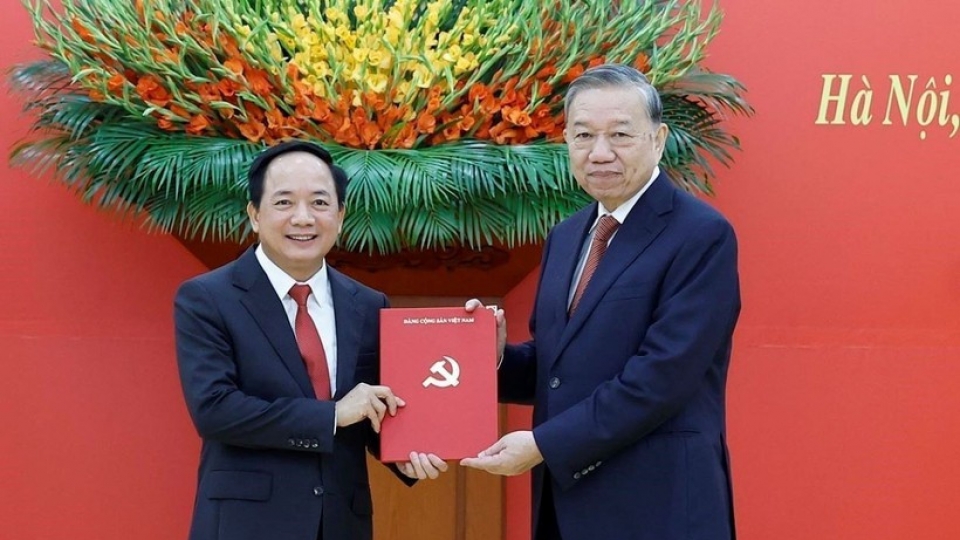
Party General Secretary presents Politburo decisions on personnel work
Party General Secretary To Lam on November 4 presented the Politburo’s decisions appointing the Chairman of the Party Central Committee (PCC)’s Commission for Information, Education, and Mass Mobilisation, and the Permanent Vice Chairman of the PCC's Commission for Internal Affairs.