Party chief: Vietnam has the momentum and capacity to enter a new era

VOV.VN - 2026 marks the start of a new development phase, linked to the implementation of the 14th National Party Congress Resolution and the 2026-2030 socio-economic development plan.
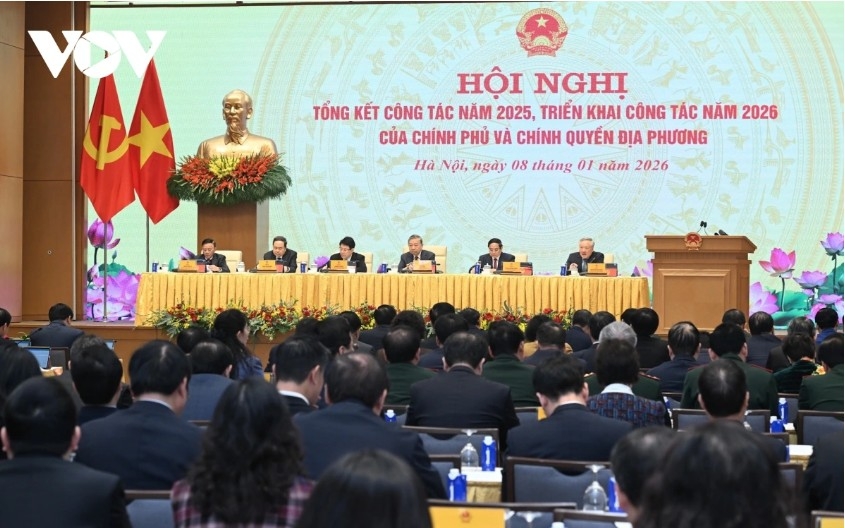
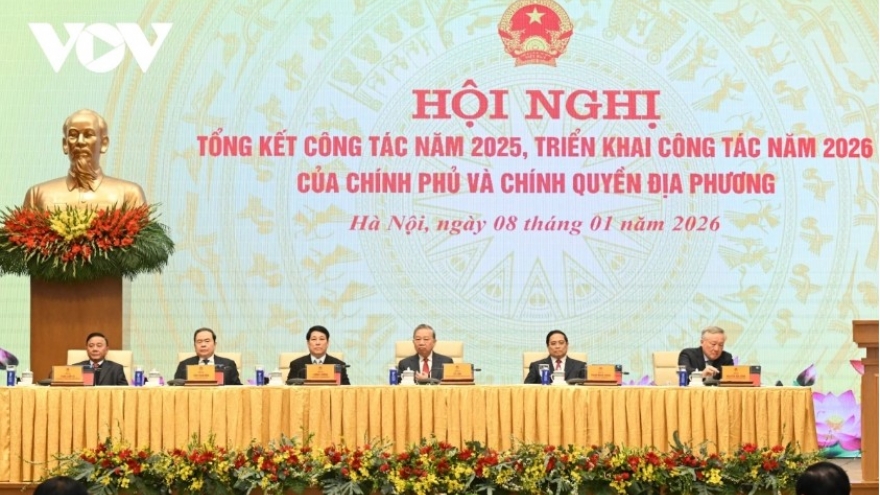
Party General Secretary To Lam made the statement at the Government–localities conference on 2026 tasks in Hanoi on January during which, he hailed the efforts and results recorded in 2025 and during the 2021-2025 period, notably the maintenance of macroeconomic stability amid heightened global volatility, highlighting the economy’s resilience.
During 2021-2025, inflation was kept below 3.6%, with 2025 at around 3.3%; key macro balances were maintained; and public debt and the budget deficit stayed within safe thresholds. GDP growth reached 8.02% in 2025, while the five-year average stood at 6.3%, placing Vietnam among the faster-growing economies in the region. Economic output expanded from US$346 billion in 2020 to more than US$510 billion in 2025, ranking 32nd globally, while per-capita GDP reached about US$5,000, moving the country into the upper-middle-income group.
Vietnam has posted a trade surplus for ten consecutive years, including more than US$21 billion in 2025, while public debt fell to around 36% of GDP. Tourism rebounded strongly, with over 21.5 million international arrivals in 2025.
The private sector gained clearer momentum, emerging as one of the most important drivers of the national economy. Foreign direct investment remained a bright spot, with registered capital of US$185 billion during 2021–2025 and disbursement of US$27.62 billion in 2025, the highest level in five years.
Alongside these gains, To Lam pointed to shortcomings that require focused corrective action, and outlined priority directions for the period ahead. Central to these is removing institutional bottlenecks and shifting decisively from a “management” mindset toward a development-enabling orientation, with clear accountability and an end to avoidance and delay.
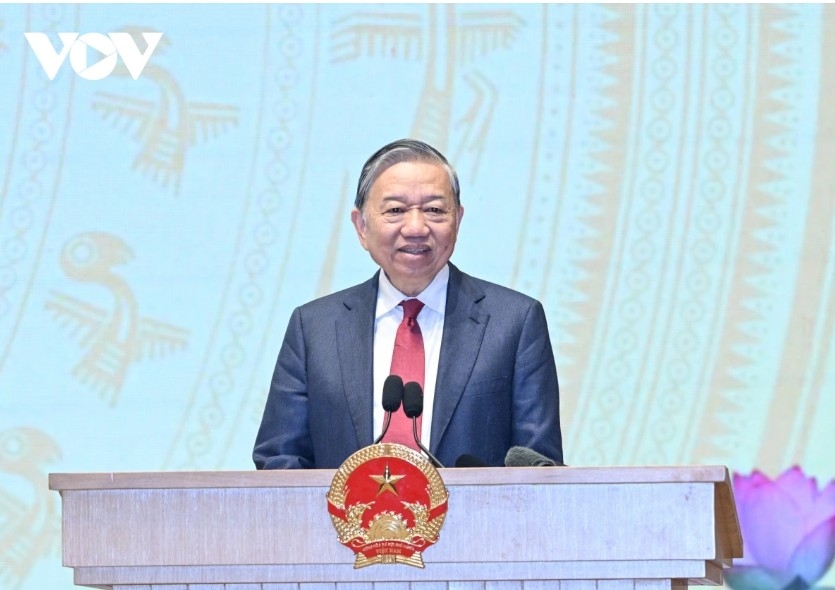
He called for continued macroeconomic stability and inflation control, closer and more flexible coordination between fiscal and monetary policy in line with market principles, and appropriate management of interest rates and exchange rates. Credit allocation should be steered toward production, business activity and priority sectors, while speculative and non-productive uses are restrained. The investment and business climate should improve further through deeper decentralization, streamlined procedures and lower compliance costs, alongside firm protection of property rights and freedom of enterprise.
The Party leader laid stress on the need for a fundamental shift in the growth model toward productivity and innovation, making science and technology, workforce quality and innovation central to development strategy in order to overcome the middle-income trap and sustain long-term growth.
Economic restructuring should move toward green, digital and circular pathways; foundational and spearhead industries need to be developed; selective FDI paired with technology transfer; national databases developed to support digital government, a digital economy and a digital society; and conditions created for private enterprises to form large groups capable of operating in strategic sectors.
He also underlined the importance of strengthening implementation capacity under expanded decentralization, linking authority with resources and accountability, streamlining organizational structures, tightening administrative discipline and refining mechanisms for evaluating and appointing officials. Parallel priorities include advancing social and cultural development, safeguarding social welfare, adapting proactively to climate change, and strengthening resource management and environmental protection.
On defence, security and foreign affairs, To Lam emphasized consolidating national defence, maintaining social order and public safety, upholding an independent and self-reliant foreign policy with diversified and multilateral external relations, stepping up economic and technology diplomacy, and ensuring thorough preparations for APEC 2027. Citizen protection, cultural diplomacy and people-to-people exchanges should continue to reinforce Vietnam’s international standing and credibility.
He concluded that the country has now amassed sufficient momentum, capacity, resolve and determination to enter a new stage of national development, while expressing confidence that the Government and all levels will act in unity and with a strong sense of responsibility to fulfill the targets set for 2026 and the years ahead.
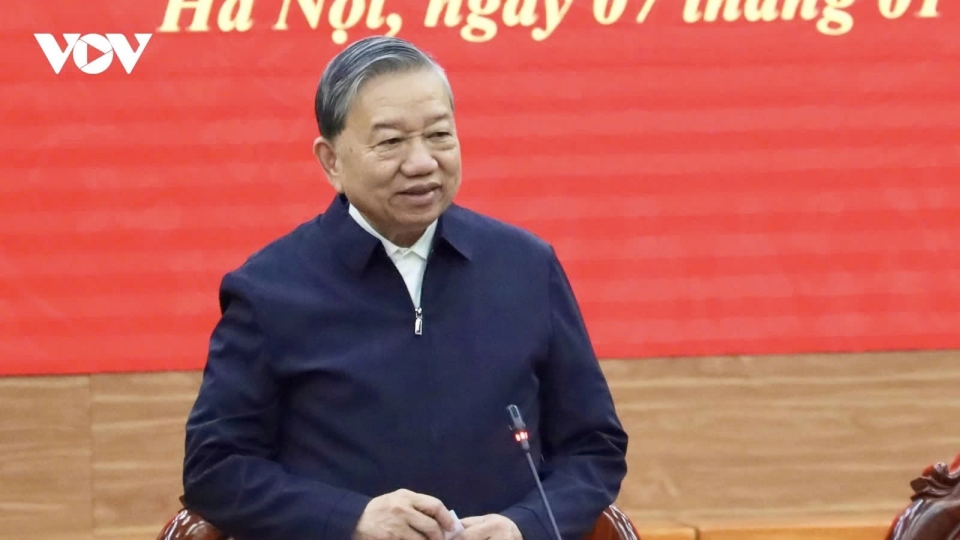
Party chief pushes new development model driven by technology and innovation
VOV.VN - Party General Secretary To Lam on January 7 called for a fundamental shift in the country’s development model, urging stronger reliance on science, technology, innovation and digital transformation to sustain long-term, high-speed growth.