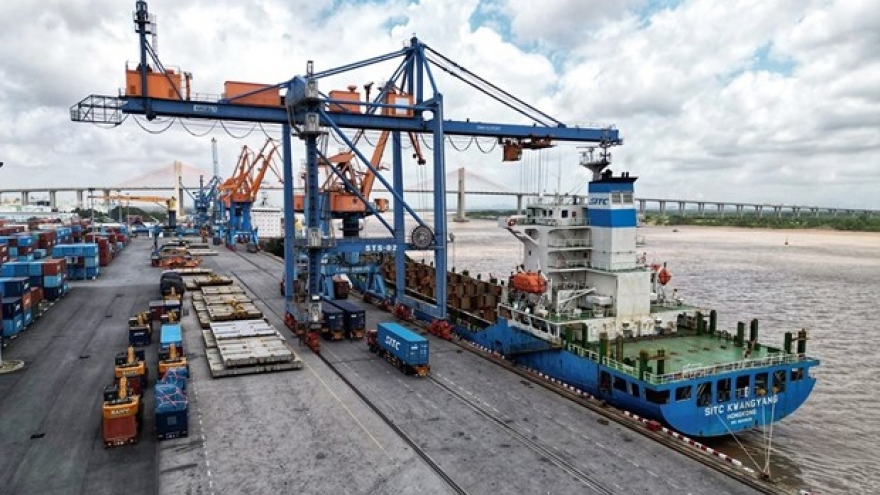
2025 growth reaches 8.02% as Vietnam maintains macroeconomic stability

VOV.VN - Economic growth reached 8.02% in 2025, placing Vietnam among the faster-growing economies in the region and globally, while macroeconomic stability and major balances of the national economy were maintained, Prime Minister Pham Minh Chinh has said.
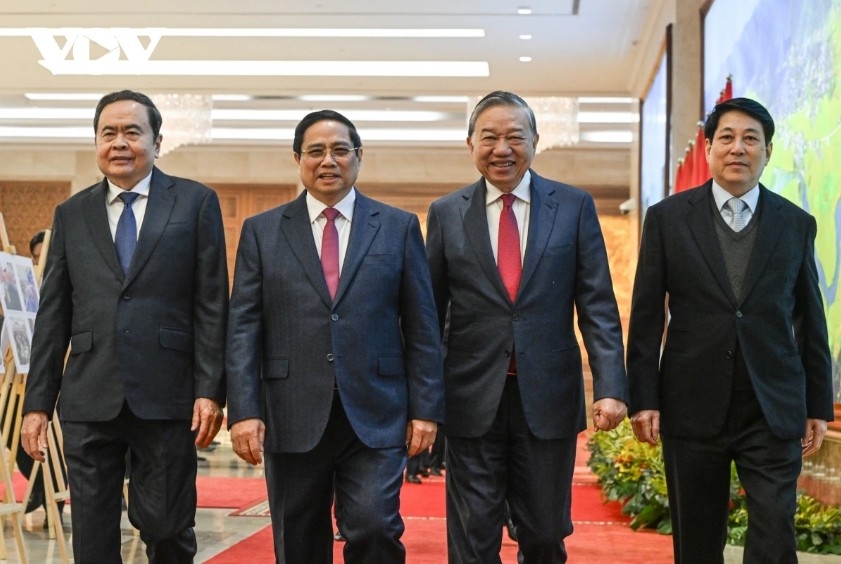
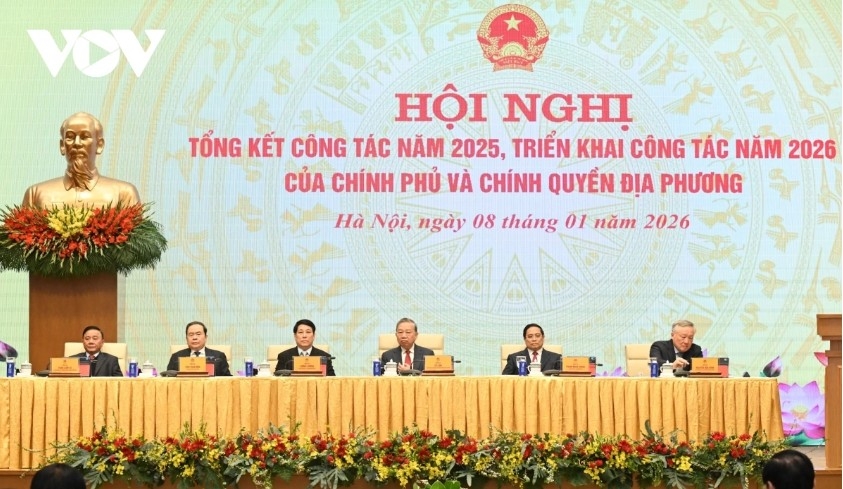
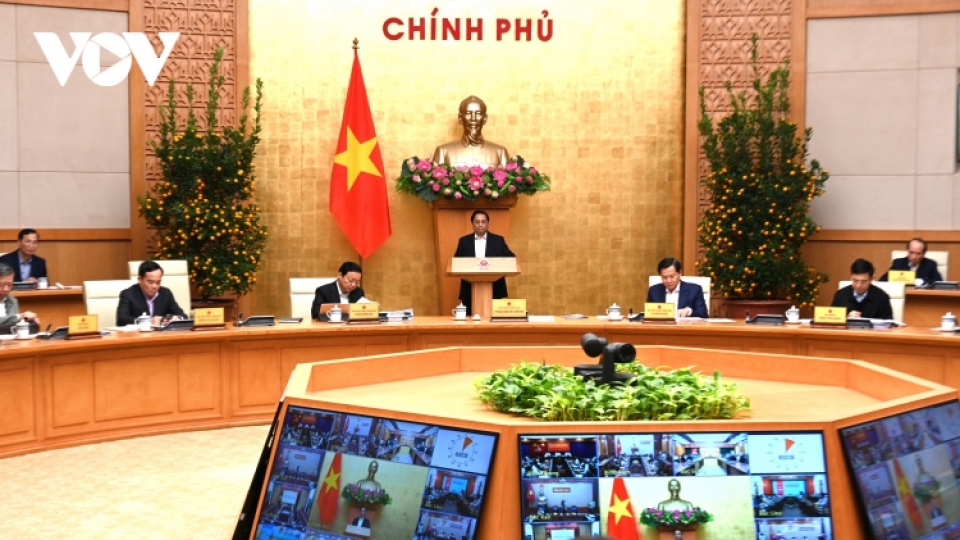
A national conference reviewing the Government’s and local administrations’ performance in 2025 and outlining tasks for 2026 was held online with connections to 34 provinces and centrally run cities on January 8.
Those in attendance at the conference included Party General Secretary To Lam, State President Luong Cuong, Prime Minister Pham Minh Chinh, National Assembly Chairman Tran Thanh Man, and Permanent Member of the Secretariat Tran Cam Tu.
Also present were members of the Politburo, members of the Party Central Committee Secretariat, members of the Party Central Committee, the Vice State President, Vice Chairpersons of the National Assembly, Deputy Prime Ministers, leaders of central ministries and agencies, provincial and municipal Party secretaries, chairpersons of provincial and municipal People’s Committees, and leaders of several economic groups, state-owned corporations, the State Bank of Vietnam and a number of business associations.
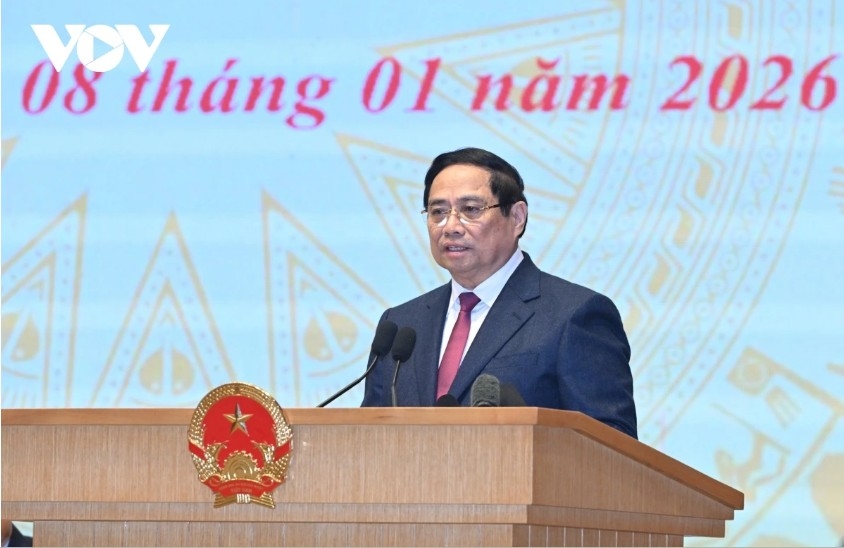
In his opening remarks, PM Chinh outlined developments since the start of the current term and stressed that the implementation of socio-economic development tasks for 2025 and for the 2021-2025 period unfolded amid rapidly changing and complex global conditions, with many unprecedented issues beyond earlier forecasts. Overall, difficulties and challenges outweighed opportunities and favorable factors.
He cited the prolonged and severe aftermath of the Covid-19 pandemic; intensified strategic competition among major powers; escalating military conflicts in several regions; slower global growth, investment and trade; inflation and public debt in most countries remaining higher than before the pandemic; disruptions across many global supply chains that have yet to fully recover; rising financial and monetary risks; and both traditional and non-traditional security threats, along with epidemics, natural disasters and extreme climate change causing serious damage.
Domestically, the Government leader pointed to the combined impact of multiple adverse external factors, while Vietnam remains a developing economy with a low starting point and is undergoing structural transition.
Routine and ad hoc tasks have continued to increase, with rising requirements; long-standing internal shortcomings and bottlenecks across multiple terms still require concentrated attention; extensive time and effort have been needed to reorganize structures at both central and local levels; and natural disasters and floods have inflicted heavy losses on production, business activity and people’s livelihoods.
In this context, under the leadership of the Party Central Committee, directly and regularly guided by the Politburo and the Secretariat and headed by Party General Secretary To Lam, together with the National Assembly’s support, the engagement of the entire political system, the active participation of the public and business community, and assistance from international partners, the Government and the Prime Minister directed ministries, sectors and localities to carry out tasks and solutions in a determined, coordinated and effective manner, thereby delivering important and notable outcomes across all fields.
In particular, economic growth hit 8.02% in 2025, putting Vietnam among the faster-growing economies in the region and globally, while macroeconomic stability and major balances of the national economy were maintained, and inflation was contained.
The state budget deficit and public debt stayed below statutory ceilings; social security and living standards were safeguarded; national defence and security were consolidated; external relations and international integration moved forward; and the country’s credibility and standing continued to rise.
Alongside these broadly positive results, PM Chinh candidly acknowledged remaining shortcomings, constraints and challenges that call for corrective measures. Further efforts are required in economic restructuring, improving growth quality, developing science and technology, digital transformation and the green transition.
Pressure on macroeconomic management, exchange rates and interest rates remains high under external stress. Environmental pollution and traffic congestion have yet to be tackled effectively, while information safety, cybersecurity and public order in some areas still carry potential risks.
At the conference, the Government chief raised several core and exploratory issues for focused discussion and feedback. Regarding the context of 2025 and the 2021-2025 term, what key developments stand out? Which negative factors have had the greatest impact on the country? In leadership, direction and management, have there been genuine determination, sustained effort and decisive action, with solutions capable of “turning the situation around” and “turning risks into opportunities”? Have all levels, sectors and localities closely tracked developments and delivered proactive, timely, appropriate and effective policy responses?
In reviewing results for 2025 and the entire 2021-2025 period, he called for clear identification of major highlights, data demonstrating strong growth and macroeconomic stability, and notable or breakthrough progress in strategic infrastructure.
He also asked for assessments of advances in culture, social affairs and living standards; outcomes in eliminating temporary and dilapidated housing, building social housing, and remedying damage from natural disasters and floods; new developments in national defense, security and anti-corruption, waste and misconduct efforts; bright spots in external relations and international integration; and issues that require resolution or acceleration in adopting a two-tier local administration model and streamlining the central apparatus.
On shortcomings, causes and lessons learned, PM Chinh urged a clear mapping of bottlenecks, difficulties and obstacles across sectors, distinguishing between objective and subjective causes, explaining why performance varies among localities, and sharing practical lessons from implementation.
“Is it a matter of resolutely, creatively and effectively carrying out Party and State guidelines, lines and policies? Does it require firm situational grasp and timely, flexible and effective policy responses? Or should decentralization and delegation of authority advance in tandem with resource allocation and tighter inspection and supervision?” he asked.
On key tasks and solutions for 2026 and the period ahead, the Government leaser requested thorough analysis of new contextual factors that may call for breakthrough measures, clarification of management priorities, and concrete approaches to internalizing and implementing the 14th National Party Congress Resolution and the Politburo’s 10 breakthrough resolutions.
He also sought identification of breakthrough solutions to achieve double-digit growth while maintaining macroeconomic stability; concrete actions on institutional reform, infrastructure and human resources; and focal points for culture and social development, environmental protection, national defence, security and external affairs.
Vietnam goes ahead with macroeconomic stability, inflation control goal in 2023
VOV.VN - Continued efforts are needed to maintain national macroeconomic stability and keep inflation in check in the year ahead amidst global geopolitical complications and unpredictable market volatility, Prime Minister Pham Minh Chinh has said.