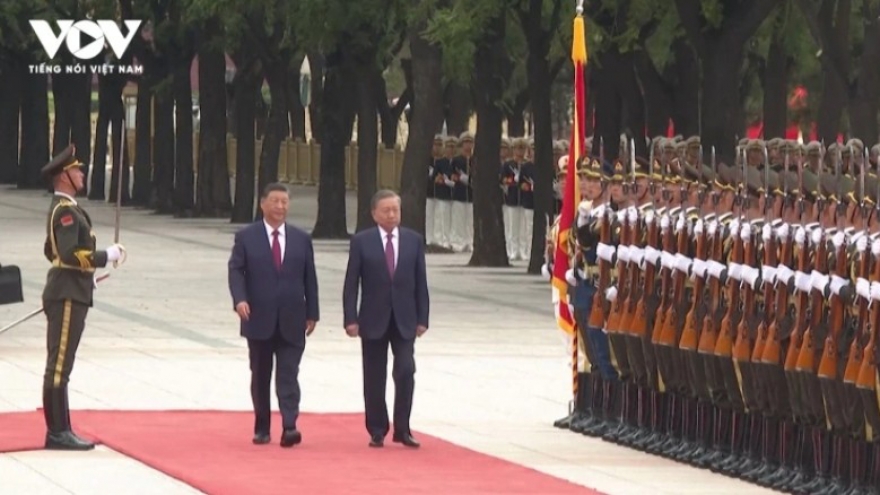
Party chief and President To Lam visits Xiong’an New Area in China's Hebei

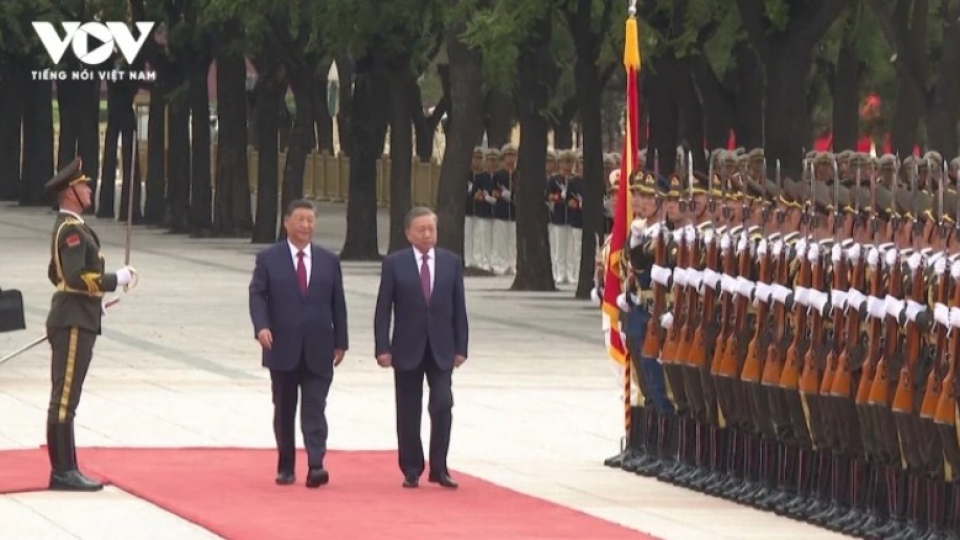
VOV.VN - Within the framework of his State visit to China from April 14 to 17, on April 14, shortly after arriving at Beijing Capital International Airport, General Secretary and President To Lam and his delegation visited to learn about planning and conduct field surveys in the Xiong’an New Area in Hebei Province.
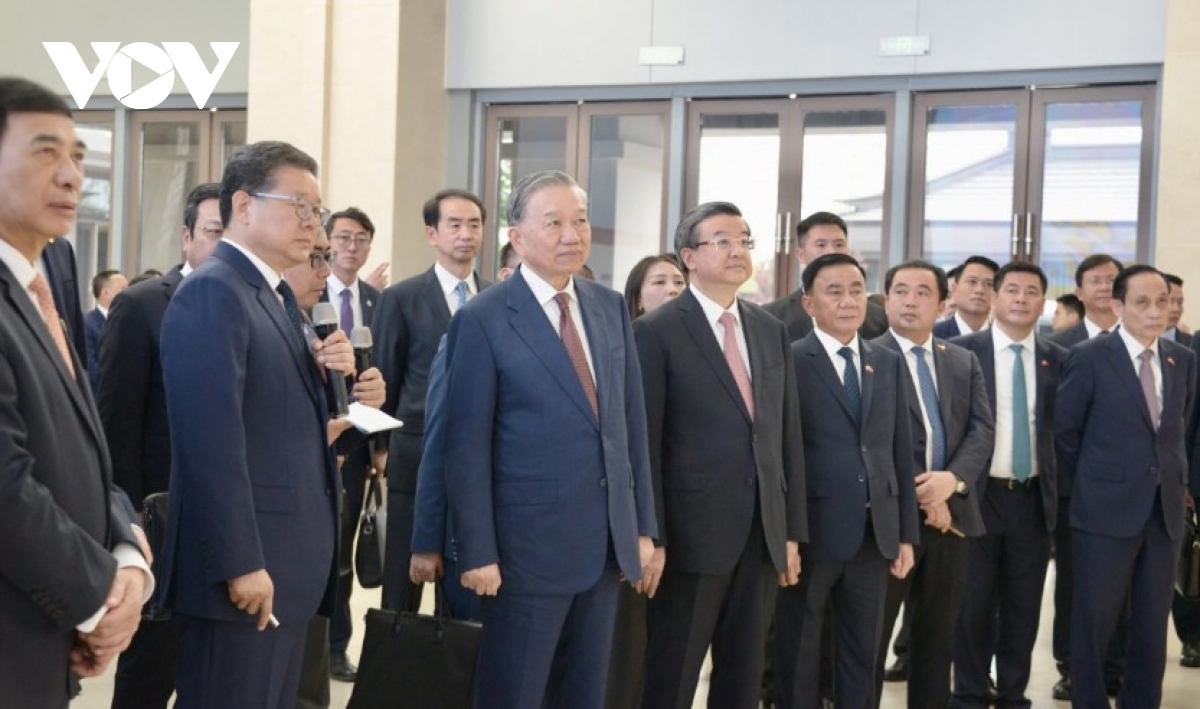
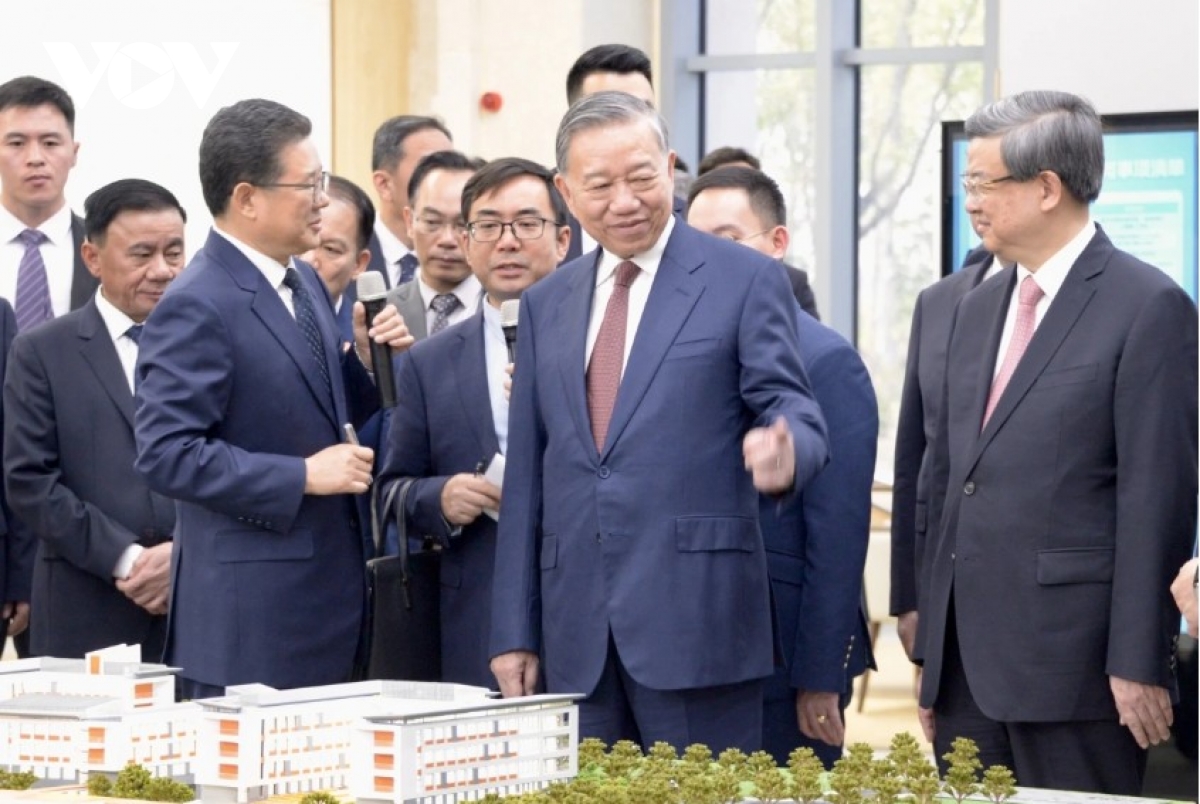
Ni Yuefeng, Secretary of the Hebei provincial Party Committee, accompanied the top Vietnamese leader during the site visit, introduced the master plan of the initial development area, and shared experience in developing the Xiong’an New Area. Established in April 2017, the area is regarded by China as a major strategic and historic choice of the Communist Party of China Central Committee, and a new area of national significance following the Shenzhen Special Economic Zone in Guangdong and the Pudong New Area in Shanghai.
The Xiong’an New Area covers 1,770 sq.km in Hebei Province and is located within the Beijing-Tianjin-Hebei triangle in northeastern China, about 110 km southwest of central Beijing. Its population stood at around 1.4 million as of 2025.
The establishment of the Xiong’an New Area aims to create a new growth centre for the Beijing-Tianjin-Hebei economic triangle. It is designed as a model zone for innovation-driven development, with functions including a green and ecological new urban area, a pioneer zone for innovation-led growth, a model area for balanced development, and a leading area for opening up and development.
After nine years of implementation, the Xiong’an New Area has shifted from the stage of “basic construction” to “high-quality construction.” To date, more than 400 branches of centrally administered state-owned enterprises have relocated to Xiong’an.
Four universities, including Beijing Jiaotong University, China University of Geosciences, Beijing University of Technology, and Beijing Forestry University, have begun operating new campuses there. Several hospitals are already in operation, providing high-quality medical services. By the end of 2025, some 169,000 residents had been relocated to the new area.
At present, the Xiong’an New Area has completed a “three-layer” urban structure, comprising above-ground operations, underground systems, and cloud-based services. More than 200 km of digital roads have been built, enabling trials of commercial autonomous vehicles and integrating 5G, radar, and intelligent traffic signal systems.
As of March 2026, the Zhongguancun Xiong’an Science and Technology Park had attracted more than 260 high-tech enterprises, focusing on areas such as artificial intelligence, biotechnology, and the low-altitude economy.
Chinese media expect new chapter in China-Vietnam relations
VOV.VN - The State visit to China by General Secretary and President To Lam has captured wide attention from Chinese media, with expectations that it will open a new chapter in bilateral ties.
Vietnam-China cooperation contributes to regional and global stability
VOV.VN - Chinese experts and businesses have shown strong interest in the State visit to China by Party General Secretary and President To Lam. In their view, deeper cooperation between the two countries not only creates opportunities for bilateral trade, investment and economic ties, but also contributes to stability in the region and the world.