Laying solid foundation for development through 2045: Party General Secretary

VOV.VN - Party General Secretary To Lam chaired a working session with the Party Central Committee’s Commission for Policies and Strategies in Hanoi on March 2 to discuss the drafting of a resolution on strategic solutions to promote double-digit economic growth in association with establishing a new growth model.
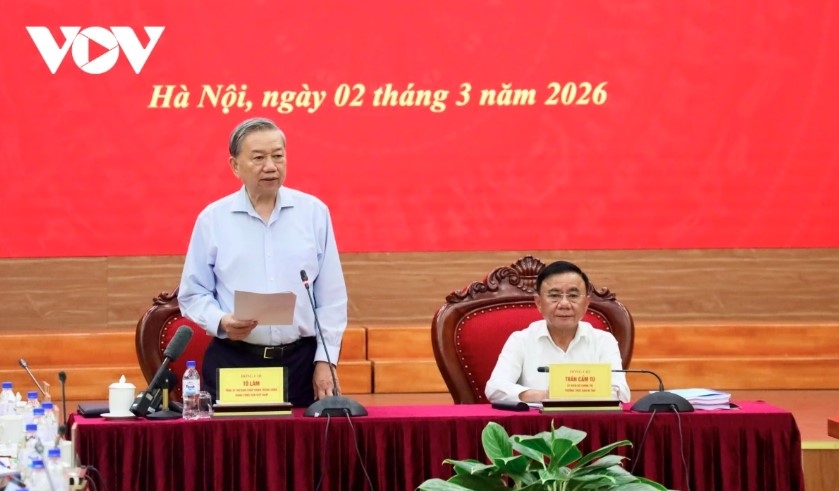
Applauding the thorough, serious and scientific preparations by the Commission and relevant agencies, the Party leader outlined six major orientations for the drafting process.
He laid stress on the need to clearly define the vision of the resolution and place the issue within a historical perspective and development thinking.
The resolution, he said, must serve as an overall blueprint for Vietnam’s double-digit economic growth model through 2045. He described the target as a strategic determination and a historic choice to realize the country’s development aspirations, while emphasizing that such growth must be stable, of quality, inclusive, green and self-reliant.
The resolution should function as a guiding compass for action, ensuring unified awareness across the entire political system and consistent, effective and sustainable implementation.
He underscored the need to build a “proactive, preventive, flexible and adaptive” development mechanism, under which growth decisions are considered in relation to risks and the economy’s resilience.
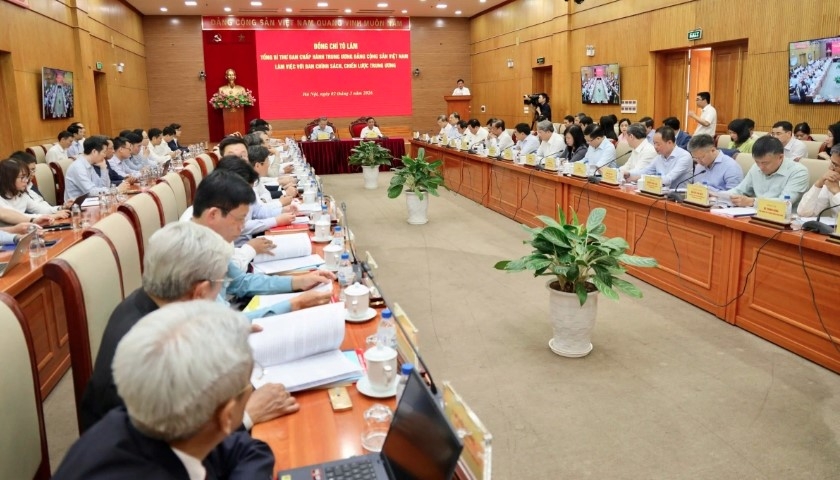
This requires close adherence to practical realities, enhanced forecasting capacity and flexible management to tightly control risks related to inflation, public debt and financial and monetary markets, while effectively responding to geopolitical, trade and global supply chain fluctuations.
Rapid growth, he stressed, must go hand in hand with environmental protection, social security, narrowing regional disparities and strengthening public confidence. Economic development must also be closely combined with national defence and security, as well as effective implementation of foreign policy, thereby maintaining a peaceful and stable environment for long-term development.
According to the Party chief, establishing a new growth model requires a fundamental shift in the structure of growth drivers, changing the “engine” of the economy rather than merely adjusting the way it operates.
Feasible resources to achieve double-digit growth must be clearly identified. While such a growth scenario presents challenges, it must be grounded in concrete calculations, with particular attention to implementation discipline and execution mechanisms.
He called for substantive and decisive reform in the implementation stage, moving from being “correct in policy” to being “correct and effective in action,” while emphasizing accountability of leaders, outcome-based management, and tackling stagnation, avoidance and fear of responsibility. This, he said, is decisive in turning the political determination for double-digit growth into practical results.
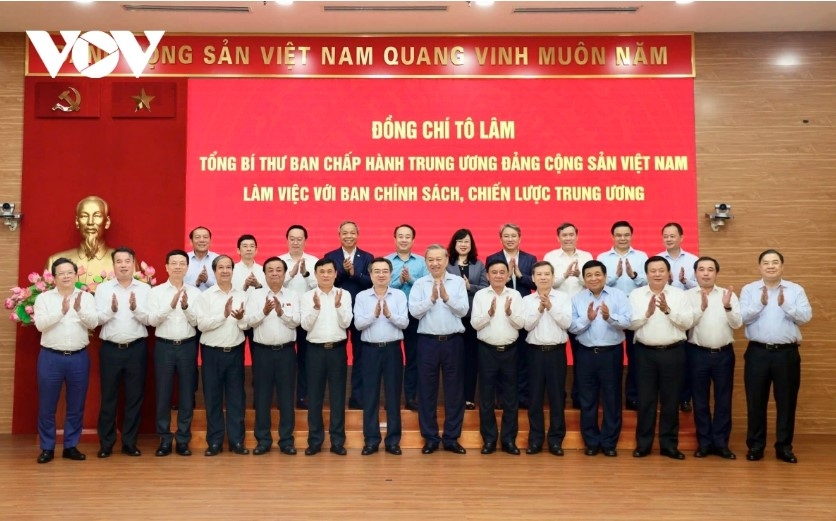
To realize rapid and sustainable double-digit growth, To Lam highlighted 10 key issues requiring attention, particularly fostering a fundamental shift in development thinking across the political system and society.
He emphasized that the target should be viewed not merely as an economic indicator but as a central, urgent and strategic political task. He called for eliminating risk-averse and short-term thinking, replacing it with a spirit of initiative, responsibility and coordinated action with clear assignment of duties and close coordination among central authorities, localities and enterprises. On that basis, science and technology, innovation and digital transformation must become core drivers of the new growth model.
Institutional reform, he stressed, must be substantive and comprehensive, turning institutions into a competitive advantage. Legal regulations must be clear and uphold the rule of law. A contingent of capable, visionary and upright officials, especially leaders and heads of agencies, must be built, alongside a clean political system free from corruption and effectively serving people and businesses.
Maintaining macroeconomic stability, controlling inflation and safeguarding major balances remain fundamental requirements. Strategic infrastructure, high-quality human resources and national governance capacity require sustained strengthening, while growth is to be associated with social equity, environmental protection and climate change adaptation. Growth, he stressed, cannot come at the expense of inflation, asset bubbles or uncontrolled public debt. Close coordination between fiscal and monetary policies is essential to meet these objectives.
He reiterated that growth must be placed within the overall framework of safeguarding national defence, security, social welfare and environmental protection. Stability, equity and sovereignty cannot be compromised for the sake of mere economic growth, thereby laying a solid foundation for development through 2045.
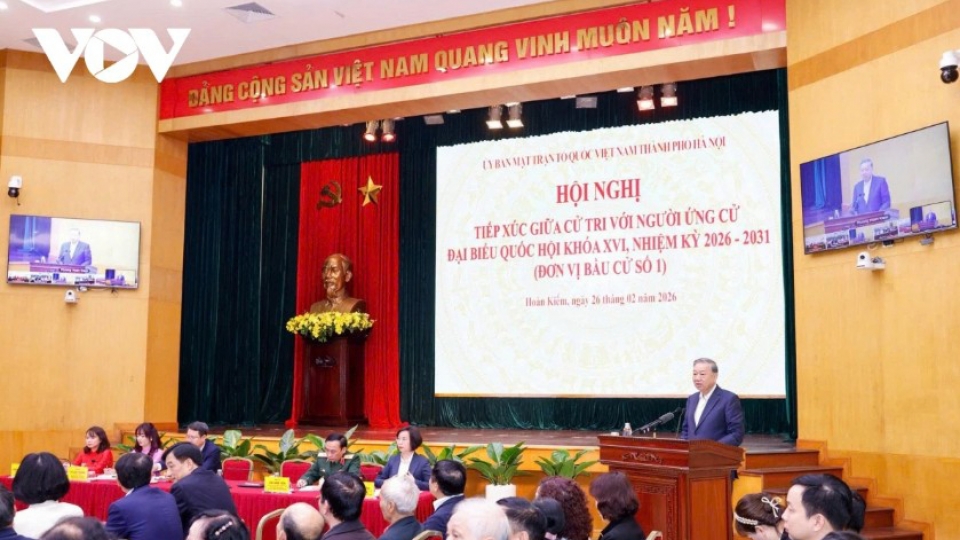
Party chief To Lam attends voter meeting with 16th NA candidates
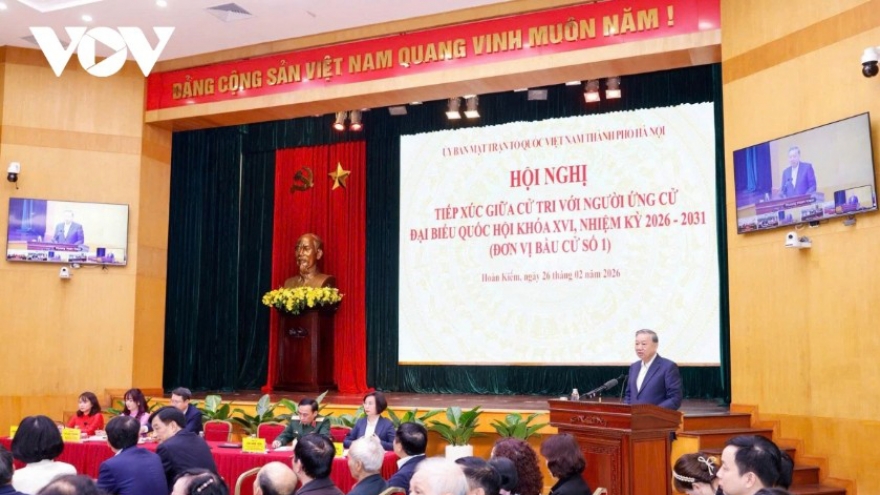
VOV.VN - Party General Secretary To Lam on February 26 attended a voter meeting with candidates for the 16th National Assembly (NA) for the 2026-2031 term in Hanoi.
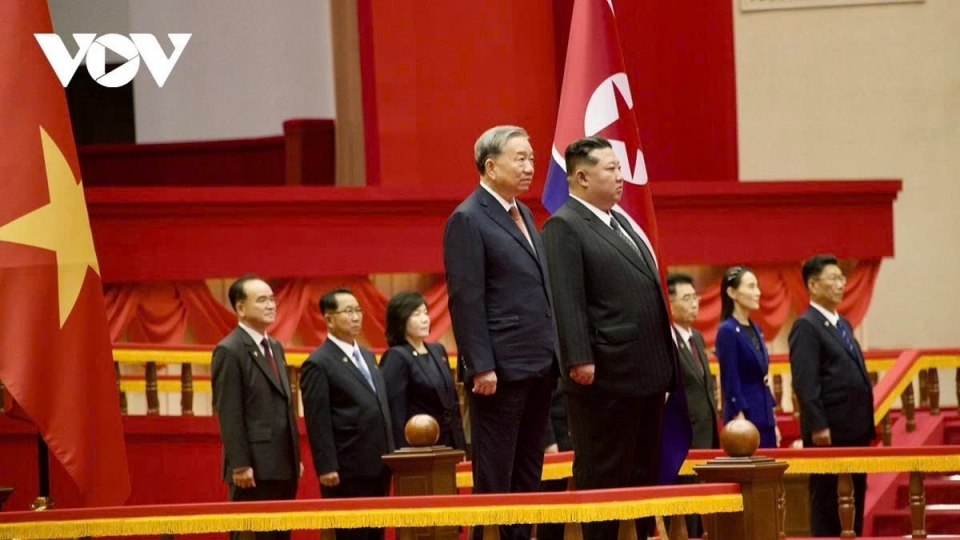
Party chief To Lam congratulates DPRK leader Kim Jong Un on re-election
VOV.VN - General Secretary of the Communist Party of Vietnam Central Committee To Lam on February 23 sent a congratulatory message to Kim Jong Un on his re-election as General Secretary of the Workers' Party of Korea (WPK) at the Party’s 9th National Congress.