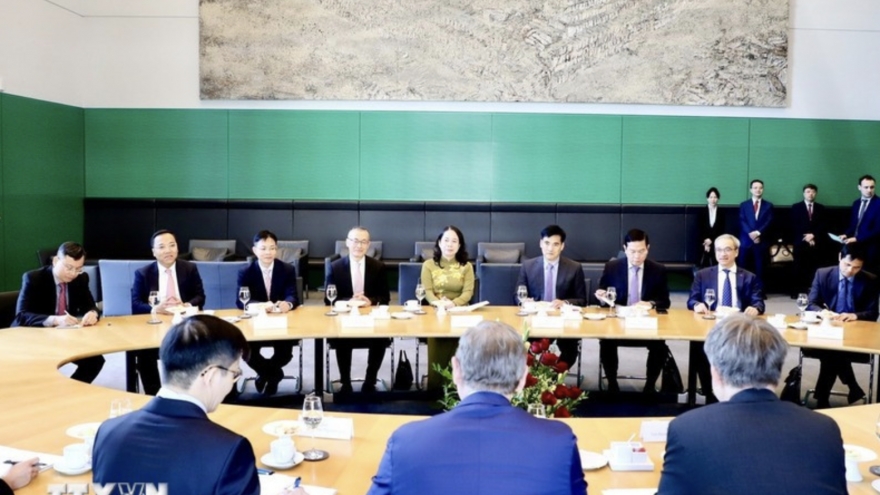
Half a century of Vietnam–Germany relations: shaping a strategic vision ahead

Marking the 50th anniversary (1975–2025) of diplomatic relations between Vietnam and Germany, the book “Innovation and Cooperation: The Future of Germany–Vietnam Relations” has been launched as a policy-oriented study offering strategic insights for bilateral ties in the new phase.
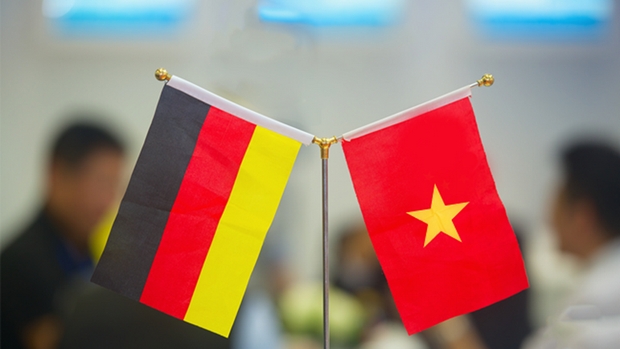
Co-edited by Prof. Dr. Andreas Stoffers, Country Director of the Friedrich Naumann Foundation for Freedom (FNF) in Vietnam, and Ludwig Graf Westarp, Vice Chairman of the Vietnam–Germany Association and a lecturer at Dortmund University of Technology, the publication brings together in-depth contributions from policymakers, academics and business representatives of both countries. It charts the transformation of Germany–Vietnam relations from a traditional aid- and education-based model to a modern strategic partnership centred on mutual interests and shared gains.
The editors underline two core pillars for the future of bilateral relations. The first is strong institutional cooperation, with the EU–Vietnam Free Trade Agreement (EVFTA) identified as the key legal and economic foundation. The second is technological innovation, with Industry 4.0 highlighted as a driving force for improving both the quality and sustainability of cooperation.
According to the book, the EVFTA goes beyond boosting trade and investment, also serving as a catalyst for institutional reform and higher labour, environmental and governance standards in Vietnam. This shift, the authors note, has helped elevate Germany–Vietnam economic ties from a focus on volume to one on value. At the same time, as Vietnam advances its industrialisation and modernisation agenda and pursues its net-zero emissions target by 2050, Germany’s support in smart manufacturing, renewable energy, automation and high-quality workforce training, particularly through the dual vocational training model, is seen as critical.
By integrating policy, economic and technological perspectives, the book argues that Germany–Vietnam relations have evolved into a partnership of regional and global significance. It points to clear complementarities: Germany, a leading engine of the European Union, is seeking a stable and reliable partner in Southeast Asia, while Vietnam needs advanced technologies and high-quality markets to fulfil its development ambitions.
The authors conclude that the combination of institutional cooperation anchored in the EVFTA and technological innovation focused on Industry 4.0 transfer and application forms the blueprint for deepening the strategic dimension of bilateral ties. In this partnership, Germany brings capital, technology and high standards, while Vietnam offers a dynamic market, a strategically important geopolitical position and a young, adaptable workforce.
Analyses by Prof. Andreas Stoffers and Ludwig Graf Westarp stress that only by advancing “cooperation” and “innovation” in tandem can Vietnam–Germany relations continue to rank among the most durable and effective strategic partnerships in Asia, while remaining resilient amid global economic and geopolitical shifts.
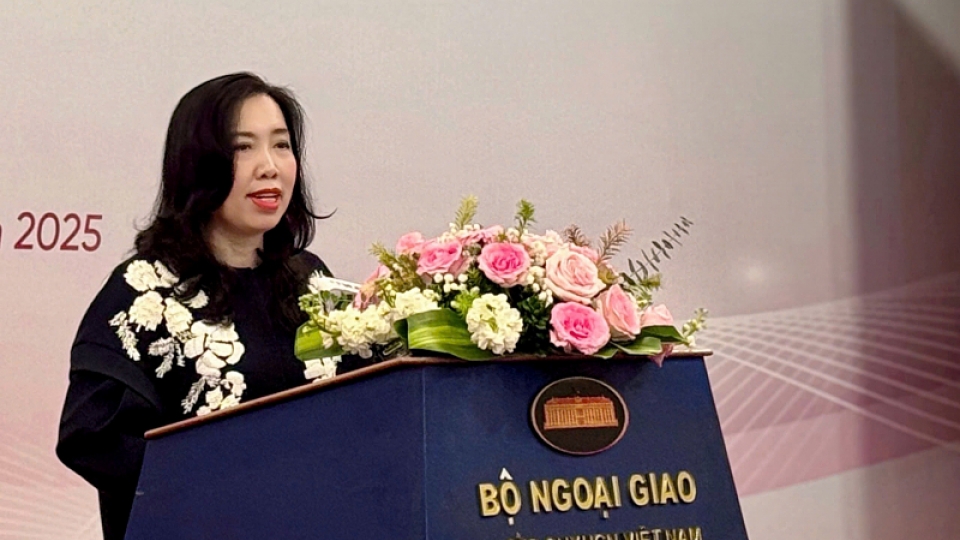
Vietnam and Germany eye new strategic cooperation space
VOV.VN - Vietnam and Germany marked 50 years of diplomatic relations at a seminar in Hanoi on December 17, reviewing a half-century of cooperation and outlining new directions for their strategic partnership in the years ahead.