Vietnam signals decisive action to deliver ambitious development goals

VOV.VN - Vietnam has pledged decisive and immediate action to deliver ambitious development goals set out at the 14th National Party Congress, positioning the next five years as a pivotal period for accelerating economic growth and securing long-term national prosperity.
Comprehensive acceleration for a new growth phase
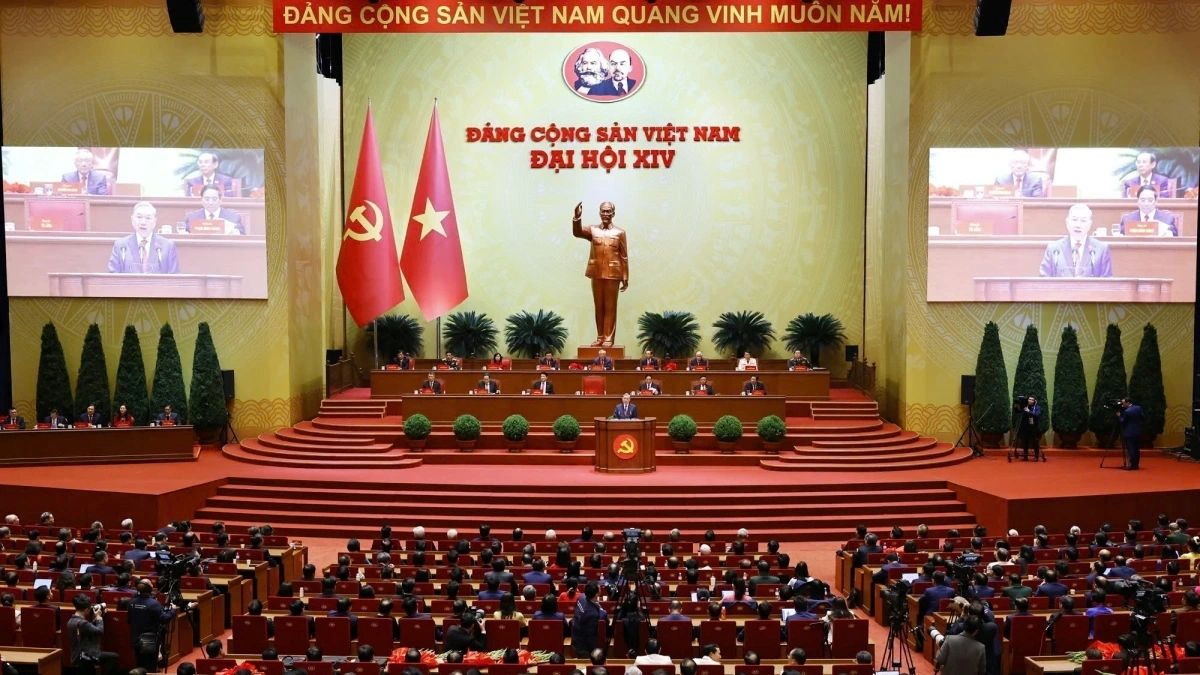
The Congress concluded with a strong emphasis on turning aspiration into concrete results, underscoring that rapid implementation and measurable outcomes will be central to achieving the country’s vision of becoming a high-income, developed economy by the middle of the 21st century.
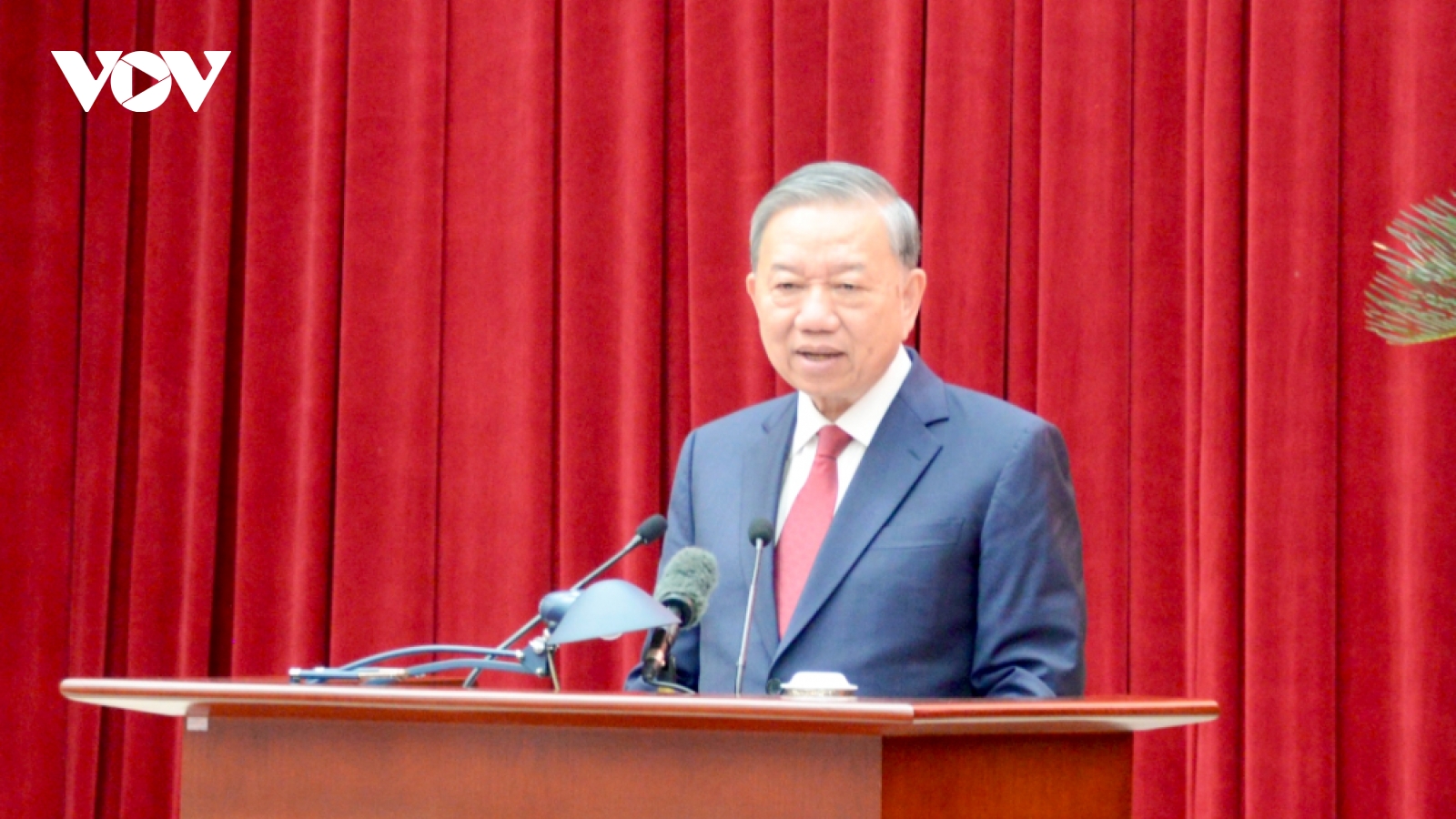
In remarks issued following the Congress, Party General Secretary To Lam described the coming five to ten years as a pivotal window for national development, urging authorities to act with urgency and discipline to secure long-term competitiveness. He also warned that failure to seize opportunities during this phase could carry significant costs in an increasingly competitive and fast-changing global environment.
The Congress adopted a development framework for 2026–2030 that prioritizes rapid and sustainable growth, higher productivity and deeper integration into the global economy. Under the new resolution, Vietnam targets average annual GDP growth of at least 10% between 2026 and 2030. By 2030, GDP per capita is projected to reach approximately US$8,500, while manufacturing is expected to account for around 28% of gross domestic product. The digital economy is set to contribute about 30% of GDP, reflecting a shift toward technology-driven growth.
The strategy calls for a transformation of the country’s growth model from extensive expansion to one centered on productivity, quality and innovation. Science, technology, digital transformation and green transition are identified as the main drivers of future development. Policymakers aim to expand the data economy, digital economy, green economy and circular economy, while accelerating energy transition and improving the quality of the workforce.
Vietnam also plans to raise total factor productivity’s contribution to economic growth to above 55% and increase annual labor productivity growth to roughly 8.5%. The Human Development Index is expected to reach around 0.8 by 2030, alongside higher levels of skilled labour and improved living standards.
Alongside its economic agenda, the Resolution underscores the task of building and fostering an advanced Vietnamese culture imbued with strong national identity, grounded in a coherent system of national values, cultural values, family values and standards of Vietnamese character.
It reaffirms the imperative of safeguarding the supreme national interest, firmly and persistently protecting independence, sovereignty, unity and territorial integrity. National defence and security, together with foreign affairs and deeper international integration, are defined as regular and strategic priorities. The approach seeks to elevate diplomacy in a way that strengthens domestic capacity while effectively mobilising external resources to support long-term development.
Act immediately, act decisively
“The entire Party and people must act with greater urgency and determination from the very start of the new term, allowing not ‘a single wasted day or a delayed week,’” General Secretary To Lam stressed, reinforcing the defining spirit of the 14th National Party Congress that include centering on strategic autonomy, seizing opportunities, promoting unity in action, overcoming challenges and translating development aspirations into concrete results.
True to the principle of “say it and do it — act promptly, act correctly, act resolutely and see it through effectively,” the 14th Congress signaled comprehensive renewal, not only in development strategy but also in the drafting and implementation of its documents. Core viewpoints and guiding principles must be translated into strategic policy decisions, with a clear emphasis on execution and measurable outcomes.
Notably, the Congress adopted an Action Programme alongside its Resolution - a breakthrough step designed to ensure that policy moves swiftly from paper to practice. The Congress underscored a results-driven approach built on the principles of “right choices, rapid implementation, thorough execution and measurable outcomes.” Each major policy decision must be translated into an actionable roadmap, clearly defining objectives, solutions and performance indicators.
On the day the Congress concluded, January 23, 2026, General Secretary To Lam, on behalf of the Politburo, signed a directive on the study, dissemination and implementation of the Resolution of the 14th National Party Congress, extending it to grassroots Party cells nationwide.
The Politburo instructed that implementation “must begin immediately,” requiring Party committees at all levels and their leaders to take direct responsibility for the quality of study, communication and execution of the Resolution. Concrete action programmes and focused implementation plans are to be carried out consistently throughout the entire term, demonstrating determination, innovation and a strong emphasis on feasibility and effectiveness.
A central priority is to decisively address what has long been described as the “weak link” of implementation. Party committees at all levels, Party organisations, members, agencies and units, especially their leaders, are required to move proactively from “correct awareness” to “effective execution,” from “strong determination” to “clear results,” while combining direction and administration with rigorous inspection, supervision and accountability.
Beyond economic targets, the Congress reaffirmed that people-centred development is at the core of national strategy. Policies will prioritise improvements in income, education, health care and cultural life, while maintaining national independence, sovereignty and territorial integrity.
With a five-year roadmap framed within a longer 20-year strategic outlook, Vietnam’s leadership has signaled that decisive governance, institutional reform and innovation-led growth will define the country’s next stage of development.
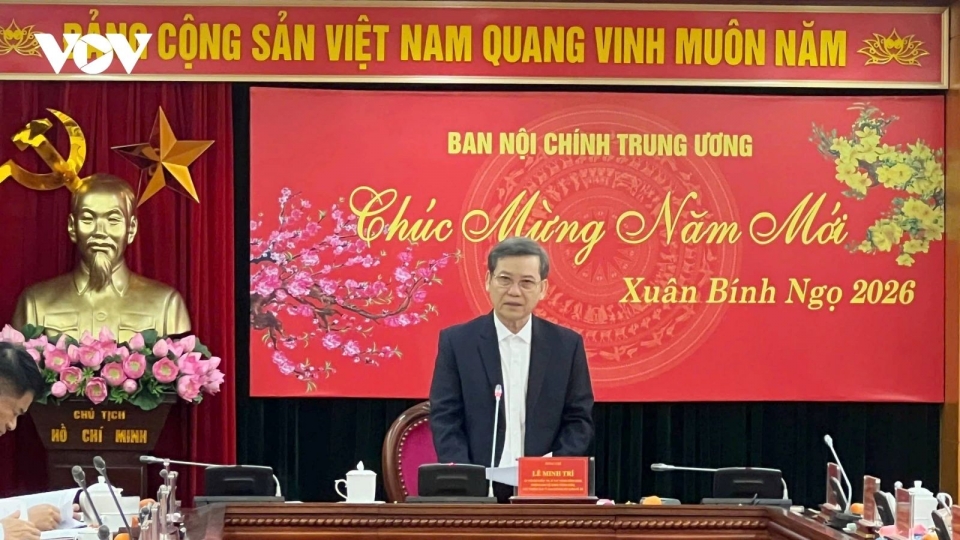
Anti-corruption resolution to be adopted in late March, says Party official
VOV.VN - The 14th Party Central Committee is set to adopt a resolution on anti-corruption, wastefulness and misconduct during its second plenum scheduled for late March 2026, a senior Party officials said on February 12.