Vietnam Party Congress adopts Resolution charting development vision to 2045

VOV.VN - The 14th National Congress of the Communist Party of Vietnam has adopted a resolution setting out the country’s strategic vision for national development over the coming decades.
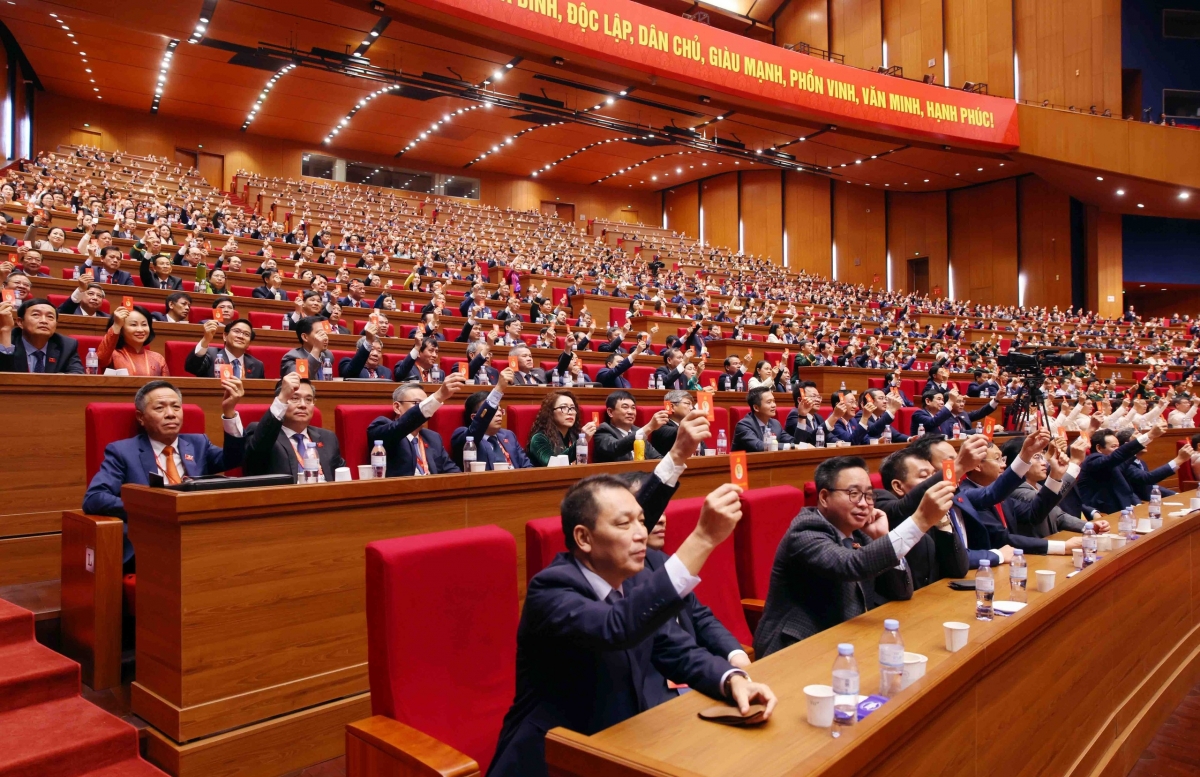
The resolution, approved at the closing ceremony of the Party Congress in Hanoi on January 23, highlights the Party’s leadership role and outlines priorities aimed at achieving rapid, sustainable and inclusive growth.
It endorses key assessments presented by the 13th Party Central Committee, including a review of the implementation of the 13th Party Congress Resolution, a comprehensive evaluation of 40 years of socialist-oriented Đổi mới (Renewal), and a summary of 15 years of enforcing the Party Charter from 2011 to 2025.
The Congress noted that the previous term unfolded amid extraordinary global challenges, including the COVID pandemic, disruptions to international supply chains, rising geopolitical tensions, trade protectionism and increasingly complex traditional and non-traditional security risks, particularly those linked to climate change. Despite these pressures, the resolution states that the Party, the people and the armed forces demonstrated strong determination, innovative thinking and decisive action, enabling the country to maintain stability and achieve broad-based progress.
According to the resolution, the Renewal process initiated and led by the Party represents a historic choice and a far-reaching transformation in strategic thinking, governance and national development. The achievements of the past decades are portrayed as the result of sustained collective effort and creativity across the entire political system and society, reinforcing confidence in the Party’s reform-oriented leadership.
Key targets for the 2026–2030 period include average annual GDP growth of 10% or higher; GDP per capita of around US$8,500 by 2030; manufacturing and processing accounting for about 28% of GDP; the digital economy contributing approximately 30% of GDP; total factor productivity contributing over 55% to growth; labour productivity growth of about 8.5% per year; social investment averaging 40% of GDP.
Human development goals include achieving an HDI of around 0.8, life expectancy at birth of 75.5 years, and maintaining annual multidimensional poverty reduction of 1–1.5 percentage points. Forest coverage is to be maintained at 42–43%, while greenhouse gas emissions are targeted to fall by 8–9%.
The Resolution identifies 12 major development orientations for 2026–2030, emphasising a decisive shift toward a new growth model driven by productivity, quality, innovation and competitiveness. Science, technology, innovation and digital transformation are defined as the primary growth engines, with a focus on the data economy, digital economy, green economy and circular economy.
Looking ahead, the Resolution reaffirms the overarching objective of safeguarding peace and stability while accelerating sustainable development, improving living standards and strengthening strategic autonomy. The long-term vision aims to position Vietnam as a modern, prosperous and high-income nation by 2045, grounded in social equity, cultural vitality and national independence.
The Resolution places strong emphasis on transitioning to a new growth model that prioritises productivity, quality and competitiveness. Science, technology, innovation and digital transformation are identified as central drivers of future growth, alongside the development of the digital economy, green economy and circular economy. The document also stresses the importance of balancing economic growth with social progress, environmental protection, national defence and foreign relations.
Institutional reform is identified as a critical priority, with a focus on removing policy bottlenecks, improving governance efficiency, reducing compliance costs for citizens and businesses, and enhancing decentralisation while ensuring accountability. Human capital development is highlighted as a decisive factor, with particular attention given to high-quality talent, education, health care and labour productivity. Infrastructure development, especially in transport, digital systems, energy transition and climate adaptation, is also described as a key foundation for long-term growth.
The Resolution further reaffirms commitments to building a clean, strong and effective Party and political system, strengthening power oversight, and continuing efforts to combat corruption, waste and negative practices. It underscores the importance of modernising the armed forces, safeguarding national sovereignty and territorial integrity, and pursuing proactive, comprehensive and effective foreign relations.
During the January 19-23 sitting, the Congress approved major reports submitted by the outgoing Party leadership, endorsed the results of the election of the new Party Central Committee, and tasked Party organisations at all levels with translating the Resolution’s strategic directions into concrete policies and effective implementation.
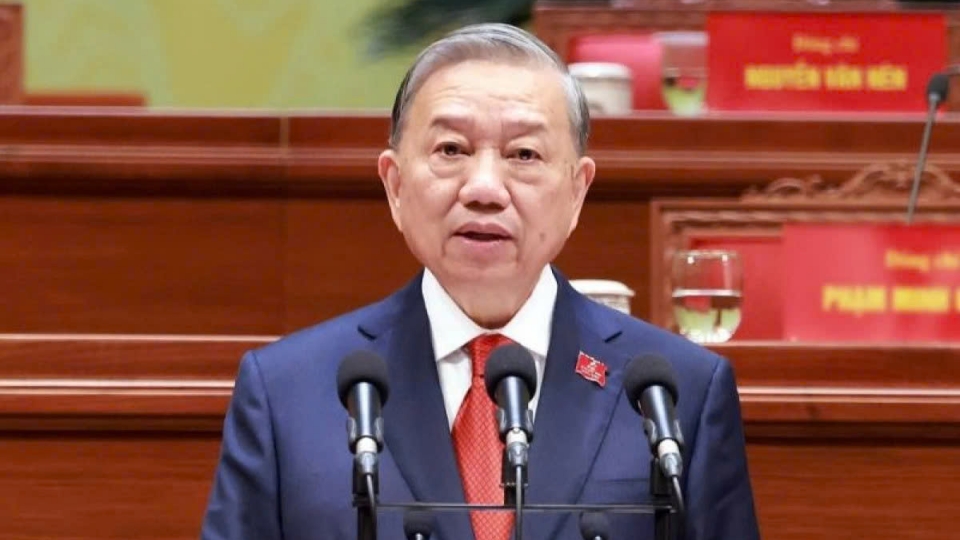
Party chief To Lam pledges decisive action for Vietnam’s future
VOV.VN - The 14th Party Central Committee will act with discipline, accountability and a strong focus on delivering tangible benefits for the people as Vietnam enters a new development phase, said To Lam after being re-elected as chief of the Communist Party of Vietnam Central Committee.