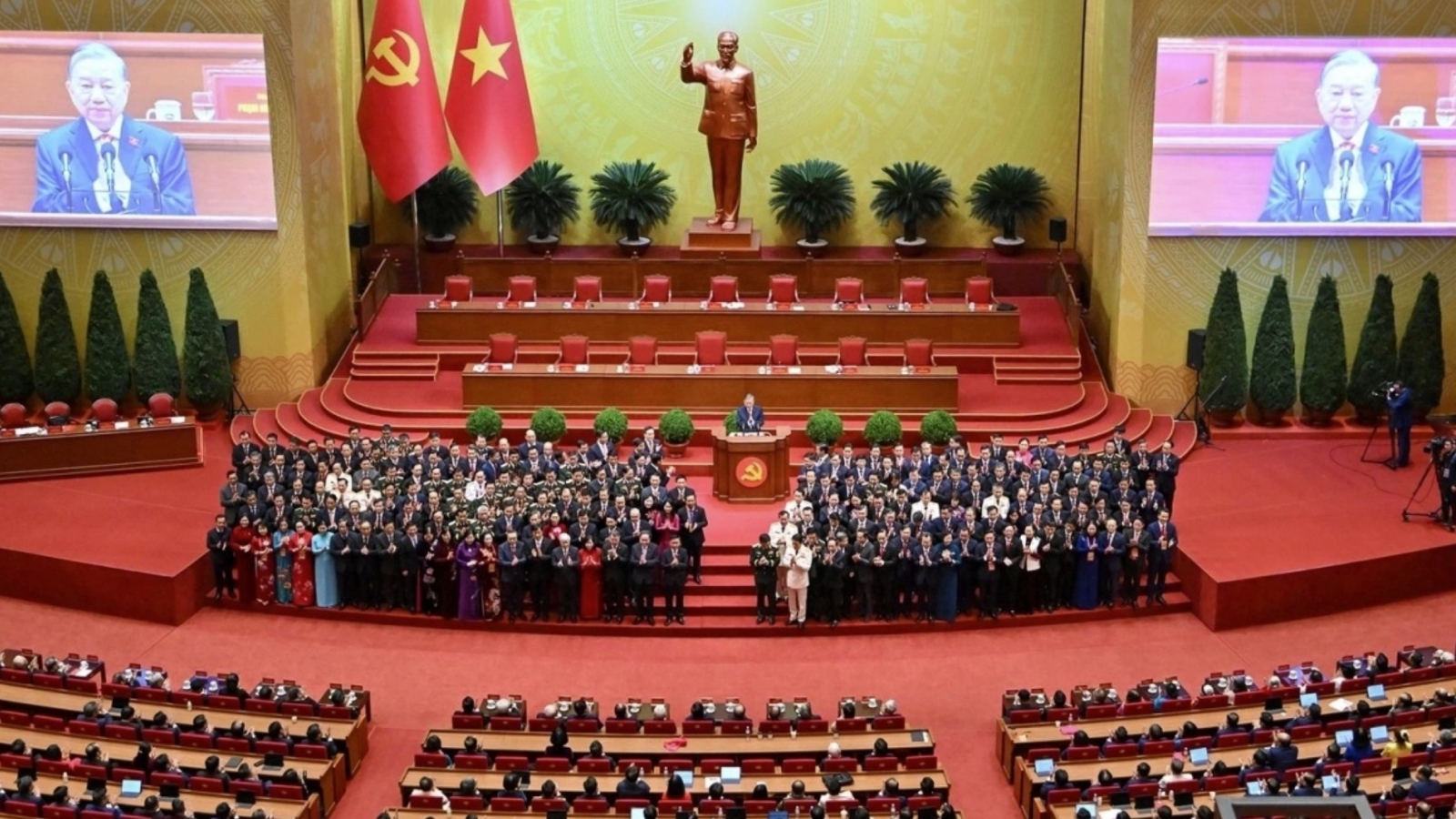
Strategic officials must sharpen their thinking and execution capacity, says top leader

VOV.VN - Party General Secretary and State President To Lam has called for higher standards for strategic officials, emphasising continuous learning, self-reflection and the ability to make sound decisions and turn them into tangible results.
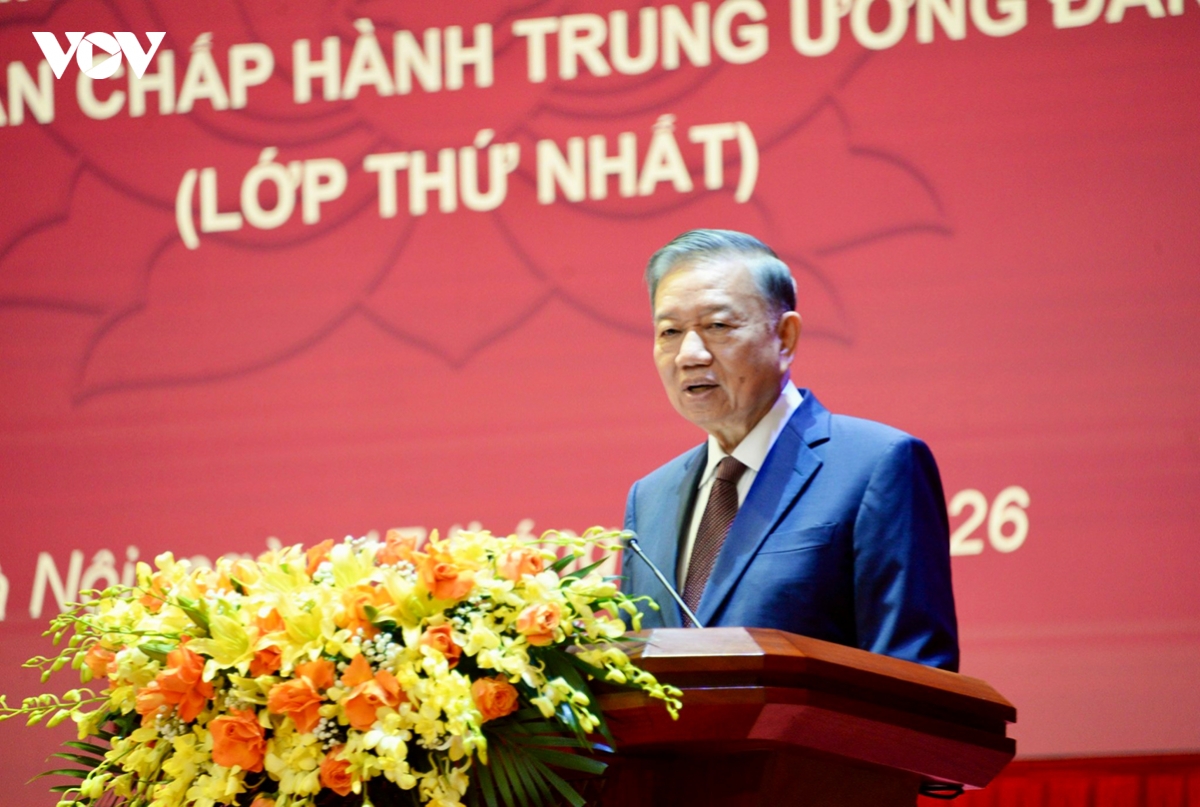
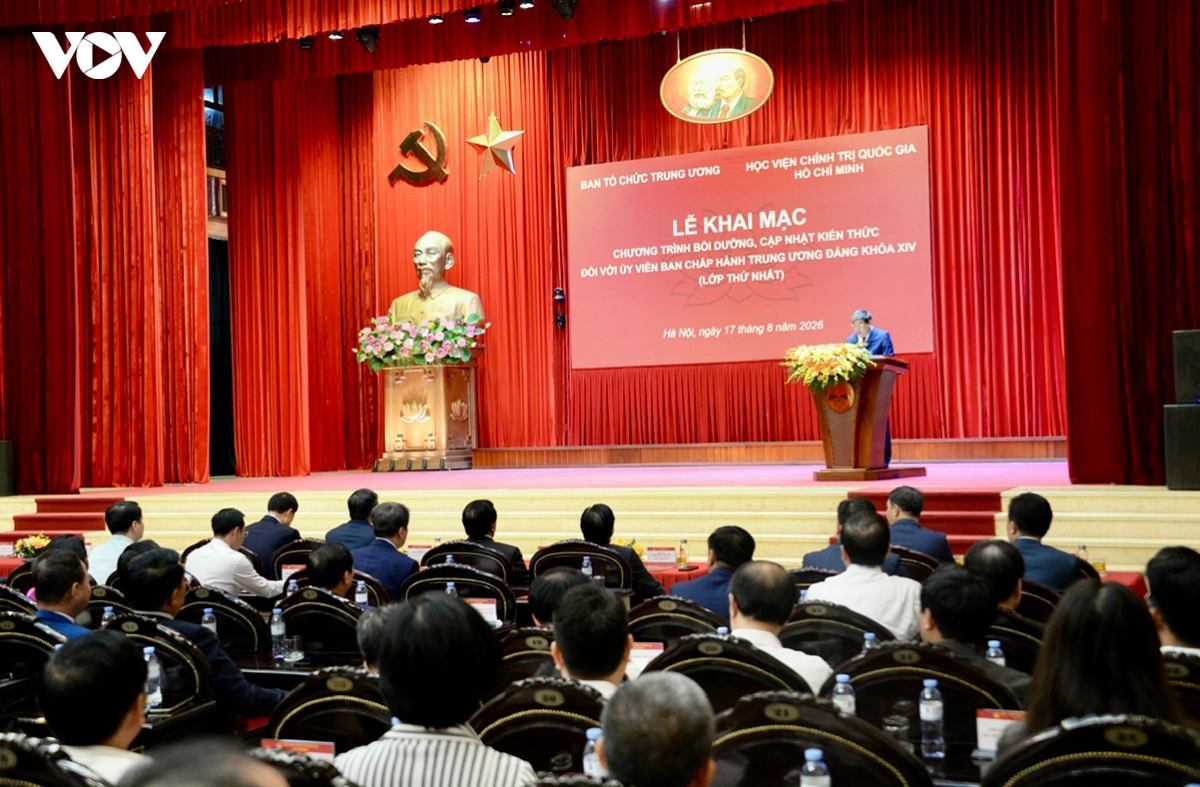
He made the request at a training and knowledge-updating programme for Party Central Committee members (first class) that opened in Hanoi on August 17.
The programme, organised by the Party Central Committee’s Organisation Commission in coordination with the Ho Chi Minh National Academy of Politics, brought together 63 members of the Party Central Committee in the first year of implementing the Resolution of the 14th National Party Congress.
The top leader noted that in a new stage of development, the requirements for strategic officials go beyond mastering Party guidelines, having management experience or successfully performing duties in a particular field or locality.
The higher the position, the broader the impact of each decision, requiring a broader vision, greater responsibility and stronger capacity to organise implementation, he stressed.
According to the top leader, each member of the Party Central Committee not only leads a sector, field or locality but is also a member of the Party Central Committee, the Party's highest leadership body between national congresses. Strategic officials must therefore think from a national perspective, act in the common interest and, together with the Party Central Committee, bear responsibility before the Party and the people for major decisions and the country's future.
This requires a broader understanding of leadership capacity. Strategic officials must anticipate the impact of decisions on national development, balance immediate and long-term interests, and place the interests of the Party, the nation and the people above sectional and personal interests.
Political mettle must go hand in hand with ethics and self-restraint in the exercise of power. The higher an official's position, the leader said, the more steadfast they must be; the greater the difficulties, the more firmly they must uphold principles; and the greater the pressure, the more they must put the interests of the Party, the nation and the people first.
Ethics, integrity, honour and exemplary conduct must serve as the foundation for exercising power and making decisions. Power and material interests must not overwhelm reason, while sectional or personal interests must not influence decision-making. Short-term gains must not come at the expense of long-term interests.
Strategic leadership starts with deeper thinking and continuous self-improvement
Against this backdrop, continuous learning, self-reflection and self-correction become essential to leadership capacity.
The higher the position, the greater the impact of decisions, and the greater the need for self-learning, self-improvement, self-reflection and self-correction, the top leader stressed.
For him, lifelong learning is not simply about acquiring more knowledge. It is about improving the ability to see clearly, think deeply, make sound decisions and act effectively. Without continuous learning and self-examination against reality, experience can become inertia, old knowledge can become a limitation, and methods that once worked can turn into obstacles.
This approach also changes the purpose of training and knowledge updating for strategic officials. The goal is not to impart as much knowledge as possible, but to help participants revisit real-world problems, identify areas that need to change and improve the quality of their decisions.
He asked participants to bring the most difficult issues facing their sectors, fields and localities into the classroom and examine them against new knowledge, experience and approaches. They should identify what needs to be maintained, what requires adjustment and what calls for decisive action.
In this way, practical experience becomes part of the learning process. Strategic officials are expected not only to acquire knowledge but also to discuss, analyse and seek solutions to real-world challenges.
The process requires openness and a willingness to learn. The leader encouraged participants to share both successes and failures, analyse their causes and lessons, and engage in frank discussion to clarify issues and identify better solutions.
From strategic thinking to concrete results
What is learned, however, must lead to changes when participants return to their positions.
Party General Secretary and State President To Lam called on each participant, after completing the programme, to select practical issues and review their ways of thinking and working, decision-making processes and implementation arrangements. They should also establish regular practices of updating knowledge and receiving feedback within their agencies and organisations.
Here, execution capacity becomes the link between strategic thinking and development outcomes. A sound policy that is not translated into a feasible programme, implemented in a coordinated manner and turned into concrete results cannot fully meet the demands of reality.
For this reason, the leader held that the decisive task today is implementation, by turning Party guidelines into feasible programmes, coordinated action and concrete results, and translating the Party's will into national development and better lives for the people. Words must be matched by action.
On behalf of the programme's Steering Committee, Politburo member and President of the Ho Chi Minh National Academy of Politics Doan Minh Huan said the orientations set out by the top leader called for comprehensive renewal of strategic cadre training, from organisation and teaching methods to the responsibilities of participants.
According to him, the programme's effectiveness should not be measured merely by the number of thematic sessions or completion of the curriculum. More importantly, it should be reflected in changes in participants' vision, thinking, capacity, qualities and mettle, as demonstrated through the quality of their decisions and the effectiveness of implementation in their respective positions.
The programme is also being digitalised, with learning resources developed to support study before, during and after the course, gradually building an open training ecosystem that promotes self-learning, continuous knowledge updating and lifelong learning.
Representing the participants, Deputy Prime Minister Ho Quoc Dung said the value of the programme lies not only in acquiring knowledge but also in discussing issues together and seeking solutions to major challenges facing the country. Participants pledged to maintain discipline, professional conduct and the exemplary spirit expected of strategic-level leaders.
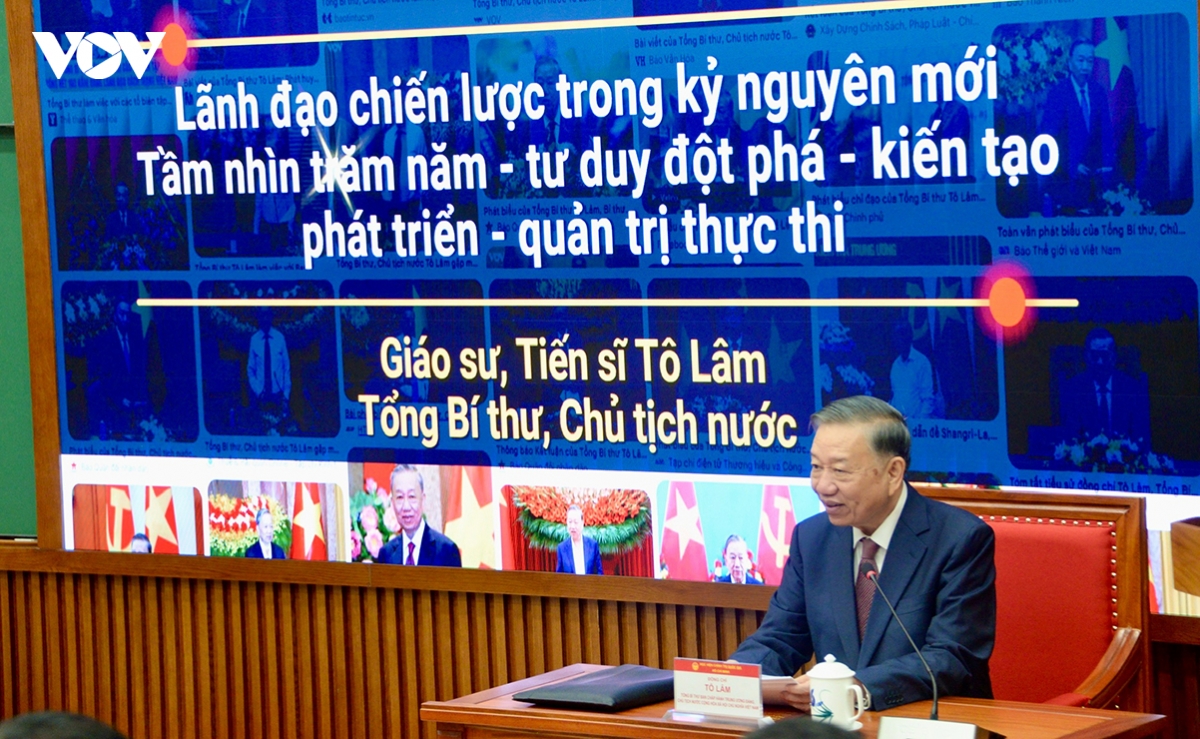
Immediately after the opening ceremony, Party General Secretary and State President To Lam personally delivered a presentation entitled “Strategic Leadership in the New Era: A 100-Year Vision – Breakthrough Thinking – Development-Oriented Leadership – Execution Governance.”
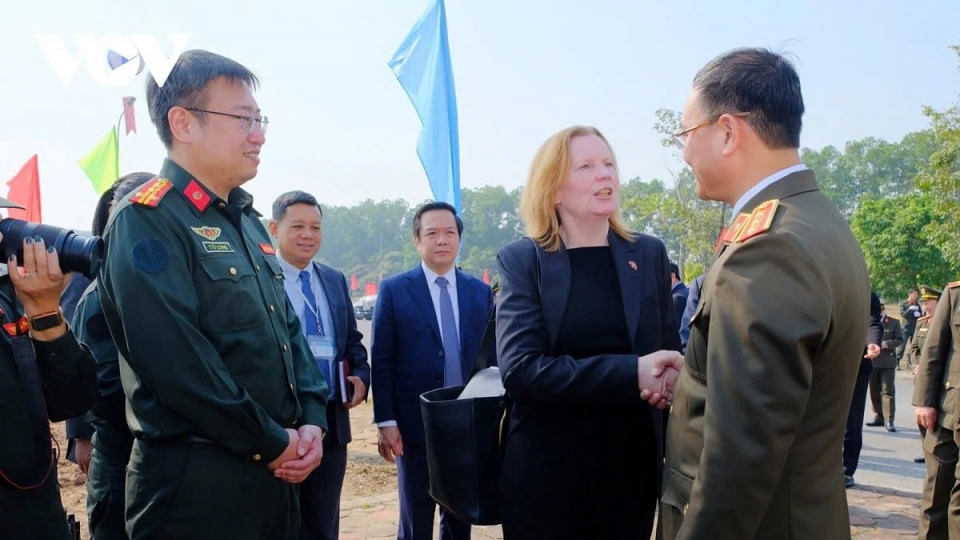
Vietnam inaugurates centre to train elite police for UN peacekeeping missions
VOV.VN - Vietnam on January 9 inaugurated a new training and capacity-building centre for the country’s United Nations (UN) peacekeeping police in Hung Yen province.