


Strategic leadership training shifts from knowledge updating to capability building

VOV.VN - A training and knowledge-updating programme for members of the 14th Party Central Committee has concluded with a broader emphasis on turning knowledge into strategic thinking, governance and implementation capabilities, as well as the ability to adapt to new and complex challenges.
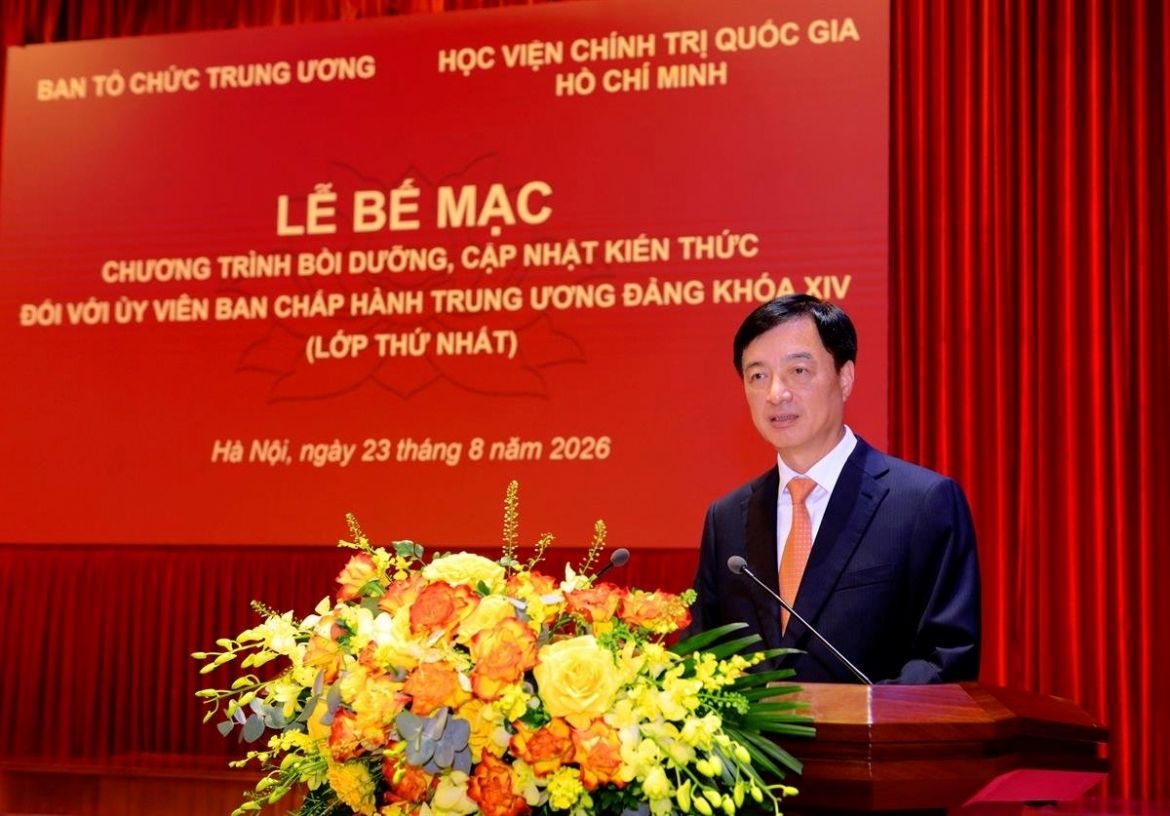
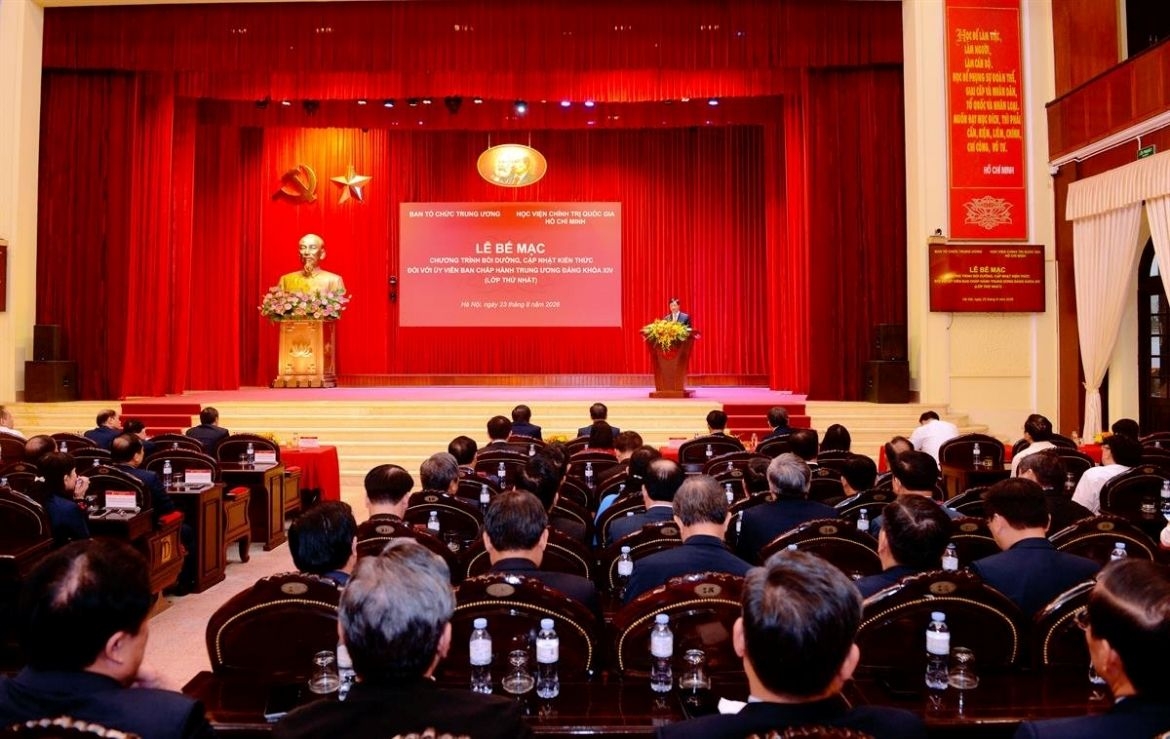
The programme, organised by the Party Central Committee’s Organisation Commission, in coordination with the Ho Chi Minh National Academy of Politics, ran from August 17 to 23 and brought together 63 members of the 14th Party Central Committee.
Rather than relying primarily on one-way instruction, it emphasised dialogue, interaction and practical analysis, combining core theoretical content with case studies and experience-sharing. Participants also had opportunities to exchange views directly with senior Party and State leaders on current challenges in leadership, governance and implementation.
Three shifts in training strategic leaders
Speaking at the closing ceremony, Politburo member, Secretary of the Party Central Committee and head of the Party Central Committee’s Organisation Commission Nguyen Duy Ngoc noted that the programme had met three objectives set at the outset, namely learning from real-world challenges, promoting dialogue and experience-sharing, and turning what was learned into concrete changes in work.
The value of the programme, he said, lay not only in the amount of knowledge delivered, but also in creating a space for dialogue, critical reflection and the exchange of practical experience. New and difficult issues without established precedents, including lessons from unsuccessful experiences, were discussed openly to generate knowledge relevant to leadership and governance.
Ngoc highlighted three fundamental shifts in strategic-level leadership training.
First, the focus must shift from updating knowledge to developing capabilities, particularly strategic thinking, development-oriented governance and implementation, mastery of science, technology, data and AI, as well as the ability to learn, engage in dialogue and build consensus.
Second, training must move from one-way knowledge transmission to the co-creation of knowledge, bringing together theory, practical experience and emerging challenges in leadership and governance.
Third, a training course should no longer be viewed as having a fixed endpoint, but as the starting point for continuous self-study, professional development and regular knowledge updates.
These shifts reflect the growing demands placed on strategic leaders as the country faces increasingly complex issues for which ready-made models or precedents may not always exist.
Learning to solve real-world problems
During the programme, participants visited the National Data Centre under the Ministry of Public Security to learn about technology, data and digital transformation. They also studied Hanoi’s planning, development model and long-term vision.
Digital learning materials were incorporated into the programme, giving participants more flexible ways to access and study information.
The emphasis was not simply on knowing more, but on applying what is learned to real-world work.
Ngoc urged participants to quickly translate new knowledge into appropriate decisions, mechanisms and implementation methods, while linking implementation with testing, assessment and feedback.
He also called for continued dialogue and professional networks across sectors, fields and localities to help address intersectoral, interregional and emerging issues.
At the same time, leaders were asked to build learning capacity not only within themselves but also within the agencies and organisations they oversee, avoiding a situation in which past experience becomes institutional inertia and existing knowledge becomes a constraint on new thinking.
The higher the position, the greater the need for self-learning
Speaking on behalf of the 63 participants, Deputy Prime Minister Ho Quoc Dung emphasised that the course and field activities reinforced the understanding that many new challenges facing the country do not necessarily come with established models or precedents.
This requires senior officials, particularly strategic-level leaders, to keep learning, update their knowledge, renew their thinking, broaden their perspectives and anticipate emerging trends and challenges.
“The programme gave each participant an opportunity for self-reflection, to continue renewing their thinking and methods of action, address remaining weaknesses and strengthen their capacity to fulfill the responsibilities of a member of the 14th Party Central Committee,” he said.
The participants would continue studying and applying the knowledge gained to their work in their respective agencies, organisations and localities, he added.
The week-long programme therefore pointed to a broader approach to leadership development: learning to build capabilities, learning from practice and continuing to learn beyond the classroom. For those holding greater responsibilities, the capacity for self-learning, continuous renewal and adaptation to rapidly changing realities becomes increasingly important.
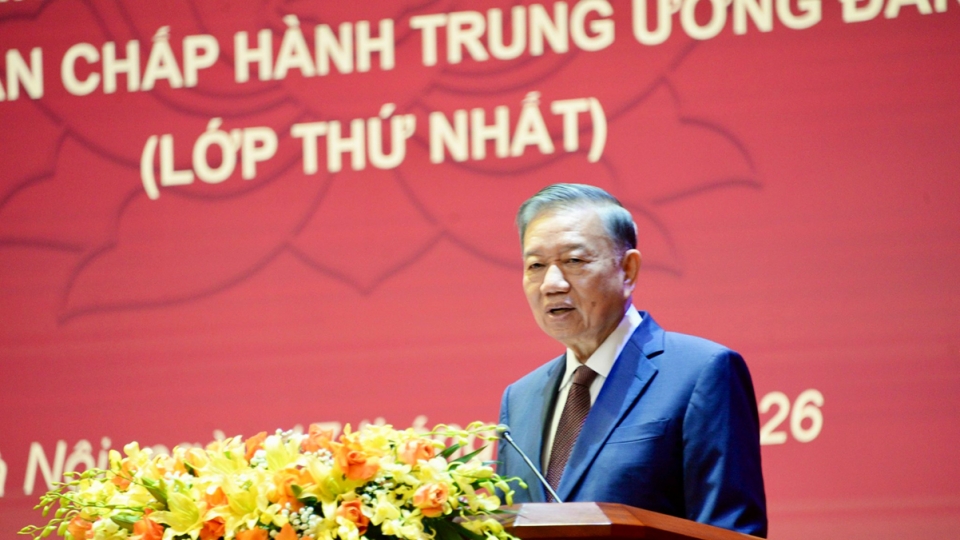
Strategic officials must sharpen their thinking and execution capacity, says top leader
VOV.VN - Party General Secretary and State President To Lam has called for higher standards for strategic officials, emphasising continuous learning, self-reflection and the ability to make sound decisions and turn them into tangible results.


