State President promulgates 11 newly adopted laws

VOV.VN - The Office of the President held a press conference in Hanoi on January 5 to announce the President’s Order promulgating major laws adopted by the National Assembly during the recent year-end session.
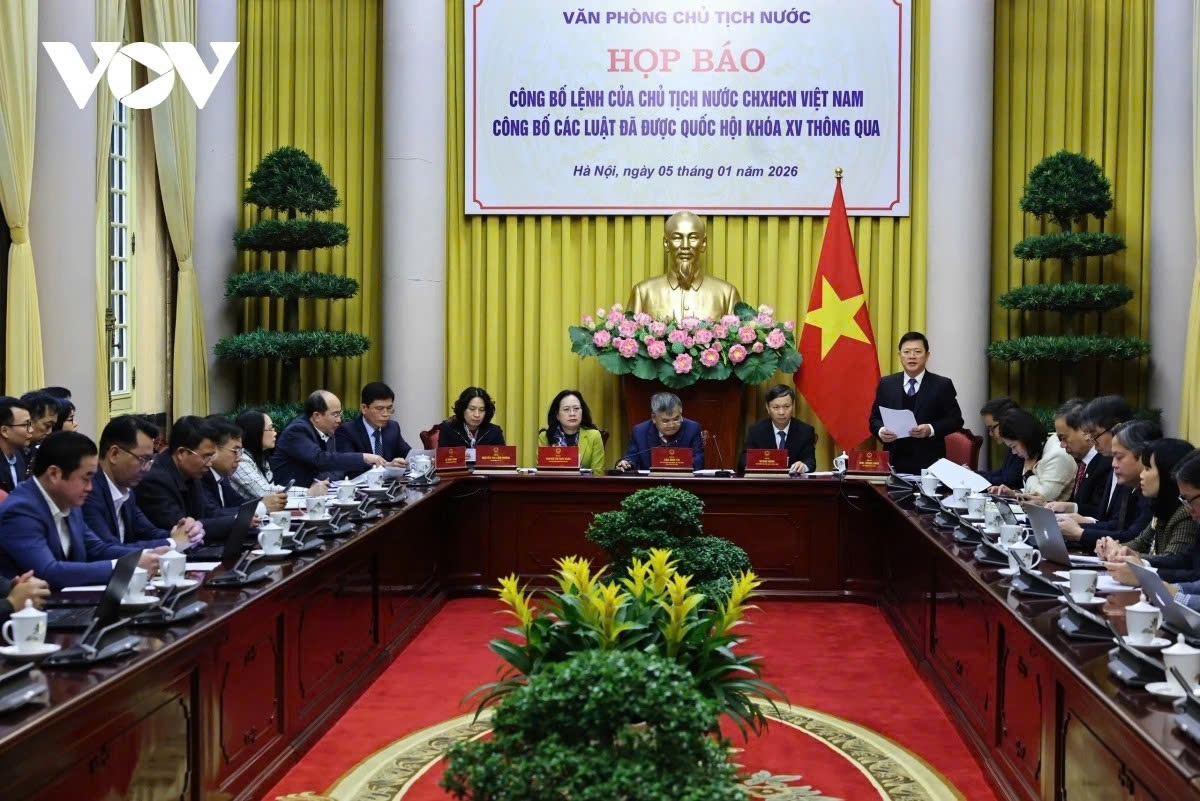
At the press briefing, Can Dinh Tai, Vice Chairman of the Office of the President and Assistant to the President, announced that the newly adopted laws are the Law on Mutual Legal Assistance in Civil Matters; the Law on Judicial Expertise; the Law on Civil Judgment Enforcement; the Population Law; the Law on Disease Prevention; the Law amending and supplementing a number of articles of the Law on Intellectual Property; the High Technology Law; the Digital Transformation Law; the Construction Law; the Law on Civil Aviation of Vietnam; and the Law amending and supplementing a number of articles of the Law on Urban and Rural Planning.
Responding to reporters’ questions on the feasibility of prioritizing the purchase, lease-purchase or rental of social housing for people with two or more biological children, as stipulated in the Population Law, Pham Vu Hoang, Deputy Director of the Vietnam Population Authority under the Ministry of Health, said the law includes clear and specific revisions.
He noted that Article 29 of the Population Law amends and supplements provisions in related legislation, including revisions to Articles 76, 77, 78 and 79 of the Law on Housing, clarifying eligible beneficiaries and priority mechanisms for social housing access.
Hoang added that the Ministry of Health is advising the Government on the development of implementing legal documents, including decrees and circulars, in coordination with the Ministry of Construction. A revised circular guiding documentation to verify eligibility for social housing support is expected to be completed before May 15, 2026.
Addressing questions regarding post-inspection and enforcement under the Construction Law, which introduces more flexible construction permit procedures, Bui Van Duong, Deputy Director of the Department of Construction Economics and Investment Management under the Ministry of Construction, said that all construction projects, except private houses, must notify competent authorities of their commencement, regardless of whether they are licensed or exempt from licensing.
Under Article 47, local authorities, as decentralised by local governments, are responsible for managing construction order in their jurisdictions, including conducting inspections throughout the construction process from commencement to completion.
He added that the revised Construction Law strengthens community-based oversight, notably through Article 49, which requires all construction projects to display on-site project information boards. The article also introduces a new requirement for investors to install monitoring devices capable of connecting with relevant local authorities to enhance supervision during construction.
At the press conference, representatives of ministries and agencies also answered questions related to sanctions against officials who require citizens to submit documents that have already been digitized; aviation safety management amid the increasing use of unmanned aerial devices; and the expansion of civil judgment enforcement procedures applicable to enforcement officers.
Many business permit requirements slashed in amended Investment Law
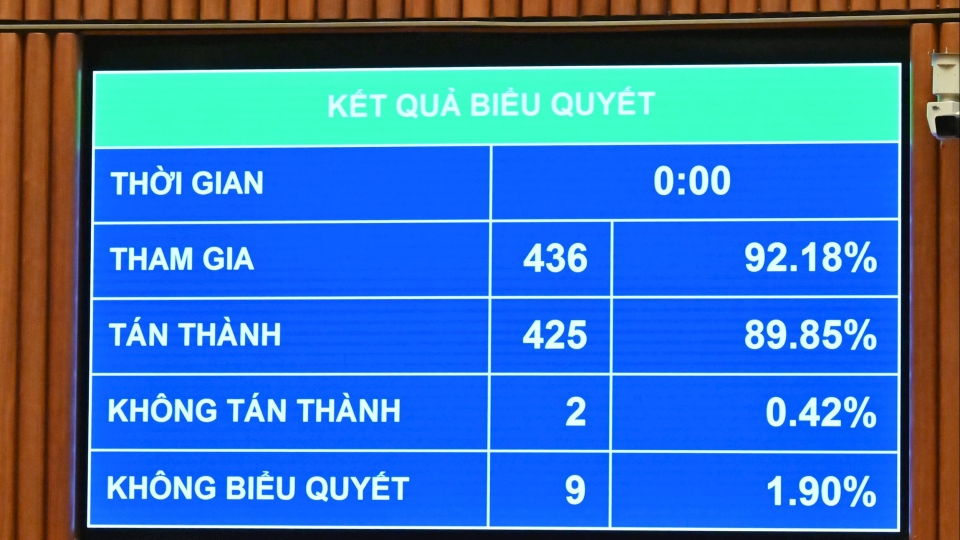
VOV.VN - The National Assembly on December 11 approved amendments to the 2020 Investment Law, reducing the number of conditional business sectors and easing permit requirements as part of efforts to shift from pre-inspection to post-inspection oversight.