President Ho Chi Minh’s diplomatic thought remains lodestar: scholars

Scholars have highlighted the enduring value of President Ho Chi Minh's diplomatic thought, describing it as a guiding principle for Vietnam’s foreign policy of independence, self-reliance, peace, cooperation and development.
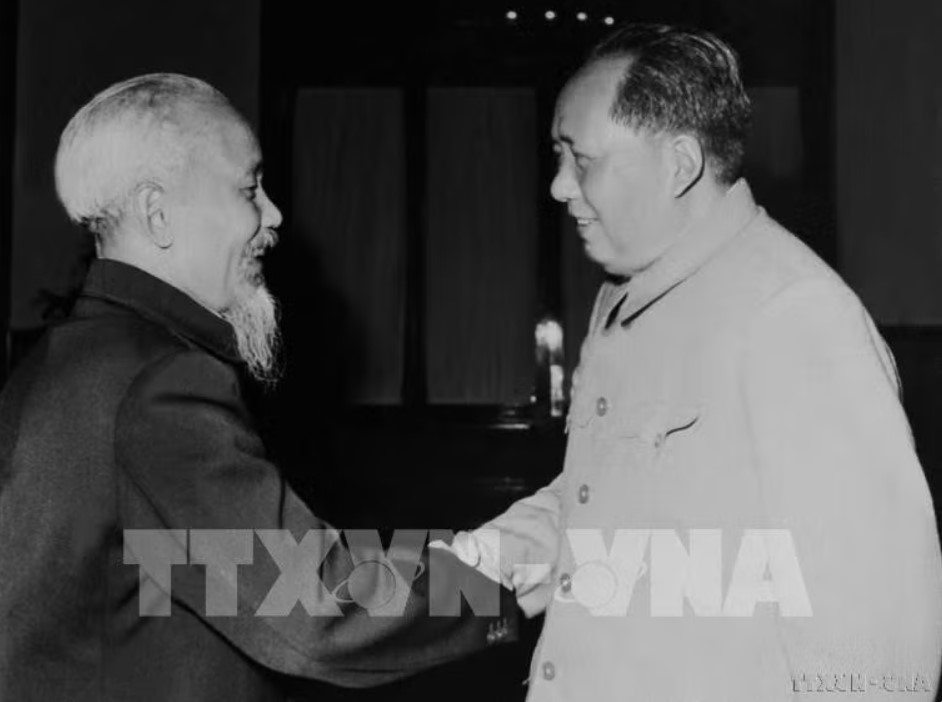
According to Dr. Le Trung Kien from the Ho Chi Minh National Academy of Politics, one of the core legacies of President Ho Chi Minh is the principle of "staying firm in policy, yet flexible in its execution".
The ideals of “Independence – Freedom – Happiness” represent the immutable values that Vietnam must consistently uphold in today’s context of intensifying strategic competition, he said on the occasion of the President's 136th birth anniversary (May 19, 1890–2026).
“Vietnam’s foreign policy is not about choosing sides, but about choosing justice and righteousness,” Kien stressed.
Drawing from President Ho Chi Minh’s philosophy of “befriending all democratic countries without earning enmity towards any,” Vietnam has maintained a foreign policy of non-alignment, refraining from military alliances or siding with one country against another, while remaining committed to independence, peace, stability and the interests of its people.
Kien emphasised that national independence today extends beyond territorial sovereignty to include independence in policymaking and development orientation. Political independence, he noted, must be underpinned by economic self-reliance.
To strengthen its strategic autonomy, Vietnam needs breakthroughs in defence industry, core technologies and energy security, he said, adding that a strong and independent economy would enhance the country’s voice and position in international negotiations.
At the same time, Vietnam should continue pursuing international cooperation based on mutual support and shared interests while preserving its political identity and socialist orientation.
Rather than relying on a single strategic partner, Vietnam is building a network of intertwined interests with major powers. When partners’ interests are closely linked to Vietnam’s stability and development, that itself becomes an effective shield for national sovereignty, Kien said.
He also noted that President Ho Chi Minh’s concept of “people-to-people diplomacy” has evolved into a broader diplomatic approach serving sustainable development.
Amid deep integration in the digital era, diplomacy must protect the legitimate rights and interests of millions of Vietnamese citizens living, working and studying abroad through international law, while also helping Vietnam improve governance capacity and legal institutions by learning from advanced international models.
Kien stressed that President Ho Chi Minh’s ideology on combining national strength with the strength of the times remains highly relevant in the current era.
Today, the “strength of the times” includes international law, global trade frameworks and multilateral institutions such as the World Trade Organisation, the Comprehensive and Progressive Agreement for Trans-Pacific Partnership and the European Union–Vietnam Free Trade Agreement.
Vietnam’s legal reforms, therefore, should proactively internalise international standards while remaining rooted in the country’s political, cultural and social realities, he said.
Professor and Dr. Mach Quang Thang, former senior lecturer at the Ho Chi Minh National Academy of Politics, said President Ho Chi Minh was the architect of modern Vietnamese diplomacy.
Thang said Vietnam has never enjoyed such international stature as it does today, thanks in large part to President Ho Chi Minh’s profound diplomatic thinking.
From the early days of the Democratic Republic of Vietnam, President Ho Chi Minh advocated a broad and open foreign policy centred on friendship and cooperation with all nations.
Vietnam today continues to expand and deepen comprehensive strategic partnerships, strengthen cooperation in economy, defence, security, and other fields, and actively contribute to peace, stability and development in the region and the world, he said.
Thang stressed that regardless of how broad Vietnam’s international relations become, the country must always remain steadfast in safeguarding its fundamental national interests while respecting the legitimate rights of other nations.
According to him, peace, independence, national unity and territorial integrity are the immutable principles at the heart of President Ho Chi Minh’s diplomatic thought.
“These are sacred values that cannot be compromised under any circumstances,” he said.

Da Nang displays thousands of archival documents on President Ho Chi Minh
VOV.VN - The Da Nang Library is holding an exhibition featuring thousands of books, photographs and documents on the life and revolutionary career of President Ho Chi Minh to mark the 136th anniversary of his birth (May 19, 1890 - May 19, 2026).