Politburo Resolution maps out Hanoi’s rise as smart, modern global capital

VOV.VN - Party General Secretary To Lam has signed the Politburo’s Resolution 02 on the construction and development of Hanoi in a new era, setting out key goals, targets, and strategic directions to transform the capital into one of the world’s most livable and happiest cities.
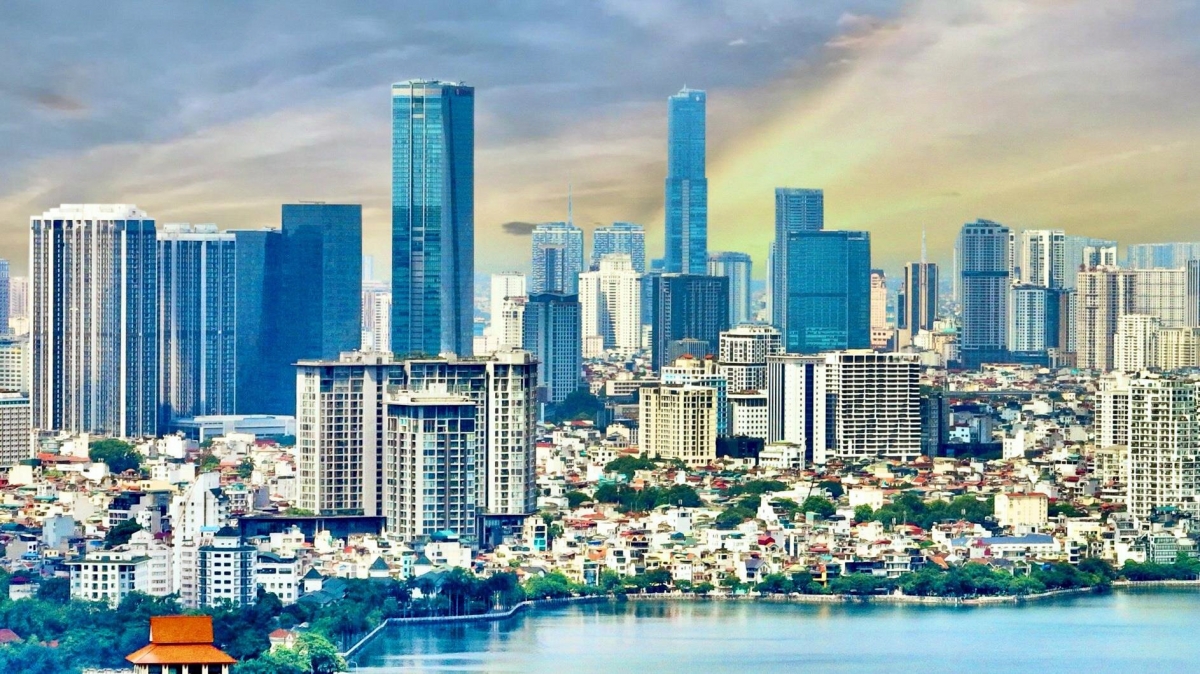
The resolution outlines a long-term vision toward 2035, 2045, and beyond, marking milestones toward the 100th anniversary of Hanoi’s liberation in 1954 and extending to 2065.
By 2035, Hanoi is set to emerge as a green, smart, and modern city, deeply integrated into the global economy, with strong competitiveness, stable socio-political conditions, and a high quality of life. The capital aims to position itself as a safe, friendly, and attractive destination while developing leading regional centres in education, health care, finance, trade, and innovation. It will also serve as a key hub for research and development and play a central role in regional and national growth networks.
By 2045, Hanoi is envisioned as a major innovation hub in the Asia–Pacific region, characterised by advanced urban governance, modern infrastructure, and a highly livable, safe, and civilized society. Looking further ahead to 2065, the capital strives to become a globally connected city with a high level of sustainable development, ranking among the world’s leading capitals in terms of quality of life and happiness.
The resolution sets ambitious economic targets. During the 2026–2030 period, Hanoi aims for average annual GRDP growth exceeding 11%, with total GRDP surpassing US$113 billion and per capita income hitting at least US$12,000 by 2030. Growth is expected to remain above 11% annually through 2035, with GRDP projected at around US$200 billion and per capita income of at least US$18,800.
By 2045, Hanoi’s economy is projected to reach approximately US$640 billion, with per capita income exceeding US$42,000, placing it among the higher-income cities in the region. By 2065, GRDP is set to reach about US$1.92 trillion, with per capita income of at least US$95,000, ranking among the highest globally. The contribution of total factor productivity (TFP) is targeted at 60% of growth, while the digital economy is expected to account for 50%, and cultural industries for over 10%.
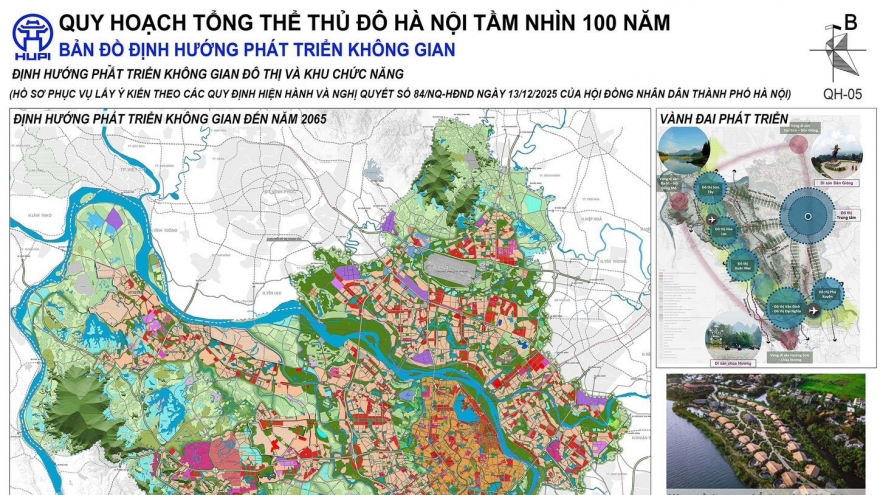
A key focus of the resolution is long-term urban planning. Hanoi will shift from a static planning model to a dynamic and open approach, integrating digital data, smart urban analytics, and simulation tools to ensure transparent and sustainable development. The city will adopt a multi-centre, multi-polar urban model, supported by modern infrastructure and mass public transit systems.
The resolution also highlights infrastructure as the backbone of development, with priority given to expanding transport connectivity within the capital and across regions. Hanoi is to complete around 100 km of urban railway lines by 2030, while gradually mastering construction, management, and operational technologies. High-speed rail links, inland ports, and airport infrastructure will also be developed, including plans to utilise Gia Lam and Hoa Lac airports for dual-use purposes and study the construction of a second international airport in the southern part of the capital region.
In addition, Hanoi will preserve and develop ecological and cultural corridors along major rivers, including the Red River, Duong River, Day River, Nhue River, and To Lich River, as well as the Ba Vi special-use forest, forming the ecological foundation for urban development.
The resolution underscores the importance of regional connectivity, positioning Hanoi as the core of an open and flexible capital region that promotes coordinated development with neighboring provinces. It also calls for institutional breakthroughs to enable more effective governance and address both local and national challenges.
Finally, the document emphasises a new growth model driven by knowledge, science and technology, innovation, digital transformation, cultural resources, and high-quality human capital, aiming to enhance productivity, growth quality, and global competitiveness.
Hanoi eyes two financial centres to attract global investors
VOV.VN - Hanoi is considering the development of two financial centres as part of its long-term strategy to strengthen the capital’s role in national and regional financial services.