Ho Chi Minh City elects key leadership for 2026–2031 term

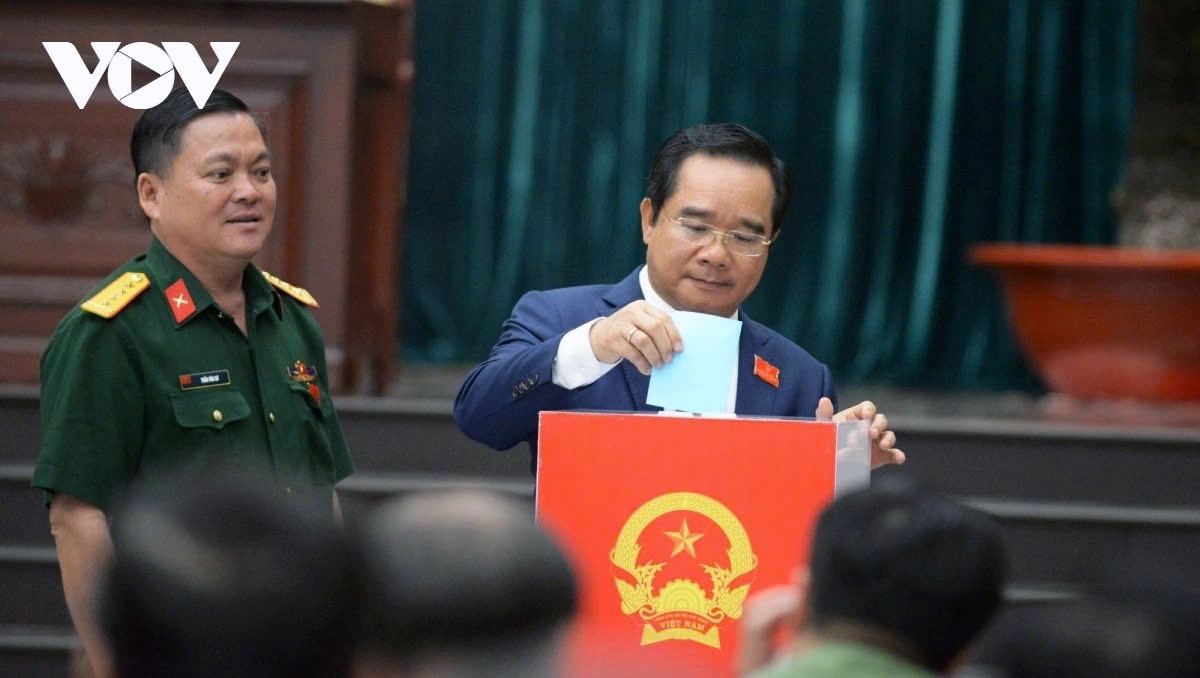
VOV.VN - The Ho Chi Minh City People’s Council for the 2026–2031 tenure convened its first session on March 30, electing key leadership positions for both the People’s Council and the People’s Committee.
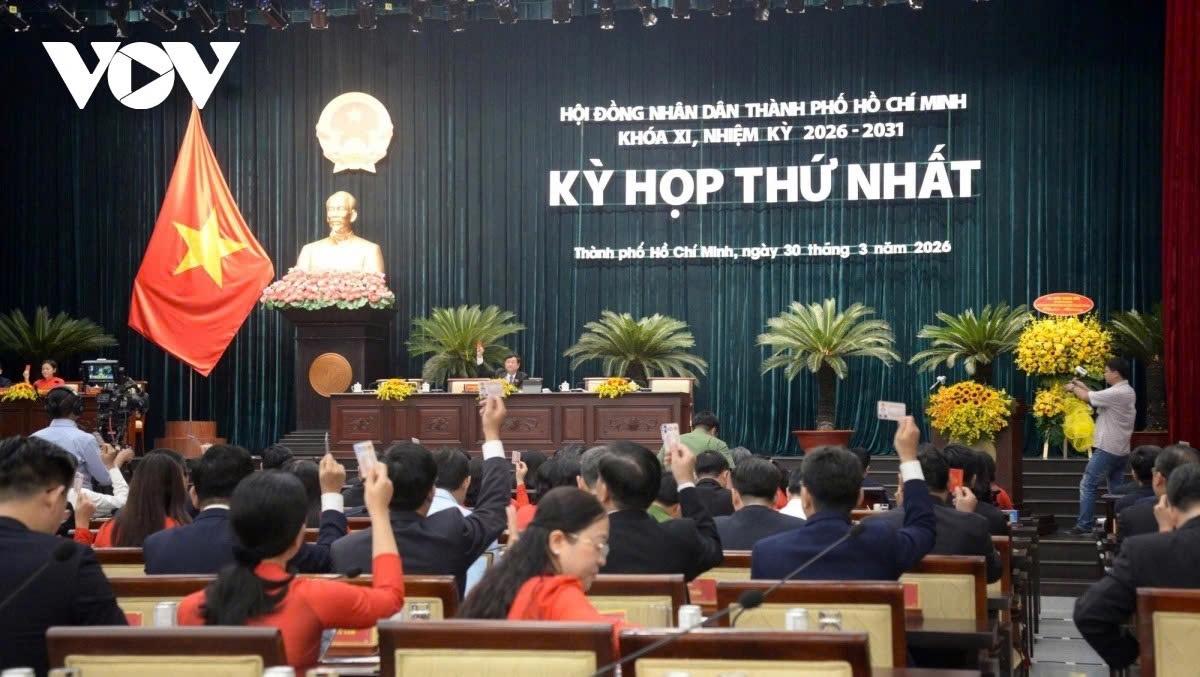
The session took place shortly after elections for the 16th National Assembly and People’s Councils at all levels, with a focus on consolidating the local government apparatus to ensure smooth operations from early April 2026.
During the meeting, the council elected its chairman and vice chairpersons, along with the chairman and vice chairpersons of the municipal People’s Committee and other committee members. The process marks a crucial step in completing the leadership structure for the new term.
Nguyen Van Duoc, a member of the Party Central Committee and Deputy Secretary of the municipal Party Committee, was re-elected as Chairman of the Ho Chi Minh City People’s Committee with 98.37% of vote in favour, reflecting strong confidence from council members.
Meanwhile, Vo Van Minh, also a member of the Party Central Committee and Deputy Secretary of the municipal Party Committee, was elected Chairman of the People’s Council with unanimous support, continuing his role as head of the city’s legislative body.
In addition to these key posts, the council elected vice chairpersons and finalised the structure of its specialised committees, while confirming the eligibility of newly elected delegates.
For the 2026–2031 period, Ho Chi Minh City aims to maintain strong economic growth, accelerate digital transformation and fast-track major infrastructure projects. The consolidation of leadership is expected to lay a solid foundation for achieving these development goals.
Addressing the session, Vice Chairman of the National Assembly Nguyen Duc Hai urged the municipal People’s Council to fully perform its role as a local state authority by making timely and effective decisions and translating central policies, especially special mechanisms under National Assembly resolutions, into practical local regulations.
He emphasised the need to proactively review these mechanisms, contribute to developing a law on special urban governance, and ensure coherence under the two-tier local government model while avoiding overlaps and strengthening accountability. He also called for efforts to accelerate digital transformation in legislative activities.
The city should align its development strategies with regional and global trends, shifting toward innovation-driven growth based on science, technology, and the digital and knowledge economy, with the goal of becoming a regional financial and innovation hub, he said.
Priority should be given to modern, integrated infrastructure, enhanced regional connectivity, and improved policies on urban planning, land management, public finance, and investment attraction, including transit-oriented development and new growth areas.
He also encouraged the development of a free trade zone linked with a future international financial centre, alongside stronger oversight, anti-corruption efforts, and waste prevention.
Finally, he highlighted the importance of advancing social policies in education, health care, culture, and tourism; promoting green growth and environmental protection; and strengthening public engagement to improve governance effectiveness.
FDI into HCM City jumps over 200% in first quarter
Foreign direct investment (FDI) into Ho Chi Minh City is estimated at nearly US$2.9 billion in the first quarter of 2026, a surge of more than 200% from a year earlier, underscoring resilient investor interest despite global uncertainty, city officials said.