Vietnam’s reform drive positions it for regional leadership: Thai scholar

VOV.VN - Vietnam’s push to overhaul governance and pursue a technology-driven development path could position the country as a regional leader in Southeast Asia, according to Thai scholar Kavi Chongkittavorn.
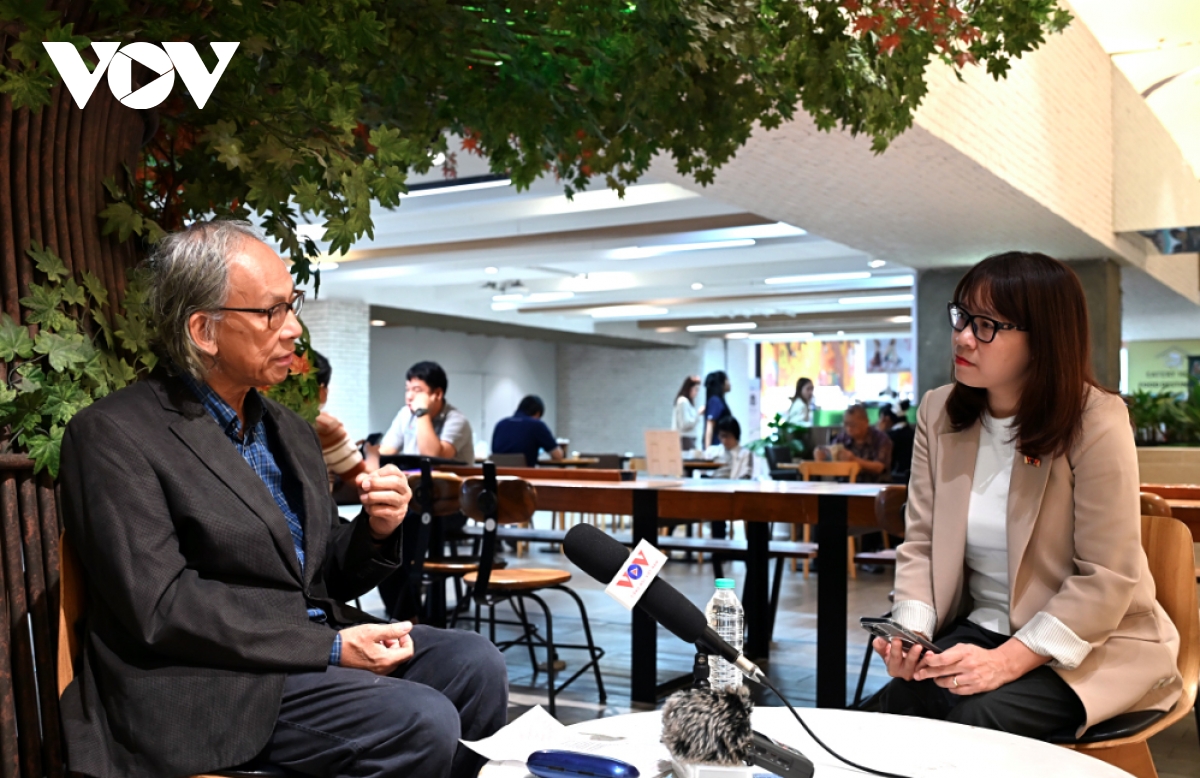
Speaking to Bangkok-based VOV correspondents, Chongkittavorn said modern governance should be seen as a core operating system for Vietnam’s next phase of growth, enabling the country to translate ambitious policy goals into tangible economic and social gains.
Vietnam has set out clear long-term objectives, including becoming an upper-middle-income country within the next five years and a developed economy by 2045. The country is also targeting annual economic growth of at least 10% over the next decade, a level few developing economies in ASEAN have openly pursued.
“Vietnam knows exactly what’s a new era and the so-called new rise, because you need a lot of changes within the domestic domain,” said the scholar, noting that achieving them would require coordinated reforms across the economy, legal system and infrastructure.
After three decades as an ASEAN member, Vietnam has established itself as a stabilising force within the bloc, contributing to regional cohesion and unity. Chongkittavorn said Hanoi now appears determined to move beyond that role and help shape ASEAN as a stronger bridge in international relations.
Vietnam’s fast-growing economy gives it the potential to play a more prominent leadership role in ASEAN, particularly if it succeeds in transitioning to a high-tech, green and innovation-led growth model. Its long-term national development goals also align closely with ASEAN’s Vision 2045, creating what Chongkittavorn described as a driving force.
However, he cautioned that the biggest challenge lies not in vision, but in execution. Vietnam will need to maintain discipline in implementation, continue streamlining its state apparatus, empower the private sector and gradually reduce reliance on state-owned enterprises, while accelerating the shift towards a service-based economy.
Building data centres and strengthening digital infrastructure will also be critical over the next decade, as Vietnam advances digital transformation and modern governance, he said.
Chongkittavorn pointed to Vietnam’s handling of the COVID-19 pandemic as evidence of its growing governance capacity. He added that the country’s extensive network of free trade agreements and comprehensive strategic partnerships with major powers gives it an edge over many ASEAN peers.
If Vietnam delivers on its commitments, its development model could become a reference point for other countries, particularly at a time when global economic conditions remain fragile, Chongkittavorn said.
Demonstrating that strong growth can go hand in hand with an open economy would earn Vietnam significant international recognition, he added, stressing that reforms ultimately need to translate into higher living standards and social stability for ordinary citizens.
That foundation, he said, would support long-term partnerships, including ties between Vietnam and Thailand, while contributing to ASEAN’s unity, stability and central role in the region.
Chinese scholar hails achievements in Vietnam-China relations
VOV.VN - China and Vietnam recorded substantive cooperation across a wide range of fields in 2025, with the outcomes of bilateral cooperation and development widely seen as achievements both sides should continue to promote