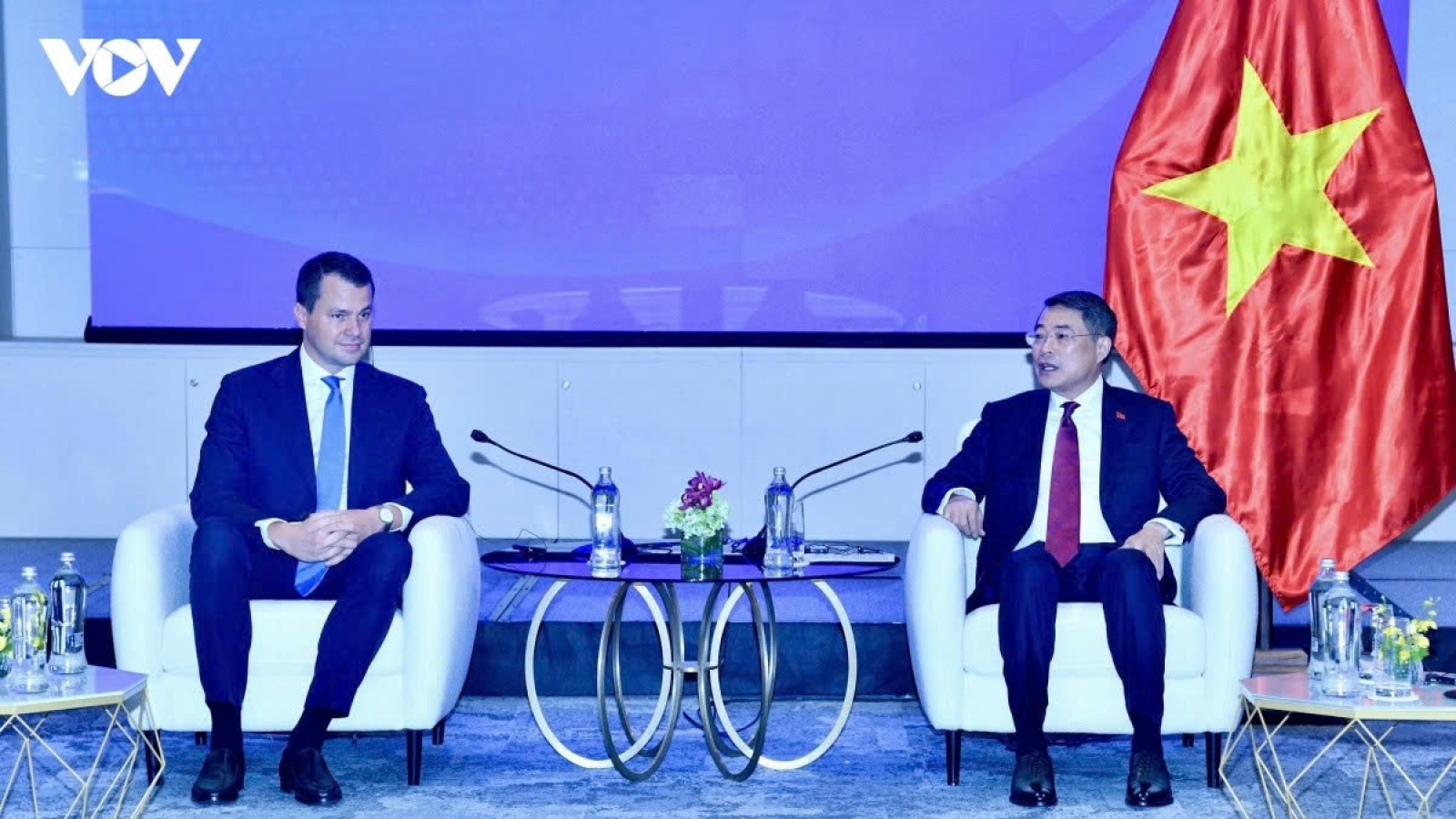
Vietnam sets out vision to become regional growth hub amid global uncertainty

VOV.VN - Vietnam aims to play a greater role in regional growth networks by 2035, positioning itself as a hub for manufacturing, innovation and connectivity as the global economy undergoes profound changes.
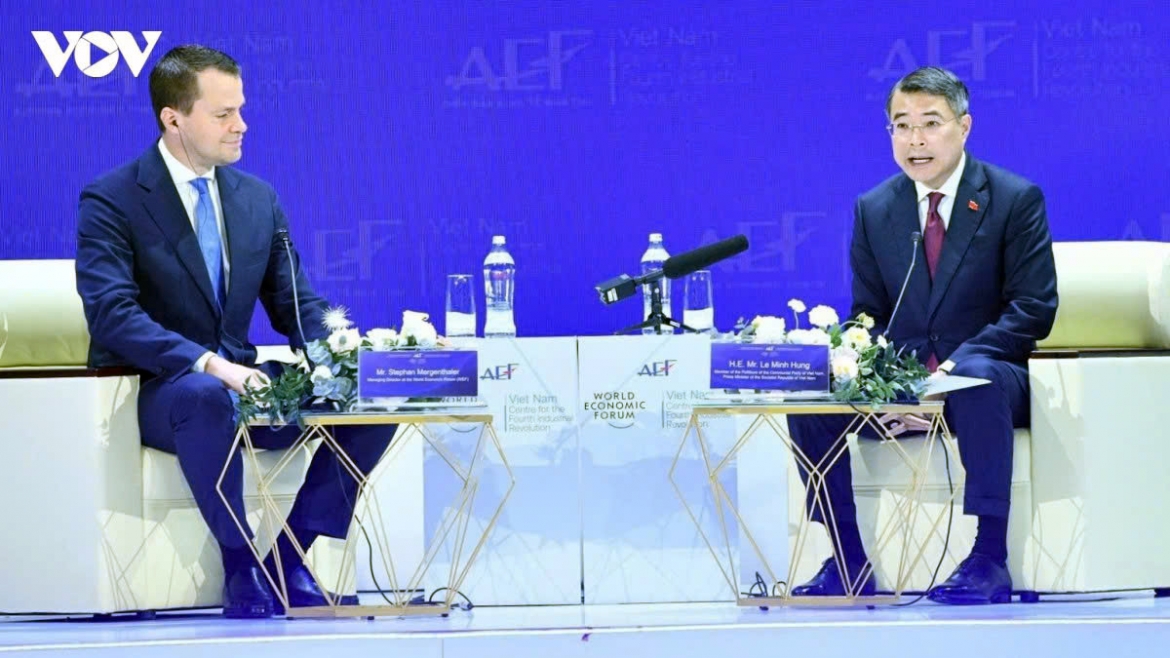
The vision was outlined by Prime Minister Le Minh Hung at a strategic dialogue on Vietnam’s positioning in a changing global landscape, as part of the Autumn Economic Forum 2026 in Ho Chi Minh City. The dialogue was co-chaired by senior leaders of the World Economic Forum (WEF) during the high-level plenary session on October 28.
Opening the discussion, WEF Managing Director Stephan Mergenthaler described Vietnam as an economy undergoing significant transformation, driven by strong development ambitions, deeper international integration and an expanding role in global economic networks.
Against a backdrop of geoeconomic fragmentation, technological competition, shifting supply chains and geopolitical uncertainty globally, Mergenthaler asked how Vietnam views the changing global order and is preparing for its implications.
In response, Prime Minister Hung identified three major challenges facing Vietnam and the international community, namely global institutions and frameworks struggling to keep pace with reality, traditional growth models approaching their limits, and declining strategic trust.
For Vietnam, he said the response involves not only addressing immediate pressures but also strengthening its capacity to withstand external shocks while defining a clearer role in the evolving global economy.
Building resilience amid global uncertainty
According to the Prime Minister, Vietnam is pursuing long-term strategic policies to strengthen its autonomy and resilience, rather than focusing solely on short-term challenges.
Political and social stability, together with a firm macroeconomic foundation, is essential to this effort, he said, adding. Vietnam will continue to manage macroeconomic policies flexibly to maintain stability, safeguard major economic balances and ensure energy and food security amid rapidly changing global conditions.
The approach reflects Vietnam’s emphasis on strengthening its capacity to absorb external shocks alongside maintaining the foundations for long-term development.
The PM also highlighted the importance of diversifying markets, partners and supply chains. Science and technology, innovation and digital transformation would serve as key drivers of productivity, quality and economic competitiveness.
He said Vietnam is also pursuing reforms to improve national governance, build an administration that serves citizens and businesses, reduce compliance costs and enhance the effectiveness of public administration.
Positioning Vietnam as a regional growth hub by 2035
Looking towards 2035, the Prime Minister underscored that Vietnam aims to become a centre for manufacturing, innovation and growth connectivity, as well as a leading growth pole in the region.
The vision places Vietnam’s role in regional economic networks at the centre of its long-term ambitions. Alongside strengthening domestic capabilities, the country intends to pursue an independent and self-reliant foreign policy, diversify its international partnerships and engage more deeply with the world.
He stressed that Vietnam wants to turn international resources into domestic capabilities, particularly for businesses, while proactively proposing new initiatives and cooperation mechanisms to support shared prosperity.
This approach goes beyond attracting investment and seeking market opportunities. Vietnam wants international partners to work with the country to develop ideas, solutions and new growth drivers into concrete projects and products, sharing responsibility and working together to deliver results.
The emphasis on practical cooperation reflects Vietnam’s ambition to connect its international partnerships more closely with domestic development and business capacity.
From international partnerships to concrete outcomes
Prime Minister Le Minh Hung called for closer cooperation with governments and international partners to reinforce peace and stability as well as opening up new drivers of development and aligning long-term strategic visions and interests. He also suggested open, fair and sustainable cooperation frameworks, particularly in economic connectivity, trade, investment and the development of science and technology.
The Prime Minister said countries should work together to shape new frameworks and standards for cooperation that serve the interests of their people and business communities and support development.
Following the dialogue, Ho Chi Minh City announced nine founding members of its International Financial Centre, awarded investment decisions to 12 projects worth more than US$13.5 billion and signed a strategic cooperation agreement with the WEF.
These announcements provided a concrete development alongside the broader discussion of Vietnam’s future positioning and international cooperation.
Vietnam’s stated ambition for 2035 is therefore linked to two priorities - building the resilience needed to navigate global uncertainty and working with international partners to translate shared ambitions into practical outcomes.
Vietnam looks beyond investment attraction to co-create new growth drivers
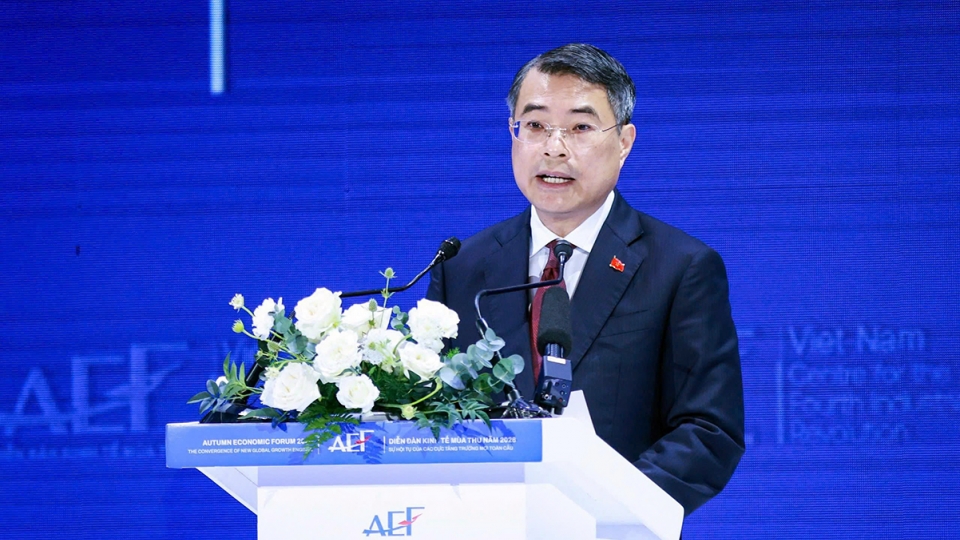
VOV.VN - Vietnam aims to move beyond being an attractive investment destination to becoming a partner in co-creating technology, innovation and new growth drivers, while strengthening economic autonomy and competitiveness, Prime Minister Le Minh Hung said at the Autumn Economic Forum 2026.