Vietnam looks beyond investment attraction to co-create new growth drivers

VOV.VN - Vietnam aims to move beyond being an attractive investment destination to becoming a partner in co-creating technology, innovation and new growth drivers, while strengthening economic autonomy and competitiveness, Prime Minister Le Minh Hung said at the Autumn Economic Forum 2026.
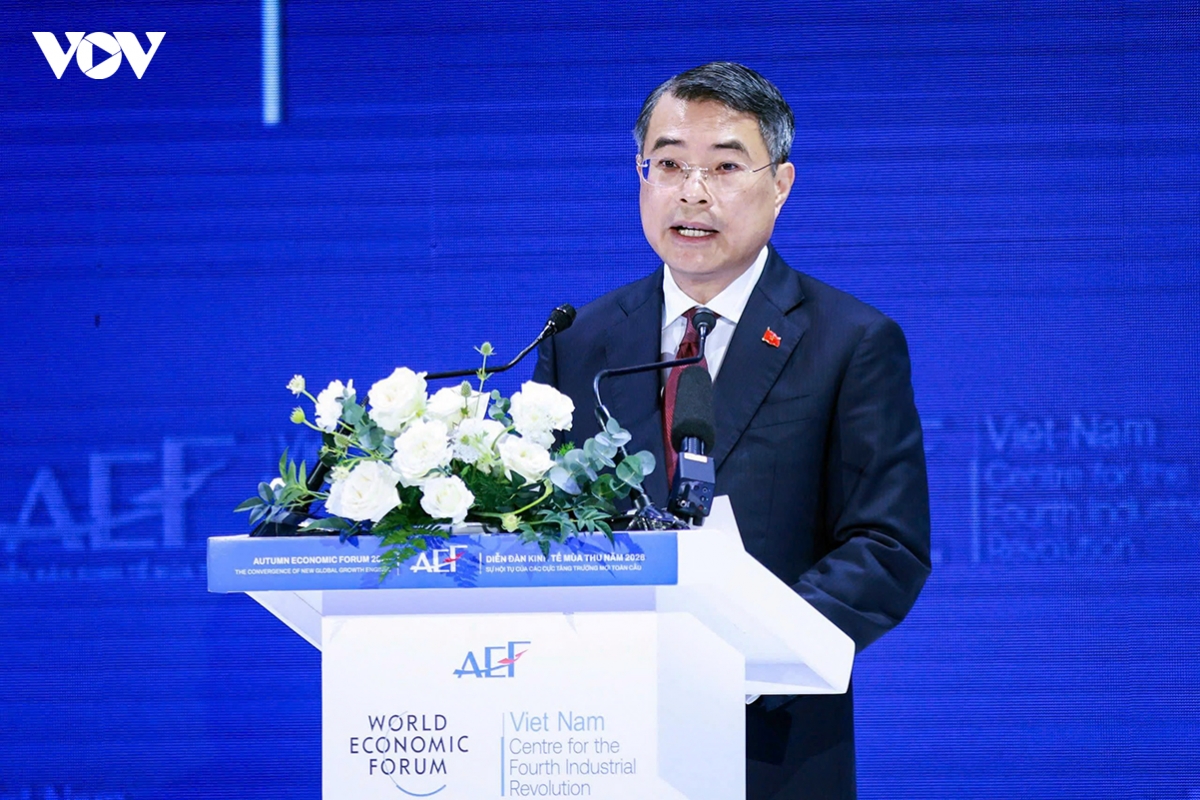
Addressing the forum in Ho Chi Minh City on October 28, the Prime Minister outlined Vietnam’s development priorities for the 2026–2030 period, highlighting international partnerships, technological advancement and institutional reform as key elements in its next phase of growth.
“We not only want to become an attractive destination for investment capital and new technologies, but are determined to become an increasingly trusted partner, an important link in global supply and value chains, a hub connecting innovation, and a place where we work with partners to create new development models and growth drivers,” he affirmed.
The Prime Minister expressed appreciation to the World Economic Forum (WEF) and its partners for supporting Vietnam over the years and helping establish the Autumn Economic Forum as a platform for open and substantive dialogue among governments, businesses and the scientific community.
Held under the theme “Collaboration in a New Era”, the forum provided opportunities to exchange policy perspectives, share experience, showcase technologies and explore new sources of growth amid rapid global changes.
Vietnam targets annual GDP growth of at least 10%
According to the Prime Minister, Vietnam is entering a new phase of development with the ambition of achieving its centenary goals of becoming a developing country with modern industry and upper-middle-income status by 2030, and a high-income developed country by 2045.
He identified 2026–2030 as a pivotal period, with the Government targeting average annual GDP growth of at least 10%, alongside macroeconomic stability, inflation control, balanced economic fundamentals and sustainable development.
To achieve these goals, Vietnam is pursuing a stronger growth model based on science and technology, innovation and digital transformation, while renewing traditional growth drivers and developing new economic sectors.
The Prime Minister highlighted the need to improve productivity and competitiveness, strengthen domestic businesses and enhance the quality of foreign investment.
“High growth must go hand in hand with higher productivity; attracting foreign investment must go hand in hand with strengthening the capabilities of domestic enterprises; and deeper integration must go hand in hand with greater economic resilience and autonomy,” he stressed.
He added that Vietnam’s approach to international integration is evolving alongside broader changes in development thinking, national governance and the way the country connects and cooperates with the world.
Four priorities for international cooperation
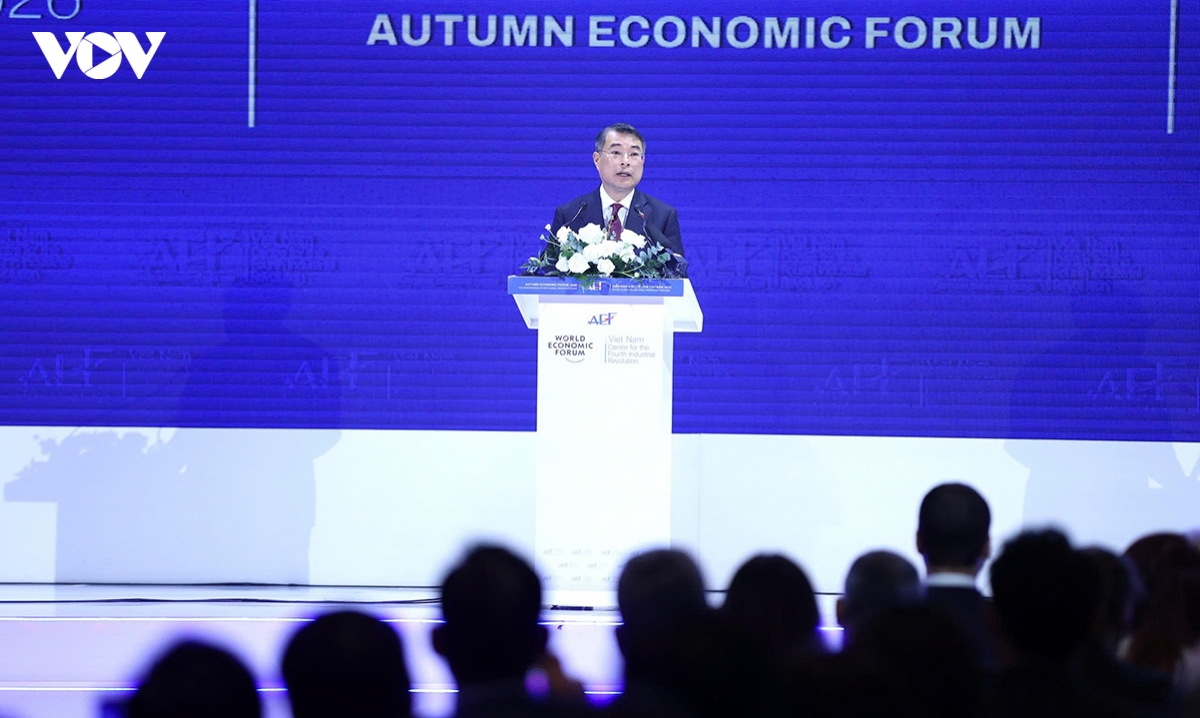
To translate the forum’s theme into practical outcomes, the Vietnamese Prime Minister put forward four areas for cooperation with international partners.
First, Vietnam aims to promote co-creation partnerships between international corporations, local authorities and Vietnamese enterprises. Building on its geographical advantages, resources and workforce, the country wants to develop its role beyond manufacturing into research and development, particularly in strategic technologies such as artificial intelligence, semiconductors and advanced materials.
Second, Vietnam seeks closer cooperation with the WEF and its partners in developing digital and high-tech talent. Such programmes would help Vietnamese businesses and workers strengthen their capacity to absorb, apply and master new technologies.
Third, Vietnam is ready to work with technology corporations on controlled testing mechanisms for strategic technologies. These would facilitate the practical deployment of emerging technologies, including artificial intelligence and new energy, in a manner that is rapid, broad-based and safe.
Fourth, Vietnam aims to mobilise medium- and long-term financing for development. The international financial centre in Ho Chi Minh City and Da Nang is expected to connect global capital more effectively with the country’s needs in infrastructure, energy, green transition and innovation.
The Prime Minister said international cooperation must deliver more than declarations and commitments, translating into substantive mechanisms, feasible projects and measurable results.
Strengthening economic autonomy through deeper integration
Against a backdrop of global uncertainty, intensifying strategic competition and the restructuring of supply chains, the Prime Minister underscored the close relationship between international cooperation and national economic autonomy.
He stated no country could achieve rapid and sustainable development in isolation, and no global challenge could be effectively addressed through unilateral efforts alone. He therefore called for stronger trust, multilateralism and dialogue, with cooperation grounded in international law and respect for the legitimate interests of all countries.
According to the Prime Minister, Vietnam is also pursuing reforms to its legal framework, institutions and national governance, with a view to creating new development space, removing institutional bottlenecks and enabling localities, regions and major growth centres to realise their potential.
Alongside these reforms, the country is advancing strategic initiatives in science and technology, innovation, digital transformation, education and high-quality workforce development. The Government is also promoting the development of the private and state-owned sectors while improving the quality and efficiency of foreign-invested businesses.
The Prime Minister said Vietnam wants international partners not only to invest and produce in the country, but also to work alongside Vietnamese counterparts in research and development, innovation and the creation of globally competitive value chains.
Turning the forum into a platform for practical action
Prime Minister Le Minh Hung called for the forum’s four pillars — the role of megacities, breakthrough technologies and innovation ecosystems, cooperation models for a new era, and the role of the private sector — to be connected through a unified action programme with clear priorities and tangible outcomes.
Under this approach, the Government will create enabling institutions and a favourable development environment; localities will take the initiative in implementation; domestic and foreign businesses will lead investment and innovation; the scientific community will contribute knowledge and solutions; and international partners will share experience and mobilise resources.
The Government also pledges to provide clear channels for businesses to raise proposals, set out concrete implementation roadmaps for promising projects, and designate the agencies and officials responsible for addressing legitimate business concerns in a timely manner.
Vietnam is ready to work together for shared development, pool efforts to achieve common progress, innovate to create value together, and take action towards a future of peace, stability, prosperity and sustainability, the Prime Minister said.
He expressed the Government’s expectation that, with continued support from the WEF and its partners, the Autumn Economic Forum would become a platform for building practical cooperation initiatives and programmes with concrete, long-term results.
The Autumn Economic Forum 2026 is taking place in Ho Chi Minh City from October 26 to 29 under the theme “Collaboration in a New Era”, bringing together around 1,500 domestic and international delegates. Co-branded with the World Economic Forum (WEF) for the first time, the event provides a platform for policymakers, businesses and experts to discuss emerging growth drivers, breakthrough technologies, innovation ecosystems, financial connectivity, digital transformation and sustainable development. Its agenda also explores new models of international cooperation, the role of major urban centres in global growth, and ways to strengthen private-sector participation in the economy.
A high-level plenary session examines the convergence of new global growth engines, while a dialogue with the Vietnamese Prime Minister and WEF representatives focuses on positioning Vietnam in the global future.
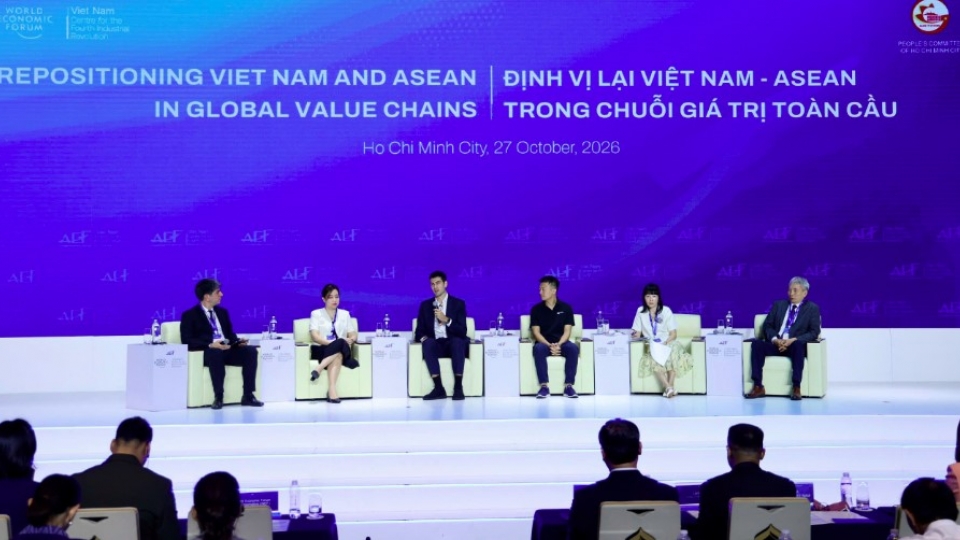
Autumn Economic Forum 2026 explores new drivers of growth through 16 sessions
VOV.VN - The second day of the Autumn Economic Forum 2026 in Ho Chi Minh City on October 27 features 16 thematic sessions focusing on new growth drivers, shifts in global value chains and the role of technology in enhancing competitiveness.