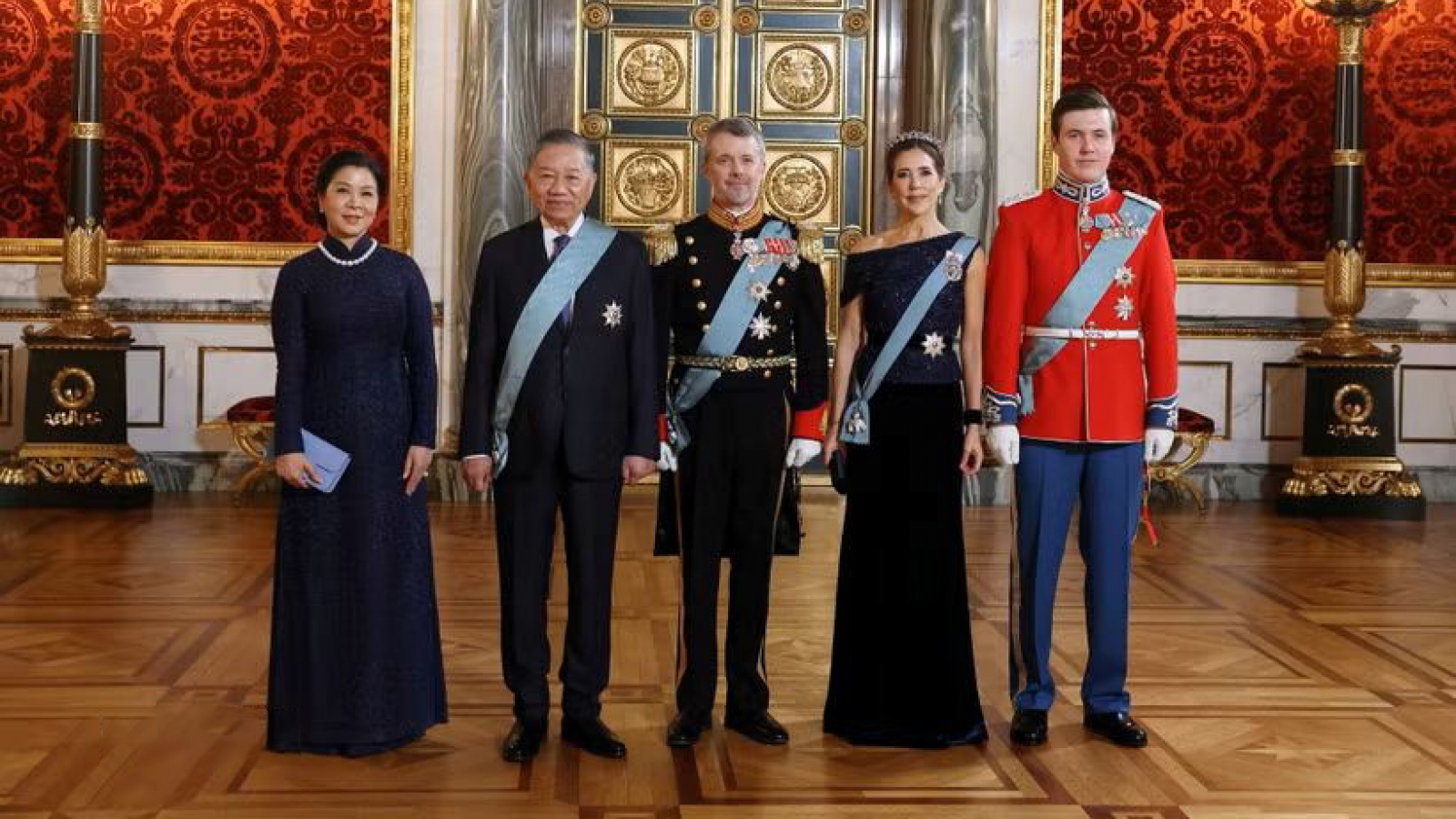
Vietnam, Denmark target deeper cooperation in green energy, high technology

VOV.VN - Vietnam and Denmark are looking to deepen practical cooperation in green energy, trade, investment and advanced technology, with both sides aiming to turn shared priorities into concrete projects and stronger economic links.
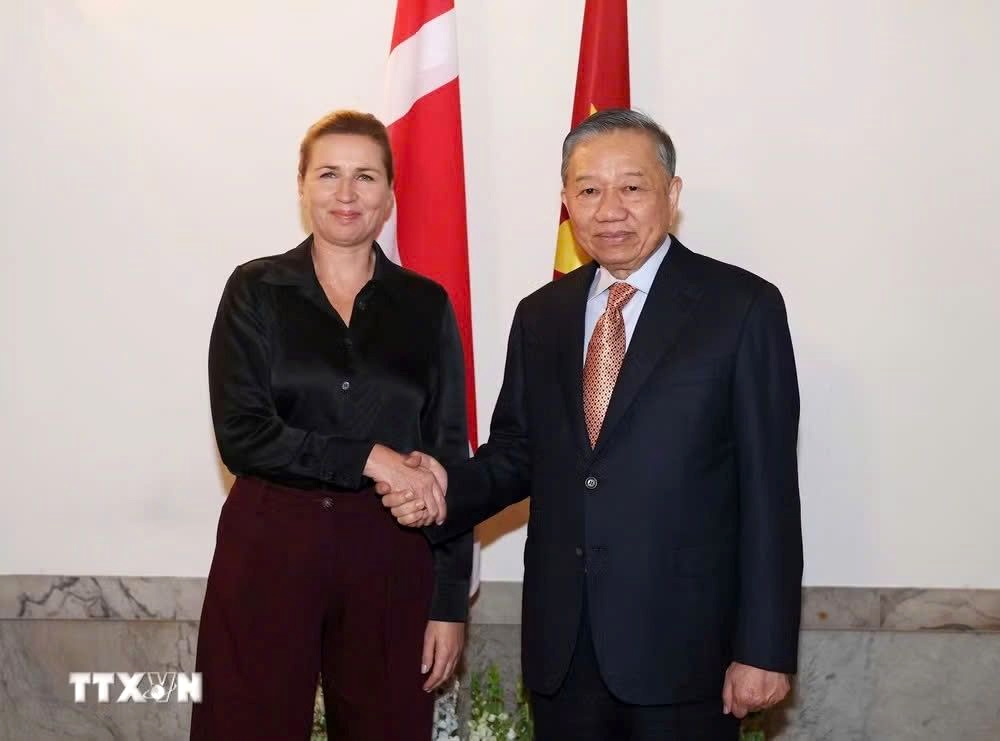
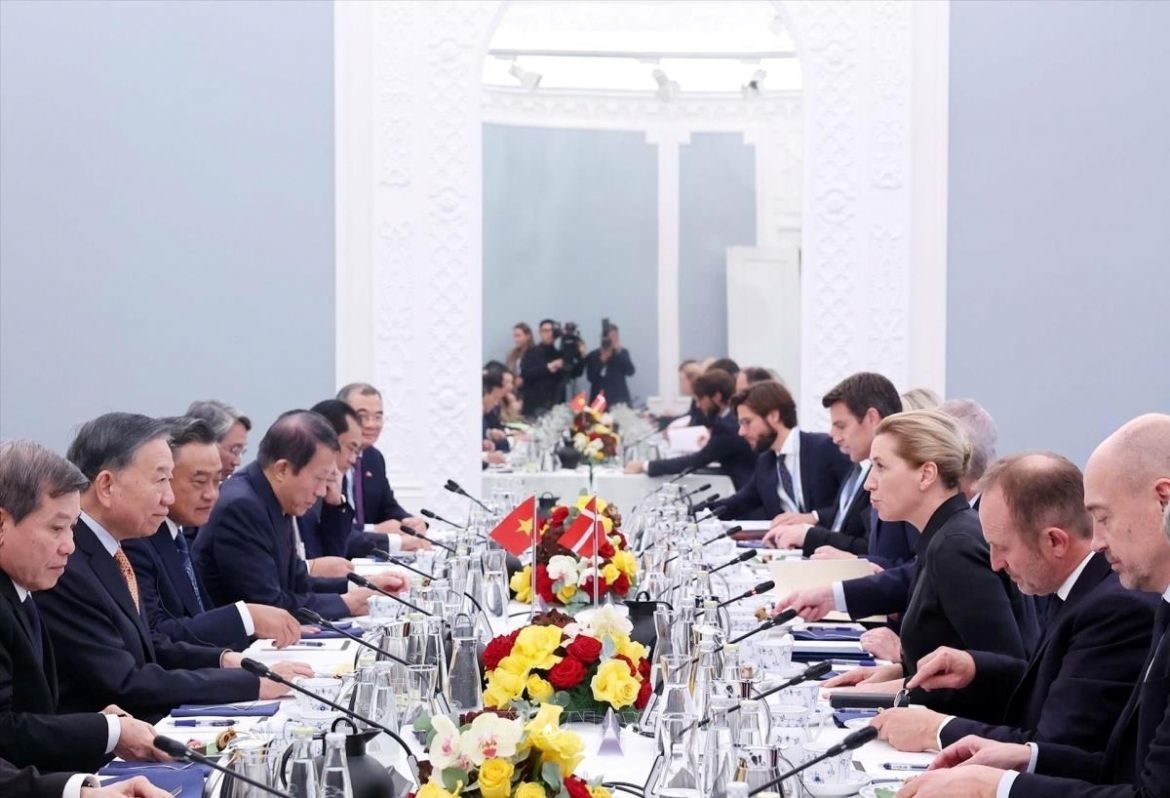
These areas featured prominently during talks in Copenhagen on 20 October between General Secretary of the Communist Party of Vietnam Central Committee and State President To Lam and Danish Prime Minister Mette Frederiksen.
The discussions centred on deepening existing cooperation and leveraging each country’s strengths to advance its national development goals. As Vietnam and Denmark mark 55 years of diplomatic relations, both leaders highlighted the expanding scope of bilateral ties, which have evolved from traditional development cooperation to encompass trade, investment, green transition and innovation.
Vietnamese leader To Lam congratulated Denmark on its development achievements, including its strengths in economic competitiveness, quality of life, green transition, renewable energy, science and technology, and innovation.
Prime Minister Frederiksen, in turn, praised Vietnam’s achievements in socio-economic development and international integration, describing it as one of Denmark’s important partners in Southeast Asia.
Green energy and sustainable infrastructure
Green transition is a key area of cooperation, building on the Green Strategic Partnership established in 2023. Both leaders agreed to make energy transition, climate action and sustainable development long-term strategic priorities, with Denmark ready to share its experience and technology to support Vietnam’s renewable energy development and improve energy efficiency.
Party General Secretary and State President To Lam called for greater Danish support in refining policy frameworks, mobilising green finance and advancing large-scale renewable energy projects, particularly offshore wind power. He also highlighted the importance of effective implementation of the Just Energy Transition Partnership (JETP), alongside Vietnam’s commitment to achieving net-zero emissions by 2050.
The discussions also covered strategic infrastructure, seaports, logistics, green shipping and supply-chain connectivity. Leader To Lam welcomed Danish businesses’ participation in developing Vietnam’s port system, logistics centres, transport infrastructure and green transport corridors.
These areas form part of a wider agenda that includes the circular economy, smart urban development and climate adaptation. By strengthening cooperation across energy, infrastructure and environmental protection, the two countries aim to support sustainable development while creating opportunities for closer business engagement.
Trade, investment and technological innovation
Economic cooperation, trade and investment were identified as a key pillar of bilateral ties. The leaders agreed to implement the EU-Vietnam Free Trade Agreement (EVFTA) effectively, improve market access, facilitate business engagement in global value chains and supply chains, and work towards increasing bilateral trade.
Prime Minister Frederiksen welcomed Vietnam’s investment and business environment and its development prospects, affirming Denmark’s interest in expanding economic and commercial ties. She encouraged Danish companies to increase their presence and make long-term investments in Vietnam, particularly in high-tech, environmentally friendly and high-value-added projects.
Meanwhile, Party General Secretary and State President To Lam recognised the positive contributions of major Danish companies operating in Vietnam, including LEGO, Maersk, Pandora, Carlsberg and Vestas. He underscored the need for stronger policy dialogue and investment promotion to translate cooperation commitments into specific projects.
Science and technology, innovation and digital transformation are also expected to become new drivers of bilateral cooperation. The two leaders agreed to expand research, technology application and transfer in artificial intelligence, quantum technology, biotechnology, biomedicine, digital technologies and emerging industries.
They also highlighted the importance of stronger links between universities, research institutes, innovation centres and businesses, alongside efforts to develop a highly skilled workforce. Cooperation will extend to healthcare and education, with both sides seeking to broaden opportunities for research, training and knowledge exchange.
Stronger institutional links and international cooperation
The two leaders also agreed to strengthen political trust through exchanges of high-level delegations and contacts at different levels, using Party and State channels as well as people-to-people engagement. They will seek to improve bilateral cooperation mechanisms and encourage closer links among ministries, local authorities, businesses and their peoples.
Cultural exchanges, education, tourism and local-level cooperation will complement the broader economic agenda. Prime Minister Frederiksen praised the more than 18,000 Vietnamese people living in Denmark for integrating well into Danish society, contributing positively to local socio-economic development and helping strengthen friendship between the two countries.
On regional and international issues, the leaders agreed to increase coordination and support for each other at the United Nations and other multilateral forums, while upholding multilateralism and respect for international law. They also backed more substantive and effective ASEAN-EU relations, with Vietnam ready to serve as a bridge for stronger cooperation between Denmark and ASEAN.
Building on these discussions, Party General Secretary and State President To Lam and Prime Minister Mette Frederiksen agreed to adopt a joint statement elevating Vietnam-Denmark relations to a Comprehensive Strategic Partnership. The new framework is intended to provide fresh political impetus for deeper and more effective cooperation, serving the long-term interests of both peoples and contributing to peace, stability and sustainable development in their respective regions and beyond.
Denmark thus became the second EU member state, after France, to establish a Comprehensive Strategic Partnership with Vietnam.
Both leaders emphasised the need to translate commitments into tangible results, agreeing to work closely with relevant ministries and agencies to implement the agreed directions and arrangements.
During the talks, Party General Secretary and State President To Lam invited Prime Minister Mette Frederiksen to visit Vietnam at an early date, and the Danish Prime Minister accepted the invitation.
Following the talks, the two leaders witnessed the exchange of cooperation documents between ministries, agencies and businesses from the two countries.
Vietnam and Denmark elevate ties to Comprehensive Strategic Partnership
VOV.VN - Vietnam and Denmark have elevated their relations to a Comprehensive Strategic Partnership, making Denmark the second EU member state, after France, to establish this level of partnership with Vietnam.