Security cooperation – a key pillar in Vietnam – India cooperation

VOV.VN - Vietnam and India are moving to elevate security cooperation into a central pillar of their Comprehensive Strategic Partnership, as both sides respond to an increasingly complex regional and global security environment.
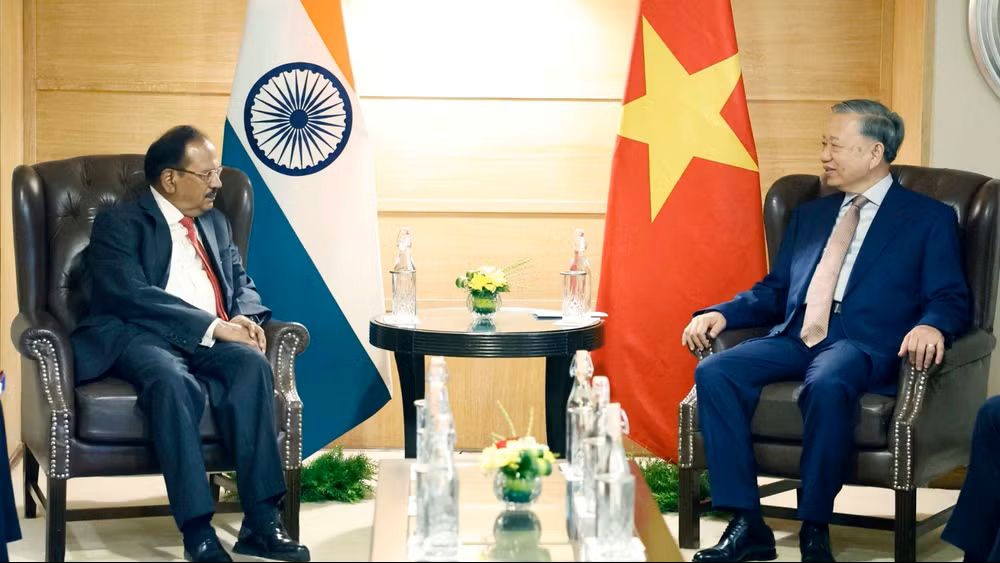
The direction was underscored during a meeting in New Delhi on May 5 between Vietnam’s Party General Secretary and State President To Lam and India’s National Security Advisor Ajit Doval, held as part of the Vietnamese leader’s ongoing state visit to India.
Both sides agreed that security cooperation must play a core and driving role in bilateral ties, not only to address traditional challenges but also to effectively respond to emerging non-traditional threats.
Doval welcomed the Vietnamese leader’s visit as a significant milestone, noting that in a world increasingly shaped by instability and uncertainty, stronger security ties are essential to building strategic trust and ensuring sustainable development.
For his part, Party General Secretary and President To Lam stressed that Vietnam–India relations are built on a high level of political trust and converging long-term strategic interests. Against the backdrop of intensifying geopolitical and technological competition, enhancing security cooperation is both an objective necessity and an urgent priority to safeguard sovereignty, maintain social stability, and sustain economic growth.
Both sides agreed to expand cooperation in a more substantive and comprehensive manner, focusing on strategic information sharing, closer coordination between security and law enforcement agencies, and improved capacity to tackle emerging threats such as cybercrime, high-tech crime, and transnational fraud.
They also highlighted the growing nexus between security and development, particularly in the context of digital transformation. Cooperation in strategic technologies, including innovation, digital infrastructure, and high-quality human resource development, was identified as key to strengthening long-term national security resilience.
In addition, Vietnam and India pledged to step up coordination in combating terrorism and transnational crime – the areas seen as directly contributing to maintaining public order and stability in each country while supporting broader regional peace.
On regional and international issues, both sides reaffirmed their consistent positions on maintaining peace, stability, security, safety, and freedom of navigation and overflight, as well as resolving disputes through peaceful means in accordance with international law, particularly the 1982 United Nations Convention on the Law of the Sea (UNCLOS 1982).
They also agreed to strengthen strategic consultations and coordination at multilateral forums.
Both sides expressed confidence that, with strong political will and a solid foundation of trust, security cooperation would continue to deepen and serve as a leading pillar driving broader Vietnam–India relations toward a more substantive, effective, and sustainable phase.
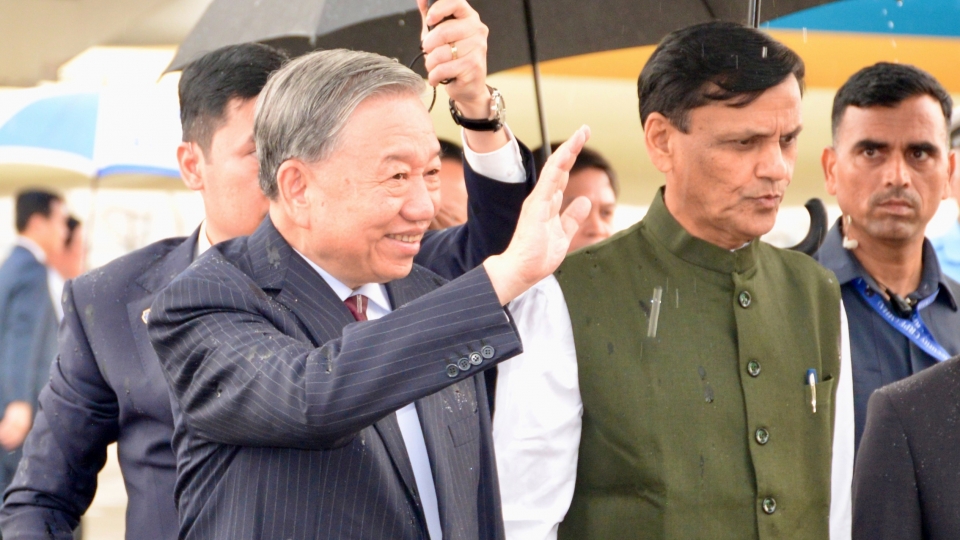
Vietnam’s top leader To Lam arrives in New Delhi for state visit to India
VOV.VN - General Secretary of the Communist Party of Vietnam and President To Lam arrived in New Delhi on May 5, beginning a state visit to India at the invitation of Prime Minister Narendra Modi.