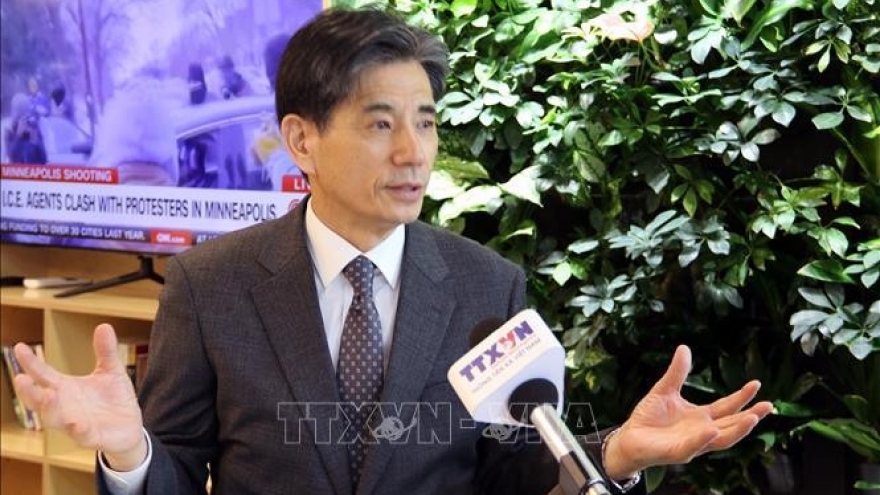
Chinese scholar highlights significance of Vietnam’s 14th Party Congress

The 14th National Congress of the Communist Party of Vietnam (CPV) holds practical significance that transcends the times, according to Prof. Dr. Cheng Hanping, Executive Director of the Institute for Regional and National Studies and Director of the Vietnam Studies Centre at Zhejiang University of Technology.
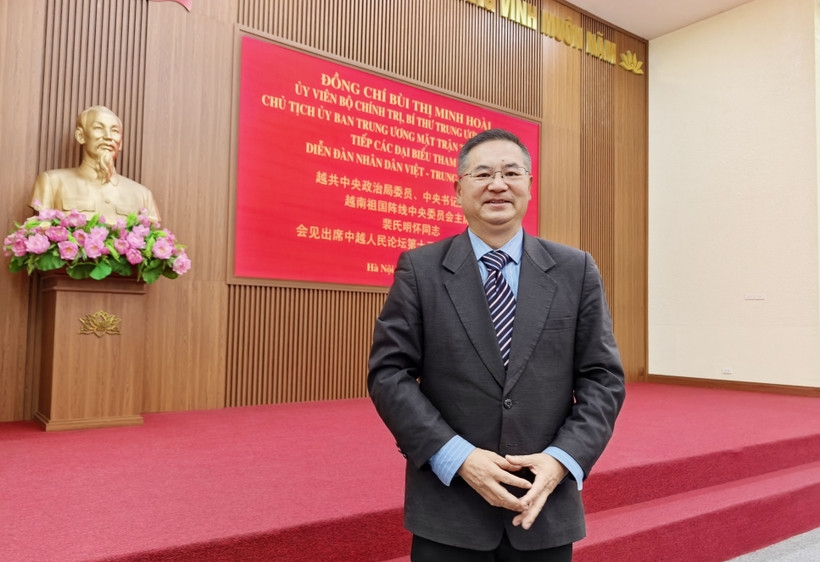
Speaking to the Vietnam News Agency (VNA)'s correspondents in China ahead of the 14th National Party Congress, Cheng noted that the global landscape has entered a new phase, with a new international order gradually taking shape. In this context, he noted, the CPV needs to clearly define its role at regional and global levels to shape an appropriate development strategy for the next five-year period.
The Chinese scholar said that as Vietnam moves from a “new era” in its national history into a “new era” of the times, the Party Central Committee, under the leadership of General Secretary To Lam, must outline a clear development roadmap to realise the two centenary goals and steadily advance national modernisation.
Highlighting the uniqueness of the current juncture, Cheng stressed that the opportunities, responsibilities and missions facing Vietnam are unprecedented, further underscoring the far-reaching practical significance of the 14th National Party Congress.
The scholar praised Vietnam for placing environmental protection alongside socio-economic development as a key priority, noting that he personally observed the Vietnamese Government’s strong focus on environmental governance while attending the 13th Vietnam – China People’s Forum in Vietnam.
According to Cheng, prioritising environmental protection not only addresses pressing requirements of the times but also reflects a long-term strategic vision. He cautioned that development pursued at the expense of the environment is costly and can result in even greater long-term consequences, welcoming the CPV’s timely recognition of these challenges and its proactive response.
The scholar added that Vietnam’s balanced approach to economic growth and environmental protection demonstrates the CPV’s strong commitment to serving the people. Measures such as restricting or moving toward banning motorbikes in major cities, while potentially difficult in the short term, are likely to deliver improved living standards over the long run.
On external relations, Cheng commended Vietnam’s decision to make national defence and security a regular and ongoing task, signalling continued investment in strengthening defence capabilities.
To achieve its goals, he suggested that Vietnam should continue to view economic development as the central driver, mobilise broader resources and expand its network of partners and friends, while ensuring strict law enforcement and stepping up public awareness campaigns to build social consensus around the Party and State's major policies.
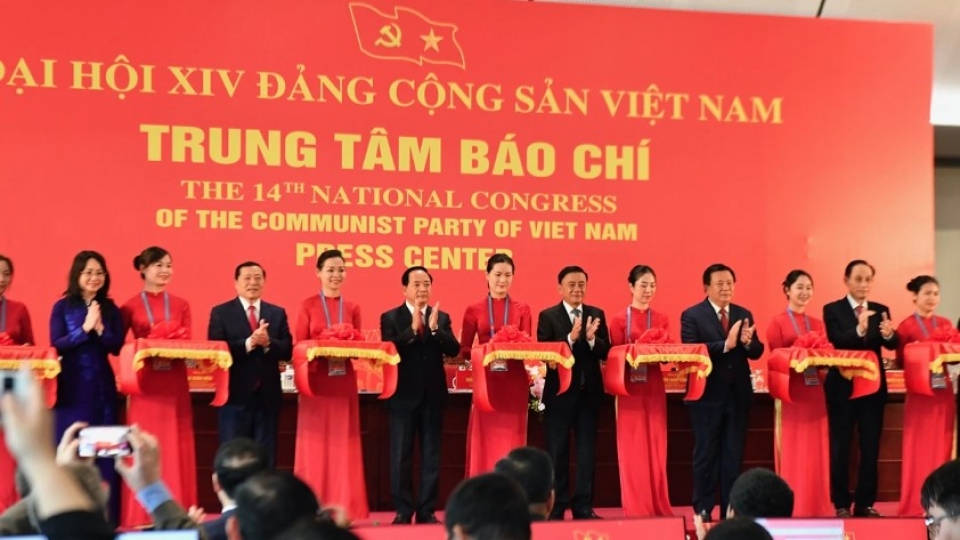
Press Center opens ahead of Vietnam’s 14th Party Congress
VOV.VN - The Press Center for the 14th National Party Congress was officially opened on January 14 at the National Convention Center in Hanoi, followed by an international press briefing ahead of the Congress.