50 years of Vietnam-Germany relations: From history to strategic trust

VOV.VN - In modern global diplomacy, few bilateral relationships carry as many emotional layers and such enduring connections as ties between Vietnam and Germany.
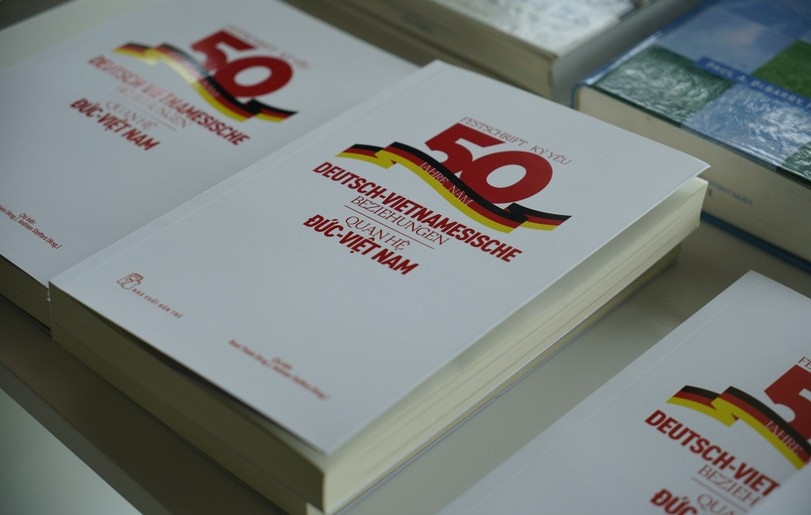
The milestone marking 50 years of diplomatic relations between Vietnam and Germany (1975–2025) offers a timely opportunity to look back on a distinctive journey of cooperation that has transcended geographical distance, cultural differences and political systems. The commemorative volume “50 Years of German–Vietnamese Relations: Partners in the Past, Present and Future” serves as a comprehensive and timely reflection, not only to mark the anniversary, but also to help shape a strategic path forward.
The book is co-edited by Professor Dr. René Thiele, President of the Vietnamese-German University and former Acting President of the Frankfurt University of Applied Sciences, with responsibility for academic affairs, research and international cooperation, and Professor Dr. Andreas Stoffers, a specialist in Southeast Asia and the Vietnamese economy at the FOM University of Applied Sciences.
Both editors adopt a direct approach: German-Vietnam relations are rooted in the shared experience of two nations that endured division and later achieved reunification. As Helga Margarete Barth, Germany’s Ambassador to Vietnam, writes in the book: “The relationship between our two countries shows that differences are not barriers, but sources of momentum. Germany and Vietnam share a valuable common trait, the determination to rise from the ruins to build prosperity.”
From a political economy perspective, Professor Dr. Andreas Stoffers describes Vietnam today as Germany’s “strategic anchor” in Southeast Asia. He argues that the shift from an aid-based relationship to one of equal partnership represents the most significant turning point in bilateral ties.
Sharing this view, Marko Walde, Chief Representative of the German Chamber of Commerce and Industry in Vietnam (AHK), says German companies are not drawn to Vietnam for low-cost labour. Instead, they seek partners for joint innovation, positioning Vietnam as an indispensable link in the global green value chain.
The authors also underline the importance of the 2011 Hanoi Declaration, which formally elevated bilateral ties to a Strategic Partnership. The declaration signalled a high level of political trust and laid the groundwork for broad-based, multi-sector cooperation over the following decade.
The book views the entry into force of the EU-Vietnam Free Trade Agreement (EVFTA) as the most powerful economic lever in the 50-year history of relations. For Germany, the agreement facilitates access to the Vietnamese market, seen as a gateway to ASEAN, through clear commitments on investment protection and transparency. This is particularly significant as Germany actively seeks to diversify its global supply chains.
According to the volume, EVFTA is the “gateway,” but Germany’s core technologies and management expertise are the true “key.” The presence of research and development centres operated by companies such as Bosch and Siemens in Vietnam demonstrates confidence in Vietnamese talent, reflecting a decisive shift from labour-based cooperation toward cooperation in innovation and Industry 4.0.
If economic agreements form the skeleton of the relationship and education its muscle, then the Vietnamese community of more than 200,000 people in Germany is its lifeblood and soul. Both editors describe this community as the most valuable “social capital” underpinning bilateral ties.
Examining changes in German public perceptions of Vietnam, Ludwig Graf Westarp, Vice Chairman of the Vietnam-Germany Association and a lecturer at the TU Dortmund University, observes that Vietnam has moved from being associated primarily with war to being seen as a dynamic economic partner and an influential ASEAN member. He notes that the Vietnamese community in Germany has achieved a quiet yet thorough integration, preserving its cultural identity while enriching Germany’s multicultural society through diligence and perseverance.
The book devotes particular attention to what it terms the “golden generation”: young Vietnamese born in Germany. They combine German analytical thinking with a strong sense of Vietnamese identity. The authors argue that this generation represents “dual natives,” capable of managing cross-border projects without barriers of language or mindset.
For Professor Dr. René Thiele, education remains the most sustainable foundation of all. He highlights the Vietnamese-German University as a flagship project of bilateral relations and a living symbol of trust and long-term commitment between the two governments in shaping future-oriented education. As he writes, “Knowledge and academic exchange form the most enduring bridge for narrowing geographical and cultural distances, transforming cooperation potential into tangible outcomes for both nations.”
Support from organisations such as the World University Service Germany (WUS) and individuals including Dr. Kambiz Ghawami is also acknowledged as quietly laying the foundations of this shared intellectual architecture. Dr. Ghawami praises the dynamism and determination of the Vietnamese people in adapting to a new development era driven by science and technology.
In closing, Professors René Thiele and Andreas Stoffers, together with their collaborators, outline a roadmap centred on “Green Cooperation.” Germany needs Vietnam’s dynamism to meet its global climate commitments, while Vietnam requires Germany’s green technologies to boost its energy transition.
The vision for the next 50 years is summed up in the phrase “strategic trust.” As the editors conclude “We mark 50 years not to close an old chapter, but to energize a new journey. The strong presence of the Vietnamese community in this book affirms a simple truth: when trust is built on understanding between people, it becomes a force capable of withstanding any change of circumstance. The future of Vietnam-Germany relations will continue to rest on solid foundations, where institutional cooperation, technological innovation and human connections converge, promising a prosperous and sustainable partnership for decades to come.”
Half a century of Vietnam–Germany relations: shaping a strategic vision ahead
Marking the 50th anniversary (1975–2025) of diplomatic relations between Vietnam and Germany, the book “Innovation and Cooperation: The Future of Germany–Vietnam Relations” has been launched as a policy-oriented study offering strategic insights for bilateral ties in the new phase.
Vietnam and Germany eye new strategic cooperation space
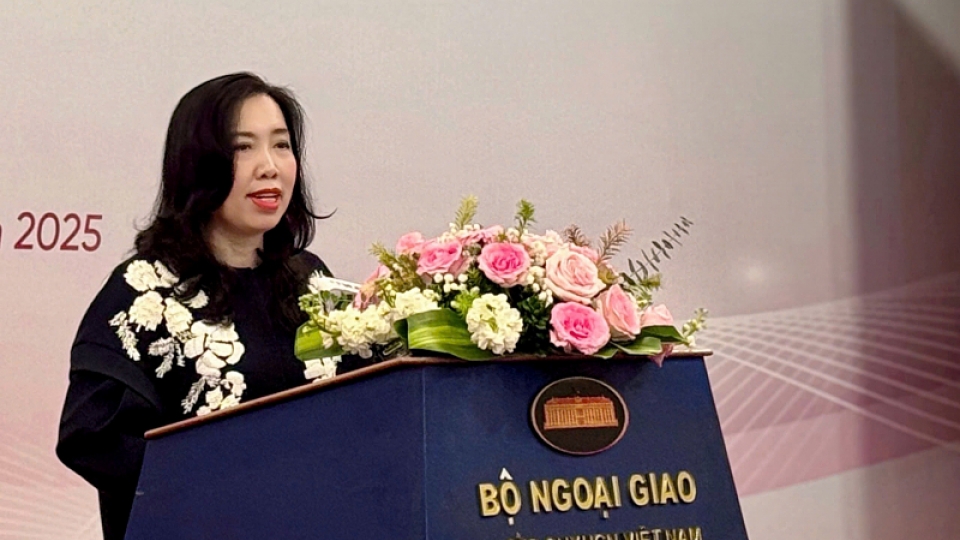
VOV.VN - Vietnam and Germany marked 50 years of diplomatic relations at a seminar in Hanoi on December 17, reviewing a half-century of cooperation and outlining new directions for their strategic partnership in the years ahead.