Vietnamese economy at crossroads as 2026 opens new growth cycle

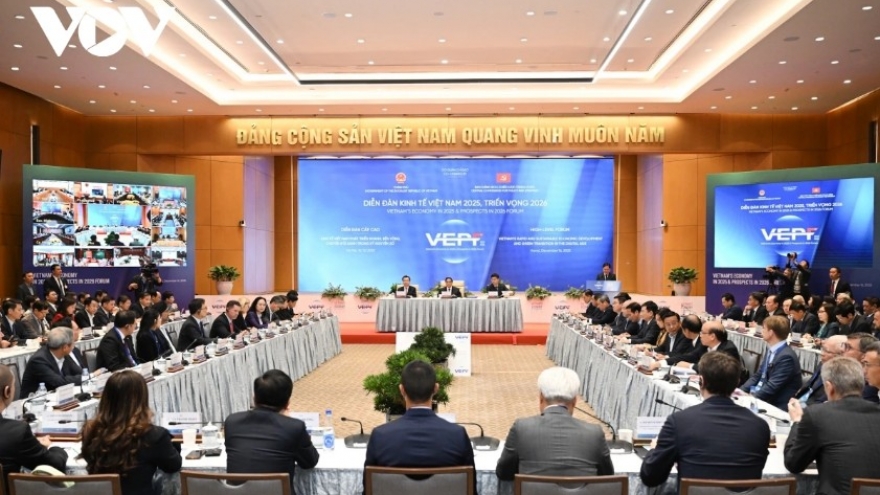
VOV.VN - As Vietnam enters 2026, a pivotal year marking the start of a new growth cycle, the economy is poised for acceleration on the back of a stabilised foundation built during 2021–2025, while also facing growing challenges that will require decisive policy action and a focus on improving growth quality.
Maintaining recovery momentum amid global volatility

Vietnam closed 2025 with several notable milestones, marking the final year of its 2021–2025 socio-economic development plan. Despite heightened global uncertainty driven by prolonged geopolitical tensions, trade fragmentation and rising financial risks, the country maintained a steady recovery, preserved key macroeconomic balances and laid an important foundation for the next phase of development.
According to the Ministry of Finance, as of Dec. 15, 2025, 22 of 26 key socio-economic indicators for the 2021–2025 period met or exceeded targets. All social welfare indicators surpassed planned levels, reflecting the Government’s sustained efforts to ensure social progress and equity. In both 2024 and 2025, Vietnam met or exceeded all indicators assigned by the National Assembly.
Gross domestic product (GDP) growth in 2025 is estimated at above 8%, lifting average growth for the five-year period to 6.3%. Excluding 2021 when the economy was severely affected by the COVID-19 pandemic, growth during 2022–2025 averaged 7.2%, exceeding official targets and underscoring the economy’s resilience.
GDP per capita in 2025 is estimated at around US$5,000, up 1.4 times from 2020, officially placing Vietnam in the group of upper-middle-income countries. Inflation remained well contained below 4% throughout the period, with 2025 estimated at about 3.5%, supporting policy flexibility and market confidence.
State budget revenues reached approximately VND2.47 quadrillion (US$100 billion) by mid-December 2025, exceeding projections by more than 25% and reflecting a shift toward more sustainable revenue sources driven mainly by production and business activities. Over the five-year period, the government implemented tax and fee relief measures worth about VND1.1 quadrillion to support businesses and households.
Public spending was restructured to curb recurrent expenditures while increasing development investment and social spending. Investment outlays accounted for 32–33% of total budget spending, while fiscal deficits and public debt remained within safe thresholds.
Financial markets improve, infrastructure drives momentum
V

ietnam’s financial markets remained stable, with the stock market upgraded to secondary emerging market status in 2025, a move expected to attract more medium- and long-term capital inflows.
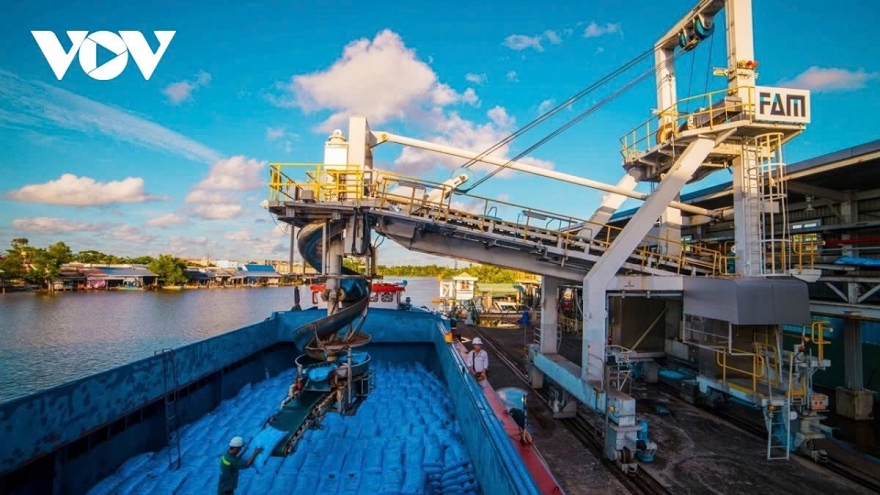
Foreign trade continued to expand, with total import-export turnover reaching a record US$920 billion, placing Vietnam among the world’s 25 largest trading economies. The trade balance posted a surplus of more than US$20 billion for the third consecutive year. Total social investment in 2025 exceeded VND4.15 quadrillion, equivalent to more than 32% of GDP.
During the current National Assembly term, lawmakers passed over 180 laws and resolutions, while the government issued 820 decrees, the highest on record, helping resolve long-standing bottlenecks, including the restructuring of five weak banks and clearing obstacles for thousands of stalled projects.
Infrastructure development recorded major breakthroughs, with more than 3,500 km of expressways completed, the national coastal road network finished, and hundreds of key projects launched across transport, energy, industry, digital transformation and social infrastructure, with total investment exceeding VND5.14 quadrillion.
Headwinds not underestimated
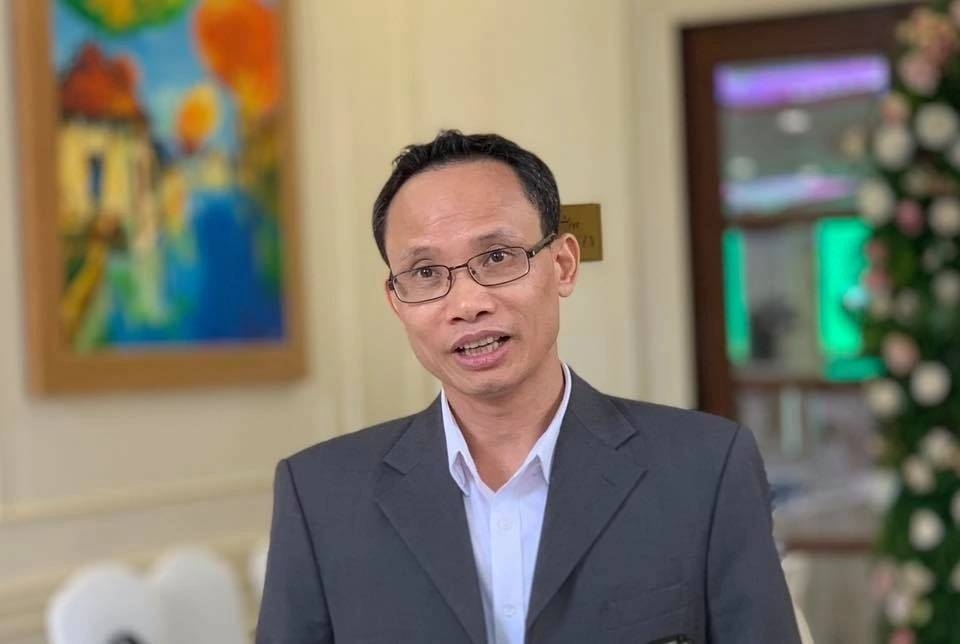
Despite broadly positive momentum, challenges persist. Can Van Luc, a member of the Prime Minister’s Policy Advisory Council, says global uncertainty remains a major risk, citing geopolitical tensions, trade and technology fragmentation, rising protectionism, cybersecurity threats and climate change, all of which could weigh on exports, foreign investment and macroeconomic stability.
Vietnam continues to run a sizeable services trade deficit of about US$10 billion, while domestic growth drivers such as private investment and consumption have yet to fully recover to pre-pandemic levels. Public investment disbursement is uneven, and businesses face high input and logistics costs, volatile orders, and increasing requirements for green and digital compliance from international markets.
In the financial sector, policy space is narrowing. Banking system liquidity is under pressure, interest rate and exchange rate risks persist, and elevated property prices are constraining capital flows into productive sectors.
High growth ambitions and policy challenges in 2026
Looking ahead to 2026, global risks are expected to remain elevated, but Vietnam is set to benefit from the rollout of breakthrough policy resolutions, the accelerated implementation of strategic infrastructure projects, and the formal operation of the two-tier local government system.
The National Assembly has set a GDP growth target of at least 10% for 2026, with GDP per capita projected at US$5,400–$5,500, while maintaining inflation control and macroeconomic stability. To achieve these goals, fiscal policy should serve as the main growth anchor, supported by accommodative monetary policy, Can Van Luc says.
Policy priorities include stimulating domestic investment and consumption, safeguarding traditional export markets, boosting services exports, and unlocking new growth drivers such as the digital, green and circular economies. Stabilising key markets, including property, foreign exchange and gold, will be essential to contain systemic risks and sustain investor confidence.
“Capital attraction must go hand in hand with more efficient use, particularly through increased public investment in transport and energy infrastructure to generate spillover effects and support double-digit growth,” Luc explains.
From a longer-term perspective, Nguyen Quoc Anh, deputy head of the Institute of Strategy and Economic-Financial Policy at the Ministry of Finance, said Vietnam needs to shift from extensive to intensive growth, driven by innovation, technology and green development. Total factor productivity should become the central benchmark, supported by higher labour productivity, skilled human resources and modern governance.
He stresses that deep economic restructuring, coupled with reforms in institutions, infrastructure and workforce quality, will be crucial. The private sector should be positioned as the leading force in the growth transition, backed by fair competition and incentives to invest in high-tech and environmentally sustainable industries.
National Data Centre must be “heart” of data economy, says Party chief
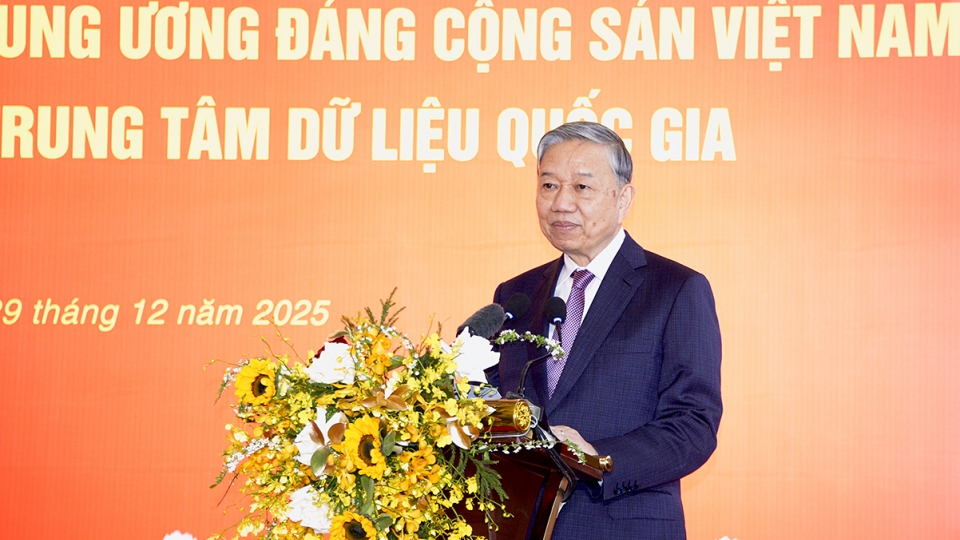
VOV.VN - Party General Secretary To Lam chaired a working session with National Data Centre No. 1 in Hanoi on December 29, highlighting the centre’s strategic role in Vietnam’s data economy and digital society, while setting out key requirements and directions for 2026.