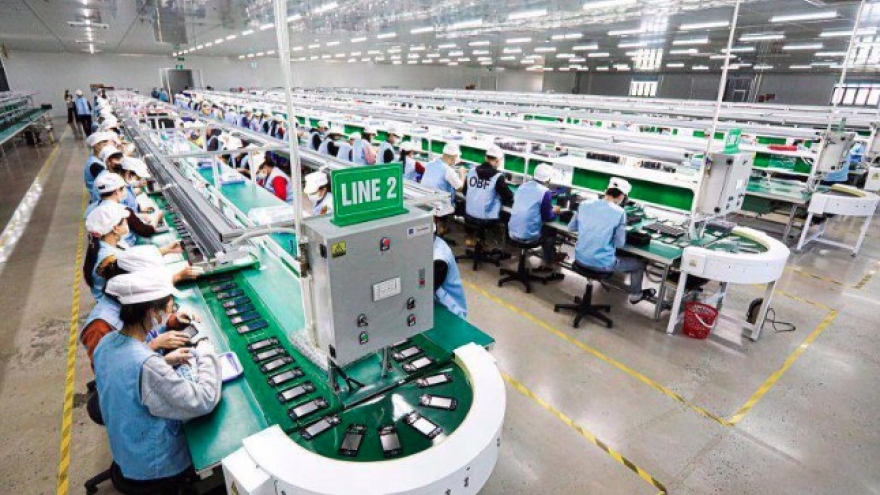
Vietnam sets sights on 8% export growth in 2026

VOV.VN - Vietnam aims to boost exports by about 8% in 2026 to roughly US$513 billion, with key industries and businesses stepping up efforts to expand markets and move up the value chain, according to the Ministry of Industry and Trade.
The target is seen as challenging amid mounting obstacles, including stricter technical barriers, reciprocal tariffs from the United States, and the European Union’s Carbon Border Adjustment Mechanism (CBAM) applied to certain industrial products.
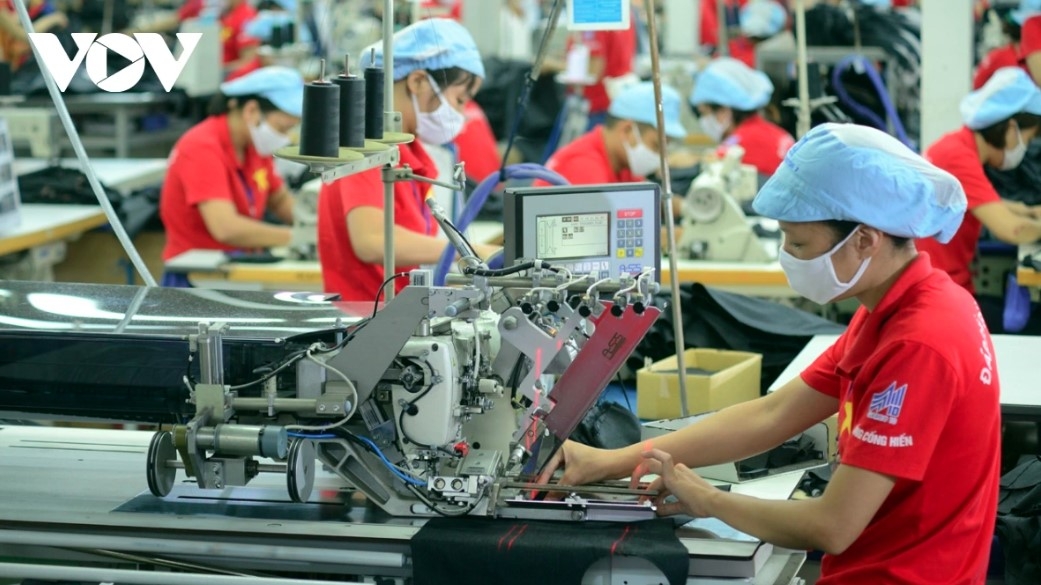
Despite these headwinds, major export sectors have begun restructuring early. After posting export turnover of US$46 billion in 2025, the textile and garment industry is aiming for US$50 billion in 2026. Industry associations, however, caution that the year will remain a “test of resilience” for the global economy, as growth prospects and trade policies continue to be shaped by geopolitical uncertainty.
According to Vu Duc Giang, Chairman of the Vietnam Textile and Garment Association, the US$50 billion goal is the outcome of a long-term restructuring process rather than a short-term push. The industry is prioritising stronger domestic supply chains, higher localisation rates, and more effective use of free trade agreements (FTAs) to improve Vietnamese firms’ positions in the global value chain.
The agricultural sector also views 2026 as a pivotal year, targeting export turnover of US$73–74 billion, nearly US$4 billion higher than in 2025. Efforts will focus on standardising raw material zones, expanding planting area codes, strictly applying GAP standards, enhancing traceability and food safety, and promoting deep processing alongside investments in preservation technology.
Amid ongoing challenges, Vietnam still has room for export growth, driven by pillars such as electronics, machinery and equipment, and agricultural and aquatic products, says Associate Professor Dr. Nguyen Thuong Lang of National Economics University.
In 2025, electronics remained the country’s largest export group, with turnover of nearly US$165 billion, playing a crucial role in lifting total exports to US$475 billion and sustaining a trade surplus.
Nguyen Thu Oanh, Head of the National Statistic Office's Service and Price Statistics Department notes that Vietnam is increasingly emerging as an important supply hub in the global value chain. Recovering consumer and investment demand in major markets, together with the existing FTA network, is creating opportunities to expand markets and diversify export products
Under Resolution No. 01/2026/NQ-CP, the Government has set a GDP growth target of 10% or higher for 2026, assigning ministries and sectors to proactively respond to global economic and trade fluctuations and renew traditional growth drivers, with exports continuing to play a central role.
Nguyen Anh Tuan, deputy head of the Central Policy and Strategy Commission, says export restructuring is needed, with a shift from price-based competition to strategies centred on branding, higher standards, and products with greater technological content and added value, while fully leveraging FTAs and emerging markets.
With 17 FTAs in force covering nearly 70 economies, Vietnam now has access to a market of almost 6 billion consumers, providing fresh momentum for export growth in the medium term.
According to the Vietnam Outlook 2026 report by MB Securities (MBS), exports could maintain growth of 15–16% in 2026, supported by market expansion and a shift toward higher value-added products. Electronics and high-technology industries are expected to remain key drivers, with projected growth of around 14%, fueled by rising investment in artificial intelligence and global digital transformation.
MBS also says Vietnam currently benefits from an average tariff rate of about 20% on exports to the US, significantly lower than that faced by many competitors, a factor expected to continue supporting major export groups.
Simultaneously, Vietnamese products are gaining market share in the EU, Japan, and the Republic of Korea—particularly in agricultural and aquatic goods—reducing reliance on any single market. Vietnam is also accelerating negotiations on FTAs with partners such as the Gulf Cooperation Council (GCC), Saudi Arabia, Qatar and the Southern Common Market (Mercosur), opening up further opportunities for domestic businesses in the years ahead.
Vietnam’s export-led growth leaves little value at home
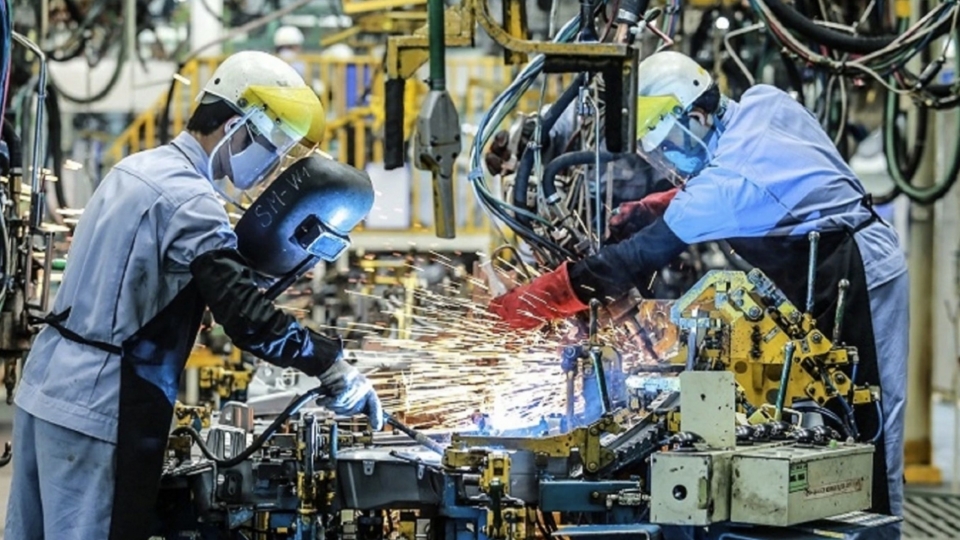
VOV.VN - Despite strong gains in industrial output and a surge in newly established businesses, the Vietnamese economy continues to face a paradox: exports are expanding, but the value retained at home remains low.