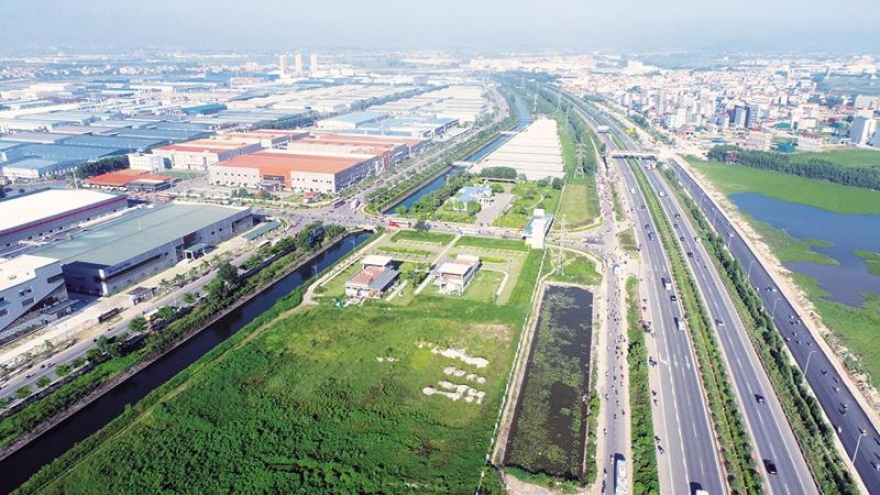
Vietnam advised to develop economic clusters to upgrade national competitiveness

To escape the assembly trap, Vietnam must shift from fragmented competition to regional cooperation.

Developing deep economic clusters is the key to boosting TFP productivity and helping local firms enter high-value segments of the global chain.
More than a decade ago, in 2010, Professor Michael Porter, the Harvard strategist who popularized the theory of economic clusters, visited Vietnam and observed the early signs of regional economic cluster formation.
He gave a clear recommendation: it is necessary to focus on developing regional economic clusters to enhance Vietnam's competitiveness. This theory is entirely logical: through the cluster model, Vietnam can shift from competition based on output to competition based on differentiation and quality. When resources are focused strategically, each region can build its own economic identity instead of collectively chasing low-value-added assembly activities.
Porter's advice was positively received in theory. However, in reality, more than ten years later, Vietnam still has only a few clusters that truly achieve competitive capacity.
Vietnam has formed several initial competitive industry clusters, such as electronics and machinery in the North, wood processing and furniture in the Southeast, agro-aquatic products in the Mekong Delta, textiles and footwear in the South, or tourism in major centers. However, most of these clusters are still "thin" in terms of technological depth and linkage networks.
One important cause lies in the fragmented development structure over many years. When every locality pursues similar investment attraction goals, competition often occurs in terms of breadth rather than depth. This leads to industrial overlap and a lack of inter-regional coordination.
Regional scale and the mindset of cooperation
According to Chris Malone from Dalberg Global Advisor, international experience shows that effective economic clusters often transcend the administrative boundaries of a single province or city.
They require a large labor market scale, synchronized infrastructure, and a sufficiently diverse supply chain. Therefore, industry cluster development needs to be placed within a regional planning framework rather than just at the local level.
With diverse geographical and economic characteristics, Vietnam can imagine natural economic regions with clearly distinct advantages: large-scale agricultural plains, manufacturing industrial zones, service-tourism regions, or marine economic zones.
When each region focuses on building several spearhead industries based on comparative advantage, the overall economy will become more diverse and flexible.
The important thing is to shift from a "win-loss" mindset between localities to a mindset of cooperation for mutual development. Instead of competing to attract the same project, localities can assign roles within the same value chain: one place invests in seaports and logistics, another develops deep processing, and another focuses on training and research.
Economic cluster strategy oriented toward the future
In the context of rapidly changing global technology, the economic cluster strategy needs to look toward the future instead of repeating old models.
Investing in industries that are at the end of their technological cycle may bring short-term benefits but carries long-term risks.
Fields such as the digital economy, automation, green technology, renewable energy, new materials, smart devices, and AI-based services are reshaping global production structures.
If industry clusters are designed with a long-term vision, Vietnam can participate more deeply in higher value-added segments rather than merely handling the final stages of production.
Differentiation for growth
Chris Malone also concludes that if each region develops a few internationally competitive industry clusters, Vietnam’s economy will become more diverse and resilient.
Growth would then come not only from expanding scale but from increasing value per unit of output.
One can imagine the economy like a regional culinary landscape, where each locality creates its own “specialty” based on its resources and culture. That diversity creates overall appeal.
Similarly, if economic regions develop distinct industrial identities, Vietnam can enter a new growth phase based on productivity and innovation.
If a cluster strategy is implemented consistently, linked with institutional reform and productivity improvement, Vietnam will have a foundation to build a more sustainable growth model in the coming decade. not only larger in scale, but stronger in quality.
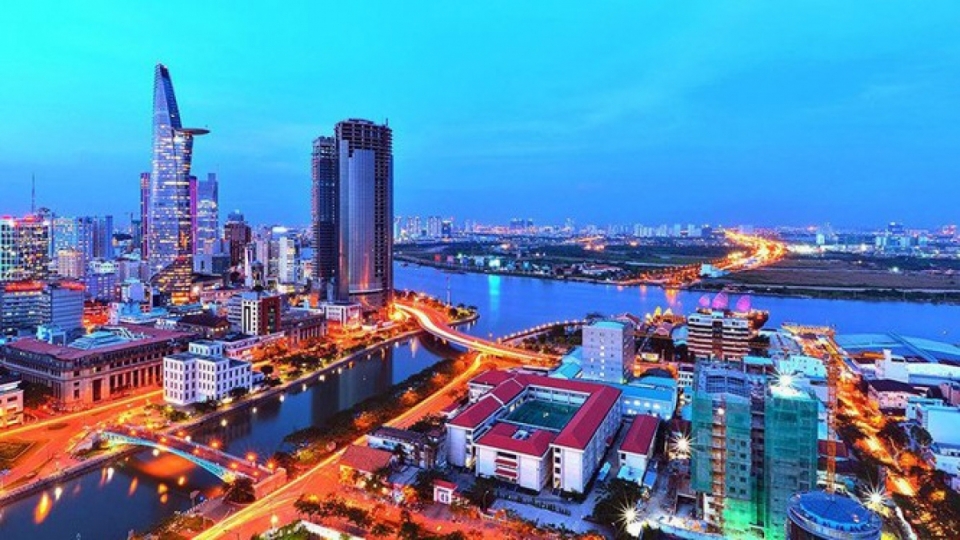
Vietnam emerging as a new engine of global economic growth
VOV.VN - Vietnam is gaining global attention as a fast-growing economy, with strong manufacturing performance, rising investment and deeper participation in global supply chains.