Vietnam accelerates rail integration with China to unlock trade, logistics gains

VOV.VN - Vietnam is stepping up efforts to strengthen railway connectivity with China, as surging demand for passenger travel and cross-border trade puts increasing pressure on existing infrastructure.
The push comes amid growing regional integration and follows high-level agreements reached during the recent visit of Party General Secretary and President To Lam to China, where railway cooperation emerged as a key priority. His use of rail transport during the trip also underscored the strategic importance of the sector.
Demand rising rapidly
Since resuming operations in May 2025, the Hanoi–Dong Dang–Nanning international railway route has served more than 25,000 passengers, including over 4,800 in the first quarter of 2026 alone.
Beyond passenger transport, the route acts as a gateway linking Vietnam to China’s extensive high-speed rail network, enabling onward connections to major economic hubs such as Beijing, Guangzhou and Shenzhen, and even further to other countries.
Inbound travel demand is also surging, with around 1.4 million Chinese visitors arriving in Vietnam in the first quarter of 2026, making China the largest source market. This trend is increasing the need for reliable, cost-effective transport solutions such as rail.
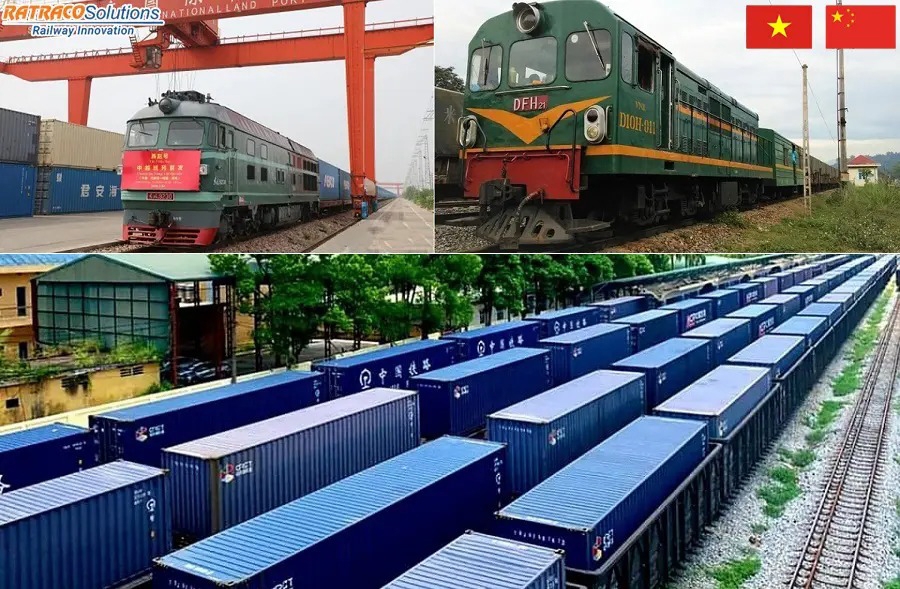
Meanwhile, cross-border rail freight between Vietnam and China exceeded 1 million tonnes in 2025, rising nearly 30% year on year, according to Vietnam Railways Corporation. The sharp increase underscores surging demand, and at the same time exposes the growing strain on existing infrastructure, much of which is approaching capacity limits.
Infrastructure bottlenecks remain
Freight transport faces even greater pressure. Key rail corridors, including Kep–Dong Dang and Cao Xa–Dong Dang–Pingxiang, are operating close to capacity as trade flows expand between the two countries and beyond to Central Asia, Russia and Europe.
However, infrastructure limitations remain a major constraint. Differences in rail gauge - 1,000 mm in Vietnam versus 1,435 mm in China - require most routes to rely on transshipment, increasing costs and transit times. Currently, only the Dong Dang–Pingxiang line allows direct connection.
According to Hoang Gia Khanh, CEO of Vietnam Railways Corporation, cross-border routes mainly operate via Lao Cai and Dong Dang, but their capacity is limited due to the lack of synchronisation in infrastructure.
Strategic projects gain momentum
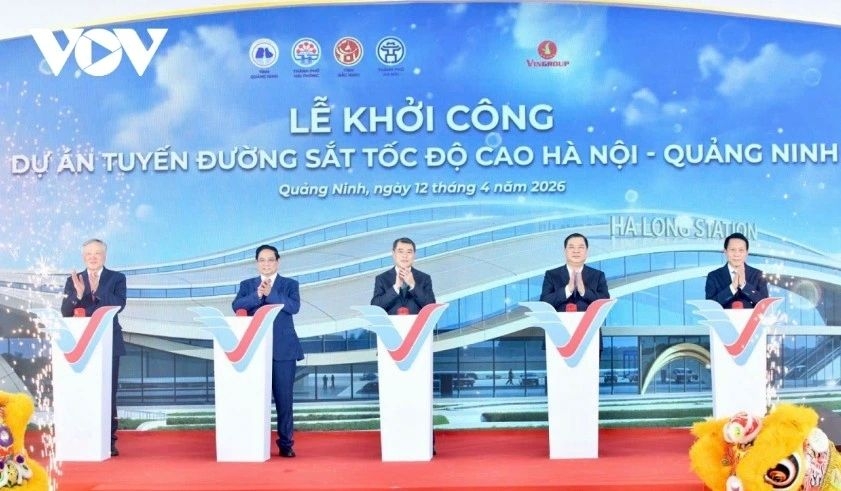
Progress is underway with the recent launch of the Lao Cai–Hanoi–Hai Phong railway project, a nearly 391-km line built to standard gauge (1,435 mm) with a design speed of up to 160 km/h. The project is expected to become a backbone corridor linking northern Vietnam with China.
Additional routes, including Hanoi–Dong Dang and Mong Cai–Ha Long–Hai Phong, are also being advanced. Once completed, these lines will form an integrated network connecting Vietnam not only with China but also with broader Eurasian rail systems.
During the recent high-level visit by Party General Secretary and President To Lam, both sides witnessed the signing of key railway cooperation documents, including feasibility studies and agreements on human resource training.
Minister of Construction Tran Hong Minh said the feasibility study for the Lao Cai–Hanoi–Hai Phong line provides a critical foundation for negotiations, financing arrangements and project implementation, paving the way for construction in the near future.
Beyond transport: a growth driver
Enhanced rail connectivity is expected to do more than improve transport efficiency. A modern railway system could reduce logistics costs, boost the competitiveness of Vietnamese exports, and support trade, investment and tourism.
The cooperation with China also offers opportunities for Vietnam to access advanced technologies and strengthen its domestic railway industry, from maintenance to manufacturing.
In the longer term, improved connectivity could help Vietnam integrate more deeply into transcontinental rail networks linking Asia and Europe.
With demand rising and opportunities expanding, the pace of implementation will be critical. Without timely upgrades and policy reforms, Vietnam risks missing out on shifting trade and supply chain dynamics.
Conversely, accelerated rail development could become a key driver of sustainable economic growth in the decades ahead.
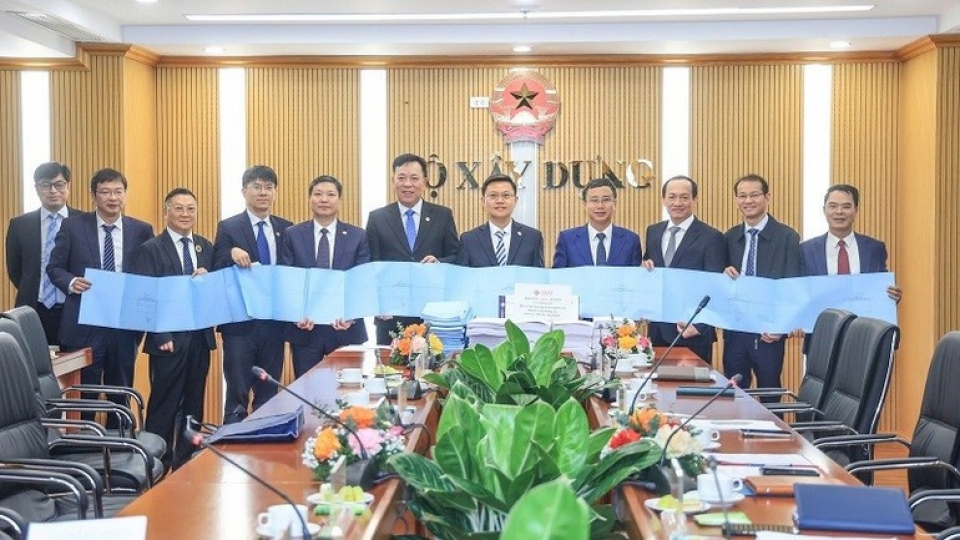
Vietnam, China sign cooperation agreement on planning two railways
Vietnam and China have signed a technical cooperation agreement on planning two standard-gauge railways Hanoi – Dong Dang and Hai Phong – Ha Long – Mong Cai, marking progress in bilateral railway connectivity.