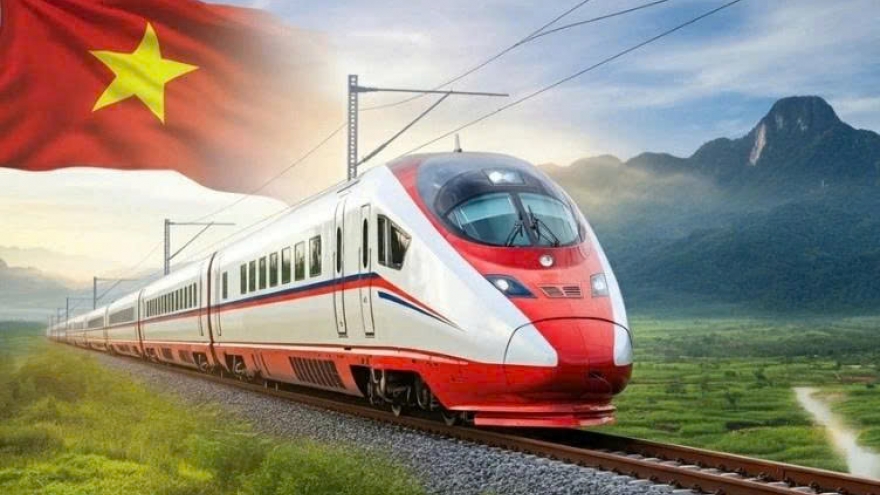
Vietnam prioritises North–South high-speed rail after completing expressway backbone

VOV.VN - The Ministry of Construction will shift its infrastructure development focus to the North–South high-speed railway after completing continuous expressway connectivity from Cao Bang to Ca Mau in 2025, marking a new strategic phase aimed at boosting economic growth and national transport capacity.
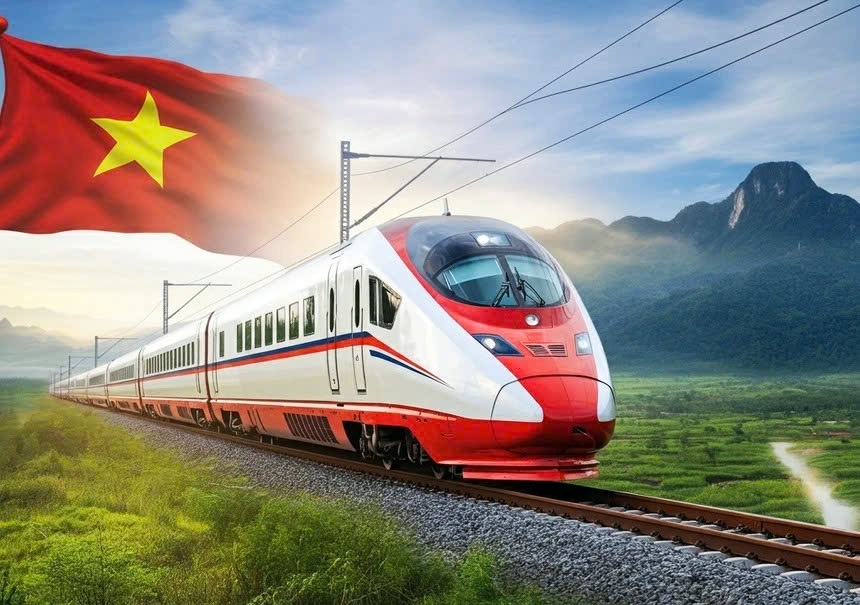
Speaking at the ministry’s 2025 year-end review and 2026 planning conference on December 21, MoC Deputy Minister Nguyen Viet Hung noted the high-speed rail project is now being positioned as Vietnam’s next major infrastructure breakthrough, following the rapid expansion of the national expressway network.
After completing and opening the full length of the North–South Expressway, the ministry is accelerating preparations to launch the North–South high-speed railway, a project expected to reshape long-distance mobility, strengthen regional connectivity and support sustainable economic growth, said Hung.
The MoC is currently working on regulatory frameworks and investment mechanisms for the project, including expanded options for private-sector participation, to reduce fiscal pressure while attracting domestic and international investors. Preparatory work is underway to enable construction to begin as early as 2026.
Beyond the high-speed rail plan, Vietnam has made notable progress in conventional and urban rail development. In 2025, construction began on Phase 1 of the Lao Cai–Hanoi–Hai Phong railway, a strategic corridor linking northern Vietnam with major ports, as well as several urban rail projects in Hanoi and Phu Quoc.
The ministry is also advancing feasibility studies and investment preparations for additional railway projects under the 2026–2030 medium-term public investment plan, reinforcing rail transport as a core pillar of Vietnam’s long-term infrastructure strategy.
Vietnam’s expressway network saw rapid expansion in 2025. By year-end, the country is expected to complete 3,345 km of main expressway routes, along with 458 km of interchanges and access roads, bringing the total expressway length to 3,803 km nationwide.
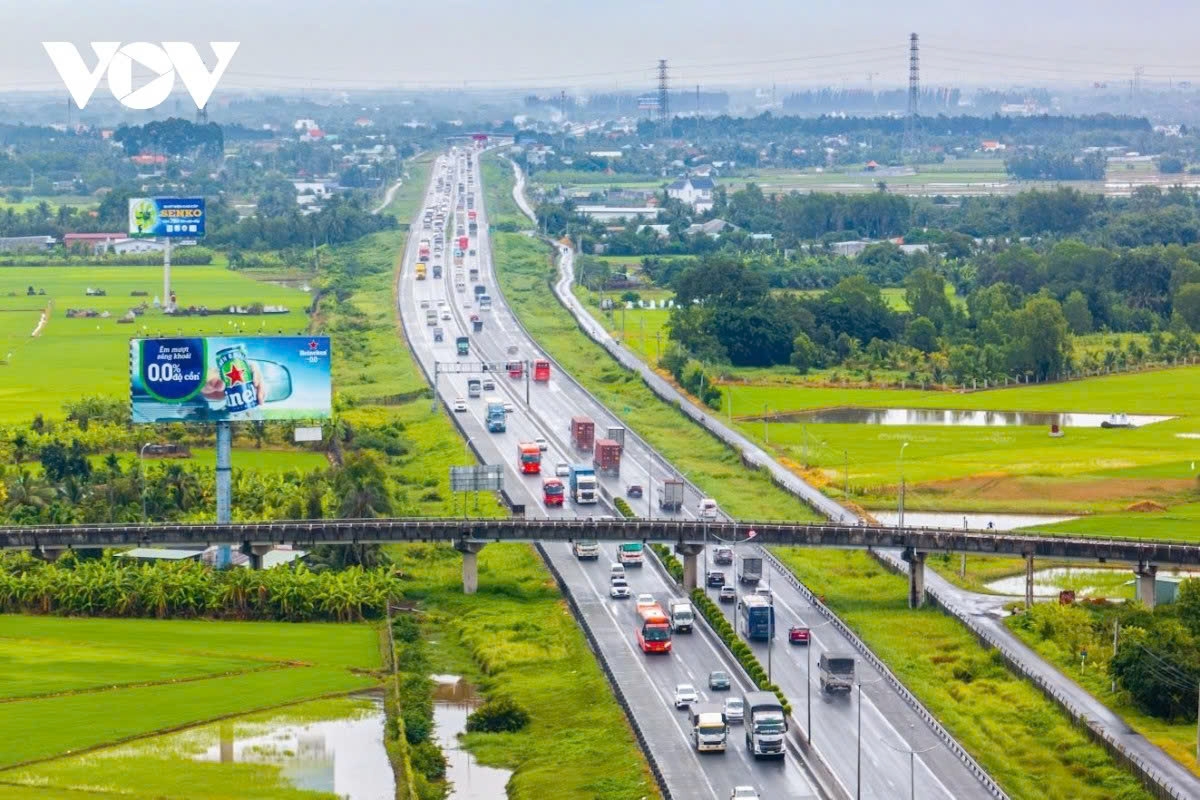
In 2025 alone, Vietnam completed nearly 1,500 km of expressways, alongside significant upgrades to national highways and coastal roads. The completion of the continuous North–South Expressway from Cao Bang to Ca Mau was described by officials as a milestone achievement, laying a foundation for the next stage of transport development.
Vietnam also recorded major gains in aviation infrastructure. In 2025, the country completed Terminal 3 at Tan Son Nhat International Airport, expanded Noi Bai International Airport’s international terminal, and welcomed the first technical flights at Long Thanh International Airport in December.
As a result, total national airport capacity rose to 155 million passengers per year, up from 92.4 million in 2020.
In maritime and inland waterways, Vietnam brought new terminals into operation at Lach Huyen Port, launched construction of Hon Khoai and Bai Goc ports, and upgraded key shipping channels. National seaport capacity has reached approximately 900 million tonnes per year, supporting export growth and the country’s maritime economy.
According to Deputy Minister Hung, Vietnam mobilised an estimated VND3.84 quadrillion in private-sector investment for infrastructure development in 2025, accounting for nearly three-quarters of total funding. Public investment disbursement reached over 78% of the annual plan, with authorities aiming to exceed 95% by year-end.
However, officials acknowledged ongoing challenges, including slow site clearance, urban congestion, flooding in major cities and delays caused by extreme weather and climate impacts. Some projects also faced early-year disbursement bottlenecks due to planning and coordination issues.
Looking ahead, the Ministry of Construction will focus on institutional reform, digital transformation and accelerated delivery of strategic transport projects, with particular emphasis on rail development.
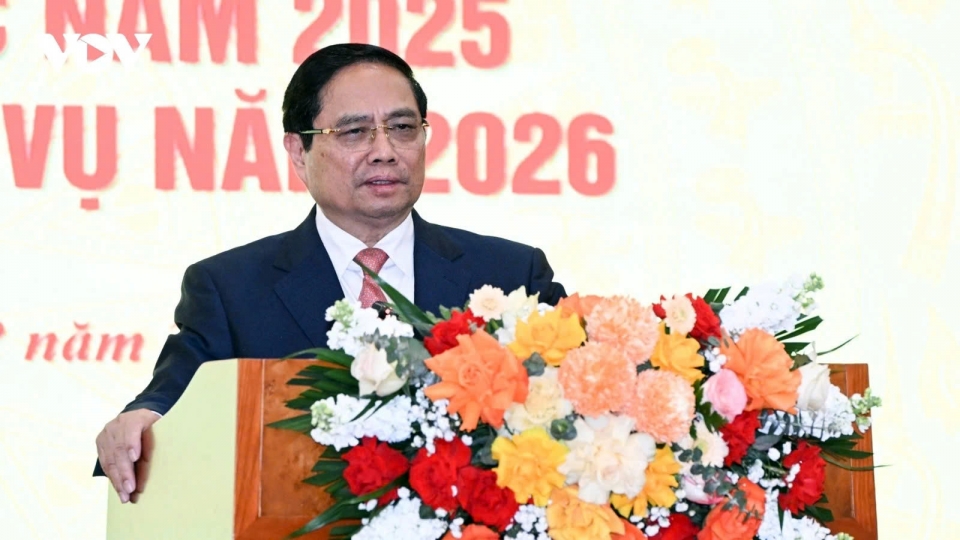
PM orders decision on North–South high-speed rail investment model in Jan. 2026
VOV.VN - Prime Minister Pham Minh Chinh has ordered the construction sector to finalise the investment model for the North–South high-speed railway by January 2026, describing it as a strategic project critical to the country’s long-term development.