Trade ministry outlines measures to sustain double-digit GDP growth in 2026

VOV.VN - As Vietnam aims for double-digit GDP growth in 2026, the Ministry of Industry and Trade (MoIT) is rolling out a series of coordinated measures to ensure stable production, boost exports, and increase local content in key industries.

At the first-quarter press conference in Hanoi on April 9, Ministry officials emphasised that maintaining supply chains, optimizing industrial output, and securing energy resources are central to achieving ambitious growth targets.
“The first quarter is not only about monitoring production statistics; it is also the critical period for preparing raw materials and equipment for upcoming projects. Enterprises are setting the stage for growth in the following quarters,” said Tran Thanh Hai, deputy director of the MoIT’s Import-Export Department. “We are closely supervising imports of machinery, electronic components, and energy products to ensure industries can operate smoothly.”
According to the MoIT, first-quarter data showed strong performance in several key areas. Industrial production rose 9% year on year, with manufacturing and processing leading at 9.7%. Notably, output in non-metallic mineral products increased by 19.7% and metals by 22.9%, reflecting the positive effects of accelerated disbursement of public investment in strategic infrastructure. The Purchasing Managers’ Index (PMI) for March 2026 stood at 51.2, marking the ninth consecutive month above the 50-point threshold.
In addition, the total trade turnover of goods reached an estimated US$249.5 billion, up 23.2% from the same period in 2025, with exports alone achieving US$122.9 billion, a 19.1% increase.
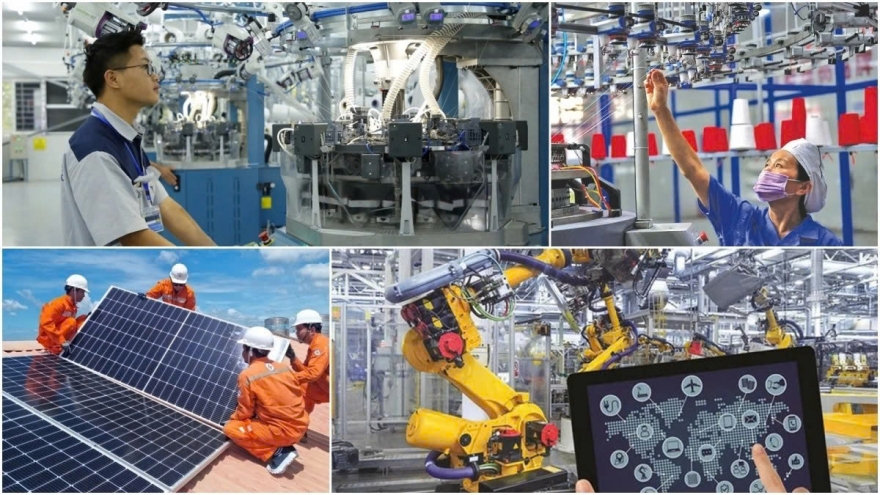
To maintain this momentum, the MoIT is prioritising industrial modernisation and local content enhancement.
“Our objective is to raise the local content to 40–45% in strategic manufacturing sectors such as textiles, footwear, and chemicals, thereby reducing dependence on imported inputs,” stated Bui Huy Son, director of the MoIT’s Planning, Finance and Enterprise Management Department. “We are also accelerating technological upgrades, investing in research and development, and developing strategic products linked to emerging technologies. This lays a foundation for sustainable growth and resilience against external shocks.”
Energy security remains a top priority for maintaining industrial and economic activity. MoIT Deputy Minister Nguyen Sinh Nhat Tan highlighted that the Ministry is closely monitoring electricity and fuel supply to prevent disruptions to production.
“We are reviewing Power Development Plan VIII to identify projects at risk of delay and ensure timely completion. Our approach combines flexible management of energy resources with strategic investment in reserves, so that rising global fuel prices do not hinder domestic production,” he explained.
Export promotion is another key lever for securing high GDP growth. Officials reported that first-quarter export turnover rose over 19%, totaling US$122.9 billion. To maintain momentum, the Ministry plans to diversify export markets, strengthen trade defence mechanisms, and support enterprises in meeting international standards, including green and carbon-compliant production.
“We aim to maximise the benefits of existing free trade agreements (FTA)s while negotiating new agreements to open up additional markets,” added Son.
On the domestic front, the Ministry is coordinating measures to stimulate consumption and ensure market stability. Promotional programmes are being expanded, and digital platforms are under closer supervision to prevent counterfeit goods from affecting consumer confidence.
A strong domestic market complements export growth, and safeguarding it is a priority, said officials.
Through these combined strategies, industrial modernisation, local content enhancement, energy security, and export diversification, the Ministry of Industry and Trade seeks to create a stable, resilient environment capable of driving Vietnam’s double-digit GDP growth in 2026, despite global uncertainties and price pressures in energy and raw materials.

Vietnam sticks to double-digit growth target amid global headwinds
VOV.VN - Vietnam’s pursuit of double-digit growth faces mounting challenges amid global volatility, with lawmakers urging swift action to remove institutional bottlenecks, strengthen policy execution and enhance responsiveness, while unlocking new drivers to sustain momentum and safeguard macroeconomic stability.