Maintaining export momentum key requirement for double-digit growth

VOV.VN - Maintaining export momentum is a key requirement for achieving double-digit growth amid global market fluctuations.
Trade records positive start as production resumes
Vietnam’s import-export turnover reached nearly US$250 billion in the first quarter of 2026, up 23% year-on-year. Exports totalled US$122.93 billion, up 19.1%, while imports stood at US$126.57 billion, up 27%.
In March alone, turnover exceeded US$93 billion, showing trade flows have picked up.
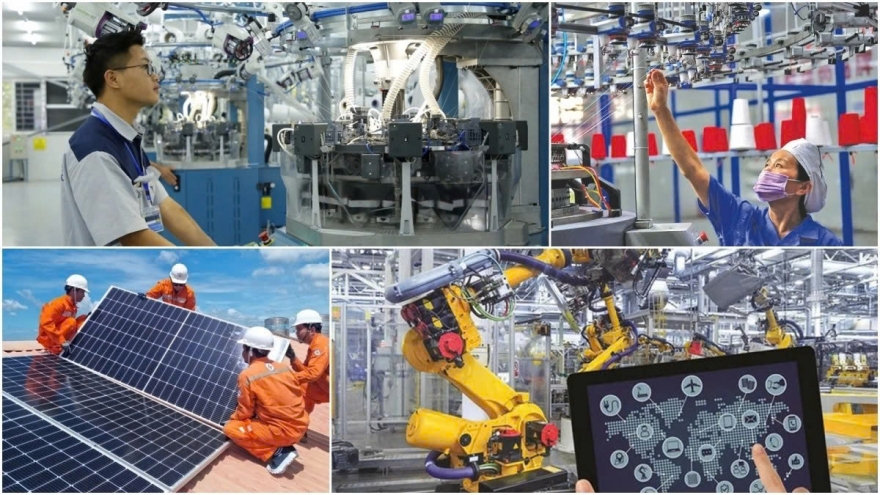
The structure of trade continued to show the role of the manufacturing sector. Exports were primarily from processed industrial goods, while imports focused on production inputs serving manufacturing and export activities.
This reflects that businesses are increasing imports of inputs to prepare for orders in the coming months, with production activity rising from the start of the year. The first-quarter performance indicates that production and trade activities have resumed.
However, the issue is not only growth. The second plenum of the 14th Party Central Committee states that the global situation will remain fast-changing, complex and unpredictable in the 2026-2030 period. In that context, double-digit growth requires not only higher output but also improved quality and resilience.
Trade therefore demonstrates growth and the economy’s ability to adapt to external changes.
Nguyen Anh Son, Head of the Import-Export Department under the Ministry of Industry and Trade, said geopolitical developments are directly affecting global supply chains.
“Even if conflicts end soon, disruptions to supply chains, shortages of empty containers and congestion in transshipment may persist for some time. Transport costs are unlikely to fall immediately, affecting trade not only in Vietnam but globally,” he said.
Keeping export pace steady amid market fluctuations
The conclusions of the second plenum set out clear requirements: actions must be proactive, flexible and grounded in reality. For trade, this begins with forecasting capacity.
In a fast-changing market, delayed information means lost opportunities, while inaccurate forecasts lead to lost orders. Improving forecasting is therefore a technical task and a requirement for effective management.
“Timely information is essential, and forecasting needs to better match reality, enabling appropriate solutions for each sector and field. This allows management agencies to respond more proactively to market changes,” Nguyen Anh Son said.
At the same time, the pace of trade needs to be regulated to ensure the smooth movement of goods. Rising logistics costs and longer delivery times, if not handled well, could lead to congestion, higher costs and reduced competitiveness.
At a broader level, the Party’s conclusions set out requirements for market diversification, effective use of free trade agreements and expansion into new markets. This is both a short-term measure and a long-term direction to reduce dependence and strengthen resilience.
A key requirement is a shift in the growth model. Exports can no longer rely on low-cost advantages but must compete on quality, standards and value-added. Requirements related to green production, traceability and environmental and social standards are becoming mandatory.
Meanwhile, the domestic market is identified as an important pillar. When external markets fluctuate, domestic consumption helps sustain production and creates conditions for businesses to adjust strategies.
The positive first-quarter performance provides a basis for trade growth. However, amid market fluctuations, maintaining stable trade flows and export momentum throughout the year is required to achieve double-digit growth targets set out by the Party.
At the same time, the domestic market is identified as an important pillar. When external markets fluctuate, domestic consumption helps sustain production and creates conditions for businesses to adjust strategies.
The positive first-quarter performance provides a basis for trade growth. However, amid market volatility, maintaining stable trade flows and export momentum throughout the year is required to achieve double-digit growth targets set out by the Party.

PM lays stress on business role in new growth model for double-digit growth
VOV.VN - Prime Minister Pham Minh Chinh has called on the business community to play a pioneering role in promoting a new growth model based on science and technology, innovation and digital transformation to achieve double-digit growth.