Special Economic Zone to take shape in Hai Phong port city

VOV.VN - The Prime Minister has approved the establishment of the Hai Phong Special Economic Zone (SEZ), a 5,300-hectare development designed to accelerate high-tech industry, innovation and regional connectivity in northern Vietnam.
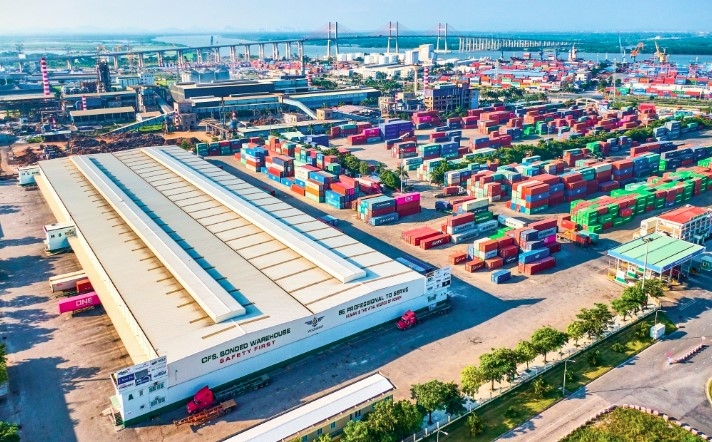
The decision, signed by Deputy Prime Minister Tran Hong Ha on behalf of the Prime Minister, sets out the framework for developing the SEZ in Hai Phong as a strategic growth pole of the Red River Delta region. The zone will comprise functional areas tailored to its development objectives, including industrial parks and clusters, integrated trade and service areas, non-tariff and logistics zones, as well as logistics centres and an innovation hub.
The SEZ aims to leverage Hai Phong’s strong industrial and service foundation, with a focus on high value-added, technology-intensive and environmentally sustainable industries aligned with the port city’s competitive strengths. It is also expected to enhance economic, trade and service linkages with neighbouring provinces and international markets, reinforcing the city’s role as a key gateway for northern Vietnam. It will also integrate investment attraction with national defence and security requirements, heritage preservation and social welfare.
Authorities estimate that the Hai Phong SEZ will contribute approximately 3–4% of the city’s Gross Regional Domestic Product (GRDP) by 2030, rising to over 5% in the following years. With synchronised and modern infrastructure, the zone is envisioned as a long-term driver of socio-economic growth for both Hai Phong and the broader Red River Delta.
The SEZ will operate under transparent and business-friendly mechanisms in accordance with Vietnam’s legal framework governing industrial parks, economic zones and investment activities. The development model integrates economic expansion with national defense and security requirements, while also preserving historical and cultural values and ensuring social welfare.
According to the approved roadmap, during the 2025–2026 period, authorities will finalise the overall master plan. Between 2026 and 2030, procedures will be completed and investment and construction activities will be carried out, with finished projects put into operation. Infrastructure systems, particularly urban, industrial and service infrastructure, will continue to be upgraded, alongside research and implementation of new production models.
In the 2031–2035 phase, the zone aims to complete a comprehensive and modern economic and social infrastructure system, accelerate urbanisation and shape a smart, green urban area offering high-quality services, while continuing to attract investment in prioritised industries and sectors.
Hai Phong sets up northern Vietnam’s first comprehensive free trade zone
VOV.VN - Hai Phong has announced the establishment of its first comprehensive Free Trade Zone (FTZ), covering approximately 6,292 hectares across three key locations within the city’s coastal economic zones.