SOEs expected to act as catalysts for investment-led growth

VOV.VN - Resolution 79 recently issued by the Politburo identifies State-owned enterprises (SOEs) not only as a key pillar of the economy but also as “catalytic capital” that activates and leads investment flows across society.
By concentrating resources on key and strategic sectors, the SOE sector is expected to lay foundations, open new pathways, and generate spillover effects that drive growth in the new phase of development.
Repositioning the state sector on market principles

Speaking at a recent seminar on the role of the state sector in the economy, Dr. Nguyen Nhu Quynh, director of the Vietnam Institute for Economic and Policy Research under the Ministry of Finance, stated that Resolution 79 on SOE development reaffirms the consistent position that the State sector plays a leading role in the national economy, as established in the Constitution and Party Congresses.
However, according to Dr. Quynh, the key innovation of Resolution 79 lies in how this role is articulated in a more comprehensive, explicit, and concrete manner.
A major breakthrough of Resolution 79 is its new approach to redefining the State economy. State resources are required to be fully accounted for and operated in accordance with market principles, while still ensuring the achievement of socio-economic, defence, and security objectives.
The Resolution also requires a clear separation between the use of State resources for providing public goods and services or performing political tasks, and the normal production and business activities of enterprises. This aims to ensure transparency and fairness in evaluating the efficiency of State capital utilisation.
Resolution 79 focuses State investment resources on developing a number of large-scale State-owned economic groups and enterprises with a leading role in key and strategic sectors. At the same time, it encourages SOEs to invest overseas in areas where Vietnam has comparative advantages or where there is strong market demand, Dr. Quynh noted.
In parallel, the Resolution promotes the restructuring of State capital investment and business activities in a more professional manner, moving towards the establishment of a national investment fund model. It also prioritises the development of selected public service units with international competitiveness, while opening up new development spaces such as the space economy, aerospace industry, and high-tech sectors where the private sector is not yet able to participate.
According to Dr. Quynh, Resolution 79 represents a fundamental shift in the role of SOEs. Previously assigned a broad leading role across the economy, SOEs are now repositioned to focus on selected key and strategic sectors, serving as pioneers and development drivers.
“This shift requires both State management agencies and SOEs themselves to adjust their management mindset, investment approach, and long-term development vision in the new phase,” Dr. Quynh emphasised.
SOEs as “catalytic capital” for strategic industries
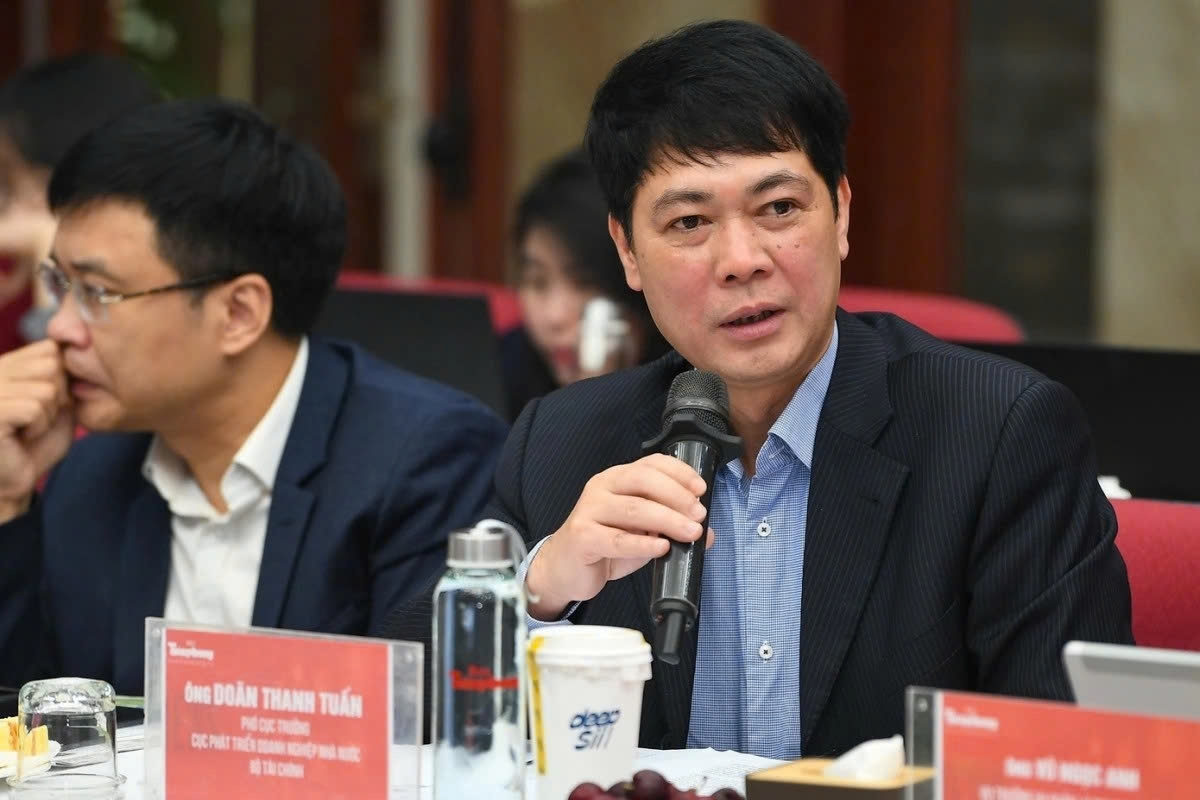
From an implementation perspective, Doan Thanh Tuan, deputy director of the Department for State-Owned Enterprise Development under the Ministry of Finance, said that Resolution 79 sets out highly ambitious and specific targets for the SOE sector.
“These are high-level objectives that demand substantial efforts from the enterprises themselves,” he noted.
Specifically, by 2030, Vietnam aims to have around 50 large SOEs ranked among the top 500 largest enterprises in the region, including one to three enterprises among the world’s top 500. Looking further ahead to 2045, the targets include approximately 60 enterprises in the regional top 500 and about five enterprises among the global top 500.
To achieve these goals, Resolution 79 outlines 14 major solution groups, with a particularly critical focus on investing in the development of strong, large-scale State-owned economic groups and enterprises that can lead key and strategic industries.
The Resolution clearly identifies priority sectors, including defence and security; energy; transport and logistics; finance and banking; science and technology, electronics and telecommunications, and digital infrastructure; exploitation and processing of strategic minerals; chemicals; construction and building materials; and agriculture and forestry.
According to Tuan, the selection of priority sectors and enterprises must be based on stringent criteria. The chosen sectors must truly be the lifelines of the economy, essential for ensuring national security, economic security, and social welfare, and areas where the private sector is unwilling or not yet capable of participating. These sectors must also be strategic, with the capacity to lead industrial value chains, form core industries, and enhance overall competitiveness.
As for enterprises, selection criteria include operating in key sectors, having sufficient scale and efficiency, and, crucially, possessing the capability to develop and master foundational technologies. These enterprises must be able to shape industry direction, lead value chains, and connect enterprises from other economic sectors to participate.
“The spillover and leadership role of these enterprises is the core element. SOEs must act as ‘catalytic capital’, activating and guiding investment resources across society, thereby contributing to the successful fulfilment of socio-economic development tasks in the coming period,” Tuan stressed.
Politburo resolution strengthens state sector, targets global champions by 2030
VOV.VN - The Politburo has issued a new resolution outlining an ambitious roadmap to strengthen the State-owned sector, aiming to build globally competitive State-owned enterprises (SOEs), modernise strategic infrastructure and unlock key national resources.