




Seafood industry eyes new export and processing opportunities under EFTA deal

VOV.VN - The Vietnam–EFTA Free Trade Agreement (FTA) is expected to open up new opportunities for Vietnam’s seafood industry, from expanding exports to the four EFTA markets to strengthening cooperation in raw materials, processing and technology, according to the Vietnam Association of Seafood Exporters and Producers
Speaking after the agreement was signed in Hanoi on October 18, VASEP Deputy Secretary-General and Communications Director Le Hang affirmed the four EFTA markets – Switzerland, Norway, Iceland and Liechtenstein – offered different opportunities for Vietnamese seafood businesses, requiring tailored approaches to market development and cooperation.
Premium seafood and two-way supply chains offer growth potential

According to the VASEP official, Switzerland stands out as a promising destination for Vietnamese seafood products with distinctive qualities and sustainable production credentials. Consumers there place a high value on quality, food safety, transparent sourcing and environmentally responsible production, creating opportunities for products that can demonstrate these attributes.
Vietnamese eco-friendly shrimp, particularly mangrove forest shrimp raised within mangrove ecosystems, has already established a foothold in Switzerland’s premium market. Unlike conventional intensive shrimp farming, this model links aquaculture with mangrove conservation, environmental protection and local livelihoods.
“The value of these products lies not only in the quality of the shrimp, but also in their production methods and associated environmental benefits,” Hang explained, adding that such distinctive characteristics could help Vietnamese seafood compete in higher-value market segments.
The opportunities extend beyond direct exports. Norway and Iceland have well-developed seafood industries, high-quality raw materials and advanced harvesting and processing technologies. Closer links with businesses in these markets could help Vietnamese processors diversify their supplies, improve production efficiency and strengthen their position in international supply chains.
Vietnam has invested in processing plants, equipment, cold storage and skilled labour over many years, with experience supplying major markets including the United States, the European Union and Japan. However, domestic raw materials do not always meet processors’ needs in terms of volume, variety, seasonality and quality, particularly in the marine seafood industry.
Imports from Norway and Iceland could help address these constraints. Raw materials such as salmon, cod, mackerel and herring could be processed in Vietnam and then exported to other markets, provided the products meet the applicable rules of origin and other requirements for preferential tariff treatment.
Such cooperation could benefit both sides: Norwegian and Icelandic suppliers would gain additional outlets for their seafood, while Vietnamese processors could make better use of existing factory capacity, maintain employment and develop higher-value products, Hang analysed.
Meeting standards and adding value are key to unlocking the FTA
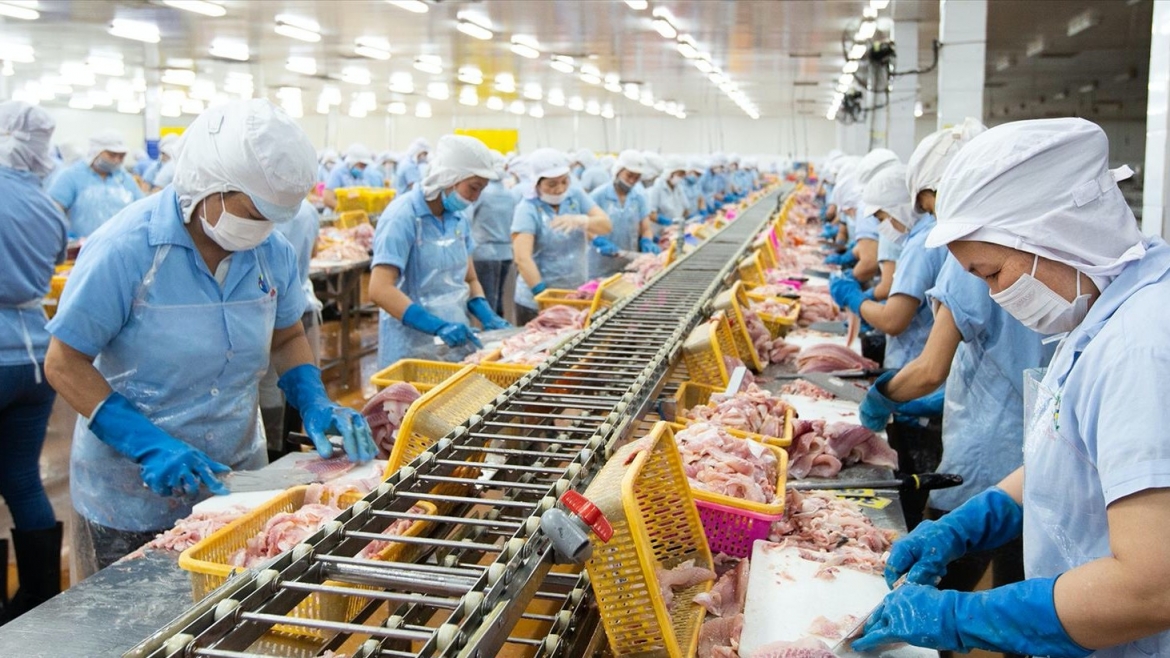
Despite the opportunities, the VASEP official affirmed tariff preferences alone will not guarantee stronger exports. Businesses must meet stringent requirements on food safety, traceability, sustainability and consistent quality, particularly when targeting premium markets.
For high-end importers and retailers, fulfilling individual orders is not enough. Suppliers must demonstrate that they can maintain reliable volumes, consistent product quality, complete traceability records and compliance over the long term. Companies also need to understand the agreement’s tariff schedules, rules of origin and market-specific technical requirements.
These considerations are particularly important when importing raw materials from EFTA countries for processing in Vietnam and subsequent export elsewhere. Imported inputs do not automatically qualify the finished products for preferential tariffs in every destination market; eligibility depends on the relevant origin rules and the extent of processing undertaken.
Hang said Vietnamese seafood businesses already had a solid foundation in processing and meeting international requirements, but would need to invest further in supply-chain management, specialised products and long-term customer relationships to make the most of the agreement.
Technology cooperation could also help the industry move beyond volume-driven growth. Norway and Iceland offer experience in modern harvesting methods, onboard refrigeration, electronic traceability and fisheries management. Access to such technologies could help Vietnamese businesses reduce unintended catches, limit post-harvest losses, improve fuel efficiency and increase the economic value obtained from each unit of marine resources.
Iceland’s expertise in seafood processing and by-product utilisation offers another avenue for development. Vietnam generates substantial by-products from processing shrimp, pangasius, tuna and other seafood, yet their potential is not fully exploited. Greater cooperation in processing technology and the recovery of valuable biological components could help turn these materials into higher-value products.
VASEP plans to support businesses through market information, connections with importers and distributors, business-to-business meetings, trade fairs and other trade promotion activities. In Switzerland, the focus will include distinctive products such as eco-friendly shrimp, mangrove shrimp and sustainably certified processed seafood. In Norway and Iceland, the association aims to strengthen two-way links in raw materials, processing and technology.
The agreement comes at a time when Vietnamese exporters face tariff and non-tariff barriers, as well as policy uncertainty in some major markets. Its value will therefore depend not only on improved market access, but also on businesses’ ability to diversify products and markets, strengthen supply chains and compete through quality, sustainability and higher value added.
For Vietnam’s seafood industry, the EFTA agreement offers an opportunity to expand beyond traditional export growth towards a more integrated model combining premium exports, imported raw materials, advanced processing and technology cooperation. Turning that potential into lasting gains will require sustained investment and close coordination between businesses, industry associations and relevant authorities.
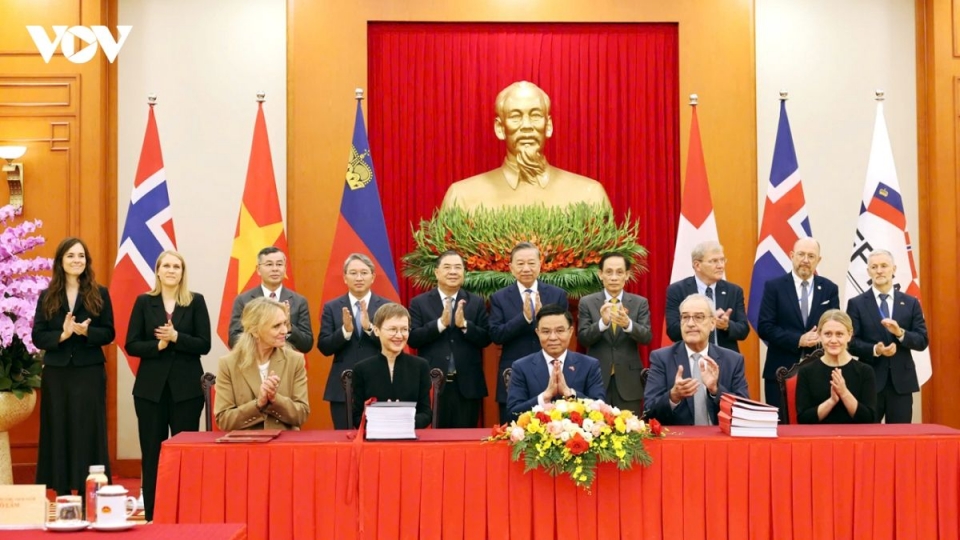
Vietnam and EFTA pen landmark free trade agreement in Hanoi
VOV.VN - Vietnam and the four member states of the European Free Trade Association (EFTA) have signed a free trade agreement, opening new prospects for trade, investment and innovation following 14 years of negotiations.


