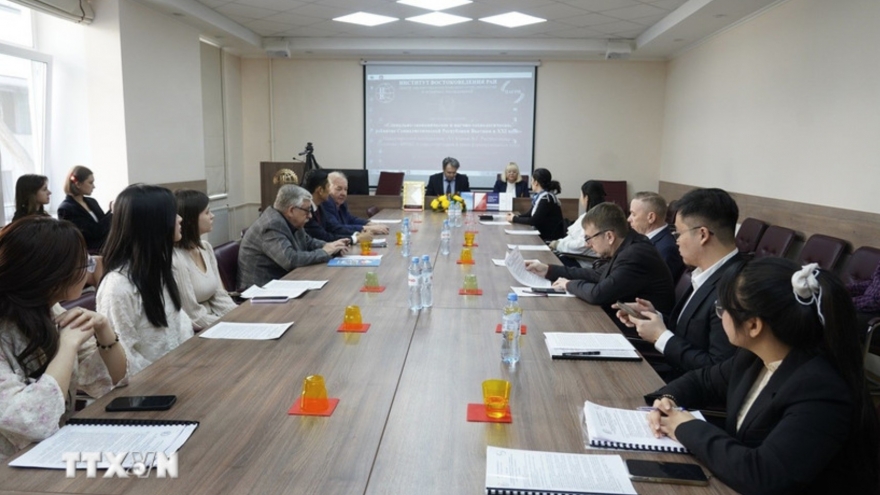
Russia eyes expanded technological footprint in Asia through VN’s nuclear project

Russian experts have highlighted the positive impacts of the recently-signed cooperation agreement between Vietnam and Russia to construct Ninh Thuan 1 Nuclear Power Plant, describing it as a strategic move that will bolster Vietnam’s energy security while expanding Russia’s technological footprint in Asia.
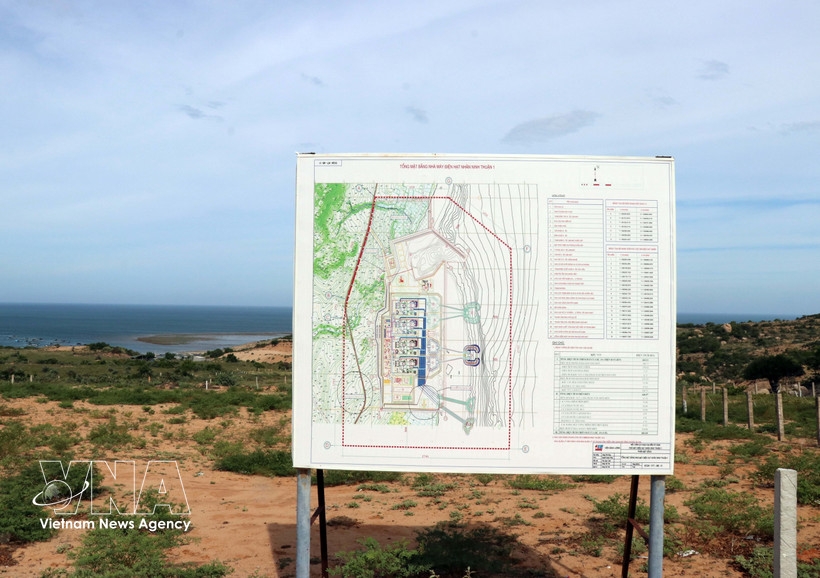
Russian analysts said that for Vietnam, the agreement marks the culmination of years of deliberation and signals a return to nuclear power development. For Russia, meanwhile, large-scale projects such as Ninh Thuan 1 provide a solid foundation to expand its presence in Asia and export its nuclear technologies and infrastructure.
Vadim Petrov, deputy chairman of the Interdepartmental Arctic Agenda Working Group of the Russian Ministry of Natural Resources and Environment, noted that the project will strengthen Russia’s position in one of Asia’s fastest-growing energy markets.
With a planned capacity of around 2.4 GW, the plant could generate an estimated 17 TWh annually even at 80% capacity - an important contribution as Vietnam’s power demand is projected by the International Energy Agency (IEA) to double by 2030, he noted.
Sergey Tronin, Assoc. Prof. at the Department of Financial and Investment Management at the Graduate School of Management Faculty of the University of Finance under the Government of the Russian Federation, pointed out that Southeast and East Asia are facing chronic power shortages amid rapid industrialisation.
He said Russia is actively promoting not only classic high-power nuclear power plants here, but also small modular reactors, as well as floating power units. In Vietnam, in addition to nuclear power plants, Russia is building a Nuclear Science and Technology Centre.
Russia's competitive advantage lies in the fact that not only the reactor is exported, but the entire infrastructure platform, including design, construction, fuel cycle, personnel training, service and technological transfer, Petrov said, adding that for Russia, these are long export contracts, high added value, machine-building workload, and geo-economic impact.
The portfolio of foreign orders in this area exceeds US$200 billion, he noted.
Meanwhile, Mikhail Khachaturian, Assoc. Prof. at the Department of Strategic and Innovative Development at the University of Finance said such cooperation gives Russia unconditional economic and technological advantages, especially stable exports of technologies and services; and powerful geo-economic benefits.
According to Nadezhda Kapustina, a professor at the University of Finance of Russia, the presence of Russian nuclear technologies in Vietnam, India, Bangladesh and potentially in other countries of the region creates an extensive network of infrastructure links. This strengthens Moscow's position in the emerging polycentric architecture of international relations.
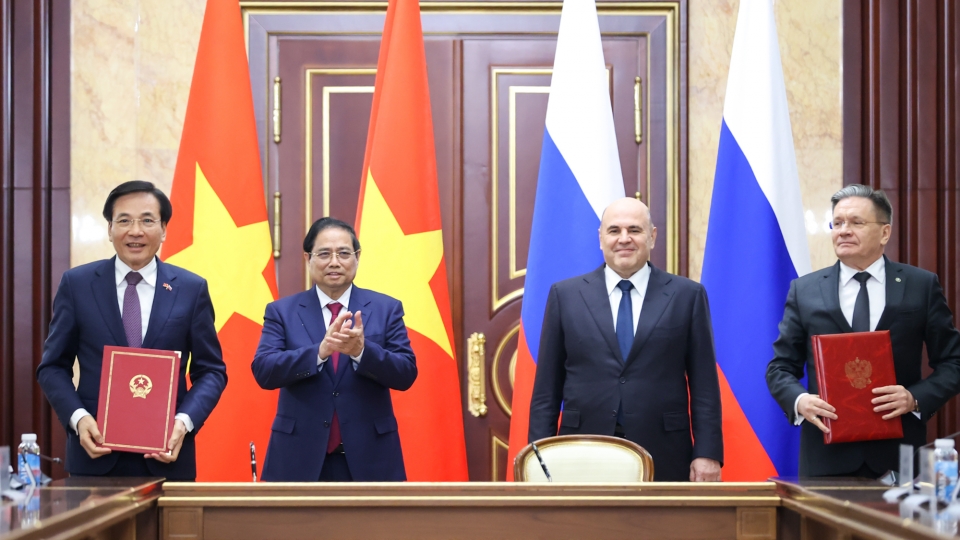
Vietnam and Russia boost energy cooperation, sign nuclear power deal
VOV.VN - Vietnam and Russia have agreed to deepen bilateral energy cooperation, with a landmark nuclear power agreement marking a strategic breakthrough amid increasing global energy market volatility.