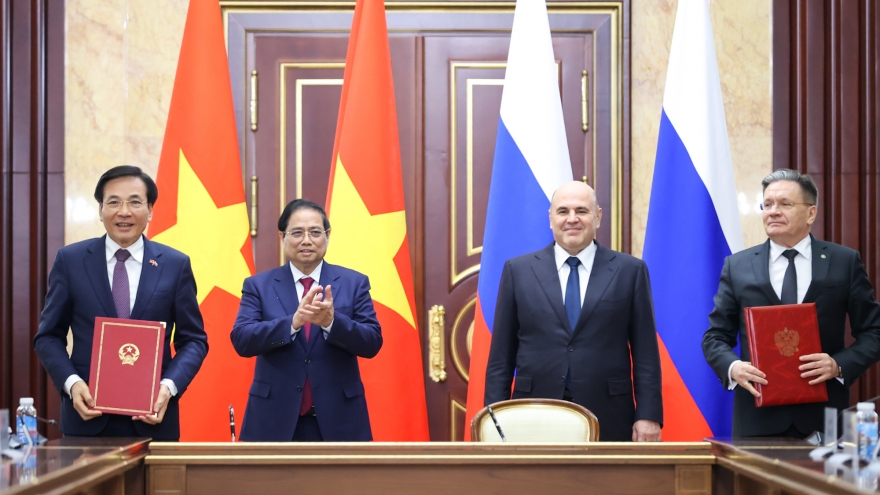
Russia-Vietnam cooperation holds strong potential in multipolar world

VOV.VN - Scholars at a workshop in Moscow have pointed to expanding prospects for Russia-Vietnam cooperation as the global order moves toward multipolarity.
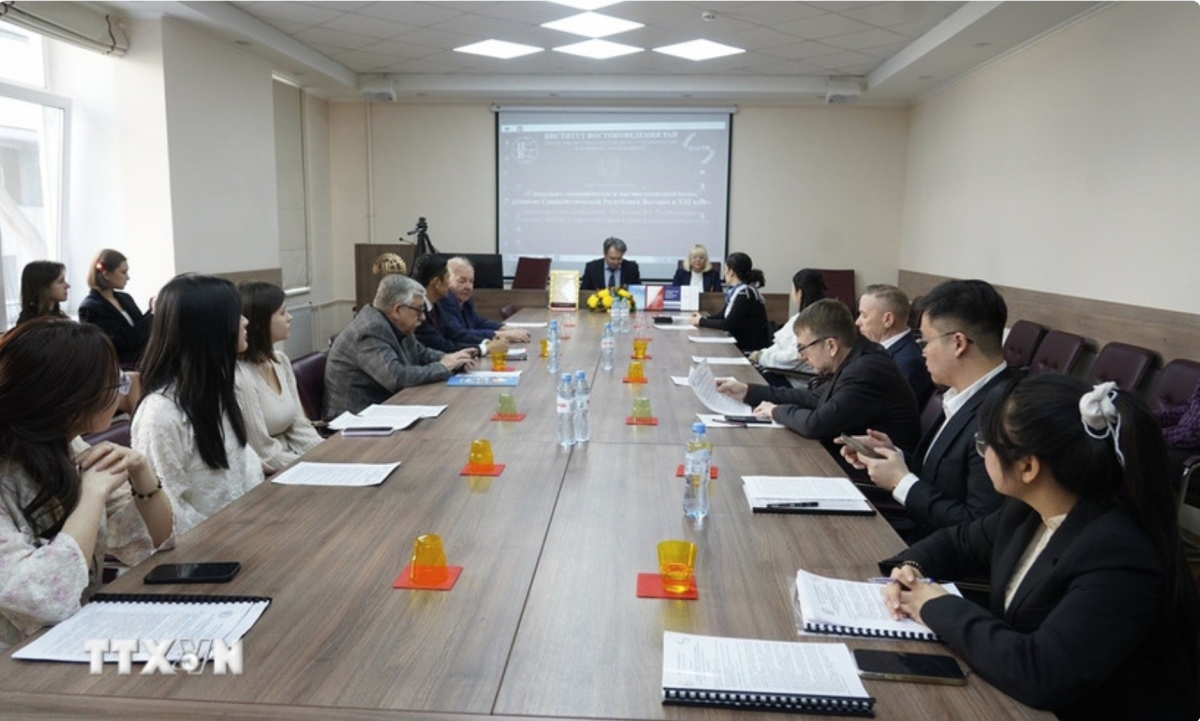
An international workshop titled “The VI V.G. Rastyannikov Readings: The Potential of BRICS and Partner Countries in a Changing World” was held from March 23 to 30 at the Institute of Oriental Studies under the Russian Academy of Sciences.
A thematic session on “Vietnam’s Socio-Economic and Science-Technology Development in the 21st Century” took place on March 30.
The event brought together a large number of Russian and Vietnamese scholars, both in person and online, and came shortly after Prime Minister Pham Minh Chinh’s successful visit to Russia.
Opening the session, Doctor of Sciences Alikber Alikberov, Director of the Institute of Oriental Studies, welcomed participants and stressed the importance of in-depth research into Vietnam’s development model.
He said Vietnam is not only a traditional strategic partner of Russia but also an important link in the economic and security structure of the Asia-Pacific.
The workshop gathered dozens of leading Vietnam specialists from major Russian research centres, featuring 12 papers that examined recent developments in Vietnam across multiple areas.
One key paper, “Towards Strategic Autonomy – Vietnam’s New Economic Policy,” was presented by Doctor of Economics, Professor Vladimir Maryzin, Director of the Vietnam and ASEAN Research Centre. It discussed how Vietnam is adapting to global economic fluctuations.
Another report by Doctor of History Petr Tsvetov, a senior researcher at the same centre, analysed Vietnam’s relations with major powers, including Russia, China and the US, under the leadership of Party General Secretary To Lam.
It highlighted flexibility and resilience in Vietnam’s foreign policy.
On bilateral cooperation, Nguyen Quoc Hung, Director of the Russia-Vietnam Cooperation Promotion Fund “Tradition and Friendship,” said the relationship is entering a phase of new opportunities, particularly in high-quality human resources training, science and technology transfer, logistics and energy.
He said a key factor for effective cooperation lies in both sides’ ability to overcome infrastructure and legal barriers, ensure a stable investment environment and protect intellectual property rights. Several participants also outlined the current state of Russia-Vietnam relations and assessed the impact of multipolar trends on the relationship.
Vietnam’s role in expanding cooperation with BRICS was seen by some young Vietnamese delegates as a potential factor in promoting a more balanced global order.
Pham Quang Truong Minh, a final-year master’s student in international economics at Plekhanov Russian University of Economics, said BRICS is becoming an increasingly influential international framework.
He said the group’s principles, along with Russia’s 2023 foreign economic concept, affirm that a multipolar world is an inevitable trend.
This concept shares similarities with Vietnam’s foreign policy, both aiming to maximise interests across all partners.
He added that this presents an opportunity for Vietnam to strengthen self-reliance, advance localisation and technological autonomy, apply artificial intelligence in production and business, and enter new markets.
The workshop concluded with a message on enhancing academic linkages, contributing to deeper, more effective and sustainable development of the Russia-Vietnam comprehensive strategic partnership in the 21st century.
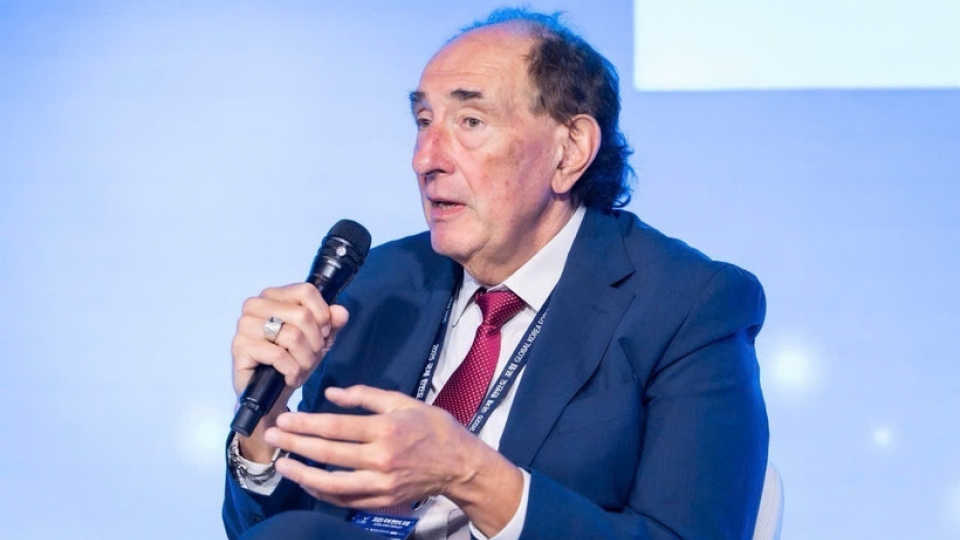
Russian scholar sees Vietnam strengthening national security strategy
Prime Minister Pham Minh Chinh’s recent visit to Russia, during which several cooperation agreements were reached, particularly in the energy sector, has been viewed by Russian experts as a strategic move that could reshape bilateral cooperation.
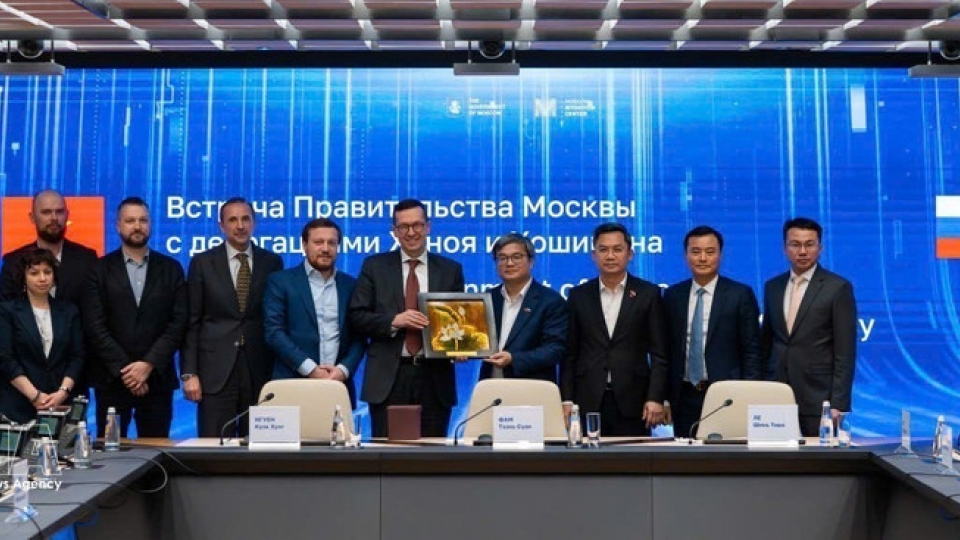
Vietnamese, Russian cities boost cooperation in urban infrastructure development
A trilateral working session between Moscow, Hanoi and Ho Chi Minh City has marked a new push to strengthen cooperation between the Vietnamese and Russian localities, particularly in developing sustainable urban transport infrastructure.