Ho Chi Minh City pilots drone deliveries, paving the way for smart logistics

VOV.VN - Ho Chi Minh City has begun piloting postal deliveries using unmanned aerial vehicles (UAVs), connecting Can Gio commune and Vung Tau ward, in a move seen as a breakthrough in its strategy to develop smart logistics.
The initiative is being implemented under a controlled sandbox mechanism for emerging technologies, in line with the city’s policies to promote science, technology and innovation. It is also aligned with Resolution 20 of the municipal People’s Council and Resolution 57 of the Politburo on advancing science, technology and innovation.
From pilot success to growing business interest
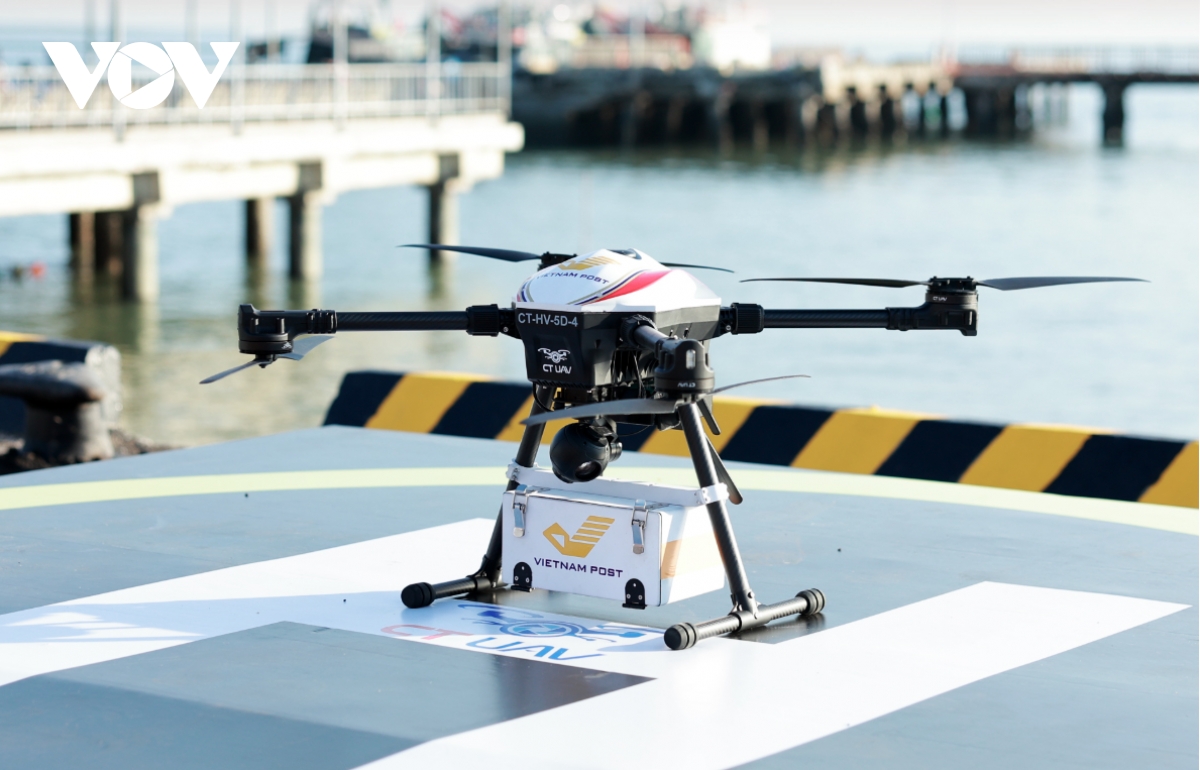
Since the start of the pilot programme in January 2026, initial results have indicated strong feasibility. According to Nguyen Ky Phung, head of the Management Board of the Saigon Hi-Tech Park, the drones have demonstrated stable operations, following pre-programmed coordinates, delivering packages accurately, and returning safely.
However, he noted that commercialisation would require time and support from both the government and the market.
“The potential is clear, given the already significant scale of the UAV market in both military and logistics sectors. But for commercialisation, support mechanisms are essential. Ultimately, market forces will determine which solutions survive and scale,” he said.
Following early success, the city has attracted growing interest from businesses. Lam Dinh Thang, director of the Ho Chi Minh City Department of Science and Technology, revealed several enterprises have proposed expanding the UAV delivery sandbox model, particularly for urgent transport routes.
Some proposals focus on high-priority routes such as connections between Can Gio and Con Dao, especially for transporting medical supplies, blood, and pharmaceuticals. UAVs could significantly reduce delivery time compared to sea transport, enhancing connectivity and emergency response capacity.
“At least two major companies have already submitted proposals to expand the pilot programme,” said Thang.
Challenges remain for wider adoption
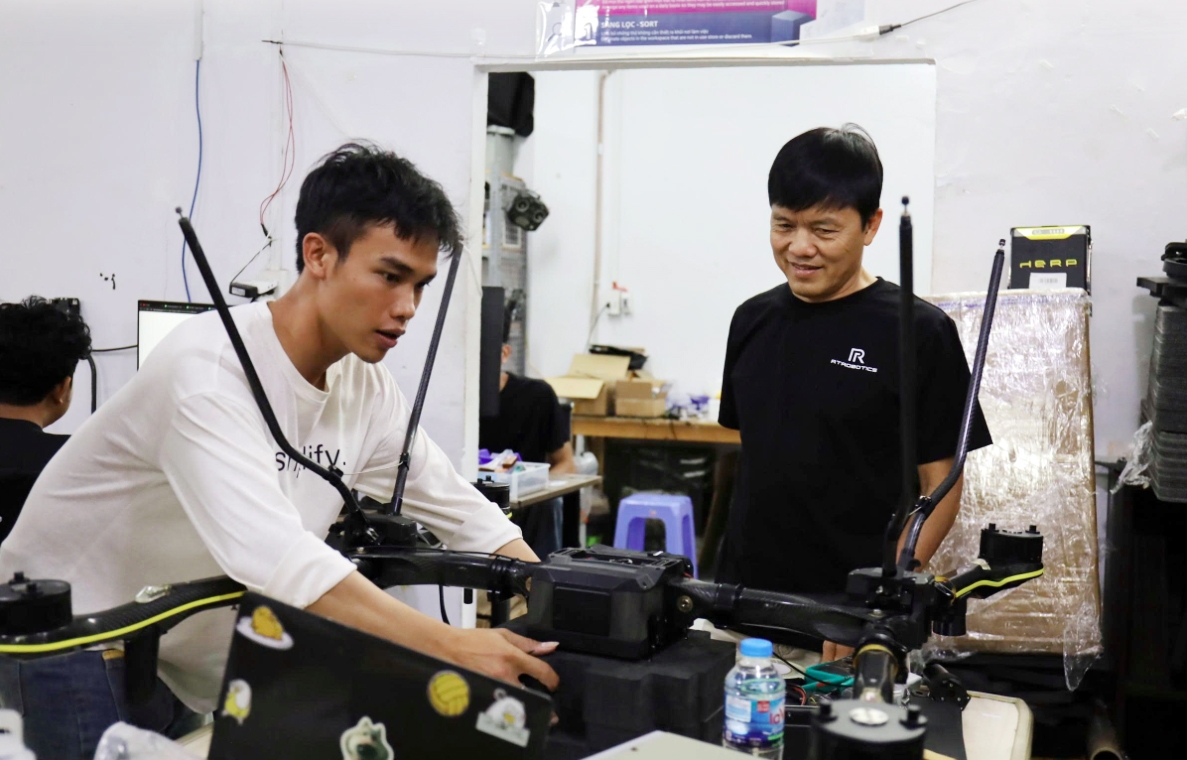
From a technology perspective, Luong Viet Quoc, CEO of Real-time Robotics Vietnam, pointed out Ho Chi Minh City has strong advantages in developing smart logistics thanks to its capacity to master core technologies, including UAV design and manufacturing.
However, he acknowledged that UAV delivery is not yet competitive with traditional logistics in terms of cost, speed, and operational efficiency in complex urban environments.
“Widespread commercial deployment in dense urban areas is not yet feasible. But UAVs show clear advantages in specific scenarios, such as remote areas or emergency situations where ground transport is disrupted,” he analysed.
For instance, he said, a drone could cover a distance of around 15 km between Can Gio and Vung Tau in just 15–20 minutes, significantly faster than ferry transport.
Despite its potential, several challenges remain. Experts point to three main barriers: technological readiness, regulatory frameworks, and operational conditions.
Quoc emphasised that businesses must ensure safety under all conditions, while regulators need to provide a phased roadmap that allows controlled testing and gradual scaling.
“Incidents are inevitable in real-world deployment. The key is not to stop, but to learn from failures, improve the technology, and move forward,” he said.
From a regulatory standpoint, the Saigon Hi-tech Park leader highlighted the lack of technical standards and governance mechanisms as major obstacles. Questions remain over which standards UAVs should follow, who certifies compliance, and which authority oversees operations.
“Like in aviation, UAV operations require clear technical standards, identification systems, and management frameworks. These are critical issues that must be addressed to enable wider adoption,” he noted.
The pilot drone delivery programme is not only a technological milestone but also a key testbed for Ho Chi Minh City’s smart logistics ambitions. While challenges persist, early results suggest UAVs could become an integral part of future logistics systems, particularly in specialised and high-priority use cases.
HCM City launches Vietnam’s first cross-sea UAV delivery route
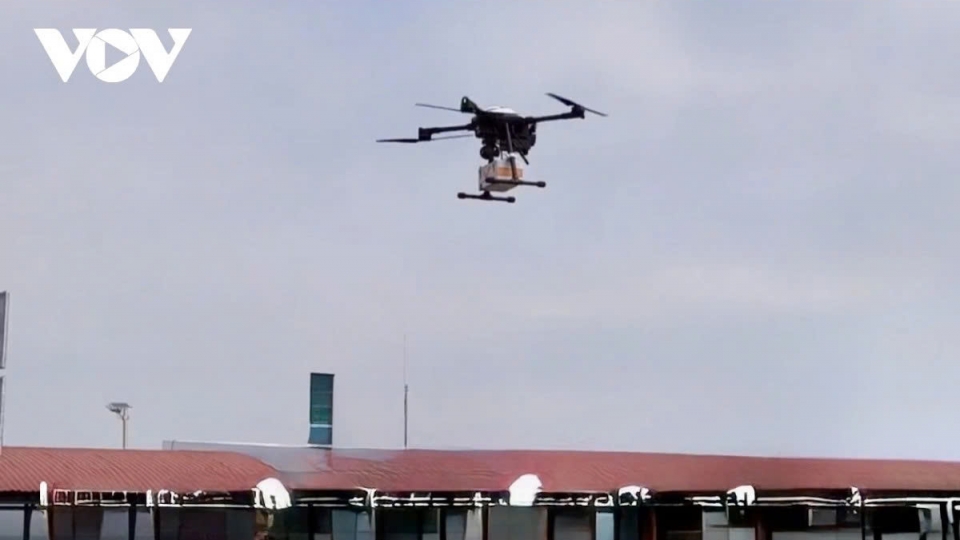
VOV.VN - Ho Chi Minh City on February 12 launched the country’s first cross-sea postal delivery route using unmanned aerial vehicles (UAVs), connecting Can Gio and Vung Tau in a pilot initiative aimed at advancing smart logistics and the low-altitude digital economy.