


High logistics costs squeeze profit margins for Vietnamese enterprises

VOV.VN - Rapid import-export growth continues to outpace logistics infrastructure, making high logistics costs a major bottleneck for Vietnamese enterprises.
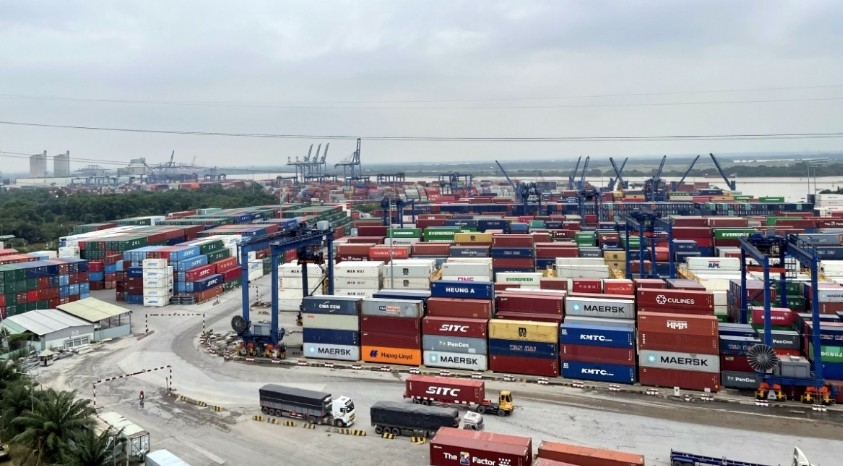
From road transport and warehousing to seaports and miscellaneous fees, compounding expenses are directly eroding profit margins and weighing down business competitiveness.
Pressure from thin profit margins
Logistics plays an increasingly critical role as Vietnam deepens its integration into the global supply chain. In 2025, total import-export turnover reached US$930.1 billion. During the eight-month period of 2026, this figure hit US$770.14 billion, a 28.7% increase year-on-year.
However, this surge in trade volume places heavy demands on transport and storage infrastructure. According to the Vietnam Textile and Cotton Association, domestic logistics costs from factory to port currently account for about 9% to 10% of the sector's import-export operations, while profit margins range between just 3% and 5%.
For industries operating on thin margins, absorbing higher logistics costs into selling prices is difficult amid intense international market competition. Corporate realities illustrate the extent of this vulnerability.
Truong Van Cam, Vice Chairman and General Secretary of the Vietnam Textile and Cotton Association, notes that at Phuc Sinh Corporation, maritime freight charges jumped to VND17 billion (approximately US$649,000) over the past month compared to the usual VND7 billion to VND 8 billion (US$267,000 to US$305,000). With an additional VND5 billion (around US$191,000) in logistics, port, and other surcharges, total monthly expenses reached VND22 billion (US$840,000), more than half of the company's VND41 billion (US$1.57 million) gross profit for the month.
Bottlenecks in transport structure and network connectivity
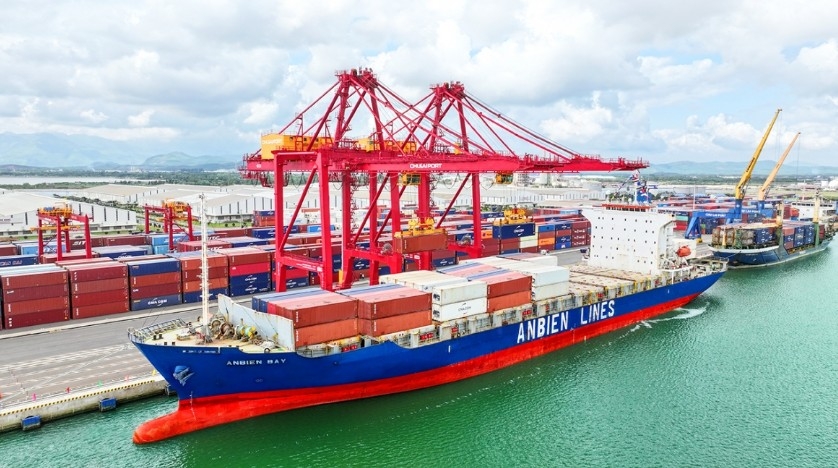
The root cause extends beyond freight rates to the organization of the transport network. Road transport still handles the vast majority of cargo movement from factories and industrial parks to seaports, logistics centers, and border gates, whereas rail and inland waterway transport have yet to fulfill their potential. For example, approximately 98% of containers passing through the Hai Phong port system are still carried by truck, straining infrastructure and risking traffic congestion.
Tran Thanh Hai, Deputy Director of the Import-Export Department under the Ministry of Industry and Trade (MoIT), points out that simply lowering a specific fee or cutting freight rates will not resolve the core logistics challenge. The issue stems from disconnected links across infrastructure, transport modes, technology, data, and inter-firm coordination. Furthermore, low equipment utilization rates, such as trucks or vessels running empty on return trips or operating below capacity, increase the cost per unit of goods.
Solutions spanning multi-modal transport and digitalization
Resolving these bottlenecks requires establishing an integrated network connecting inland waterways and railways with logistics centers and seaports to relieve pressure on roads.
This direction is outlined in the Strategy for Developing Vietnam's Logistics Services for the 2025-2035 Period, with a Vision to 2050, which targets reducing logistics costs to the equivalent of 12% to 15% of GDP by 2035, achieving a 70% to 80% outsourcing rate among enterprises, and ensuring 80% of logistics companies adopt digital transformation solutions.
In addition to upgrading multi-modal infrastructure, digitalization is vital. Integrating data on orders, warehousing, vessel schedules, and delivery status enables companies to coordinate operations proactively, reduce wait times, and minimize empty runs.
MoIT's Import-Export Department emphasizes that dealing with logistics costs requires synchronized measures: reorganizing transport along designated corridors, cutting time and expenses at ports, airports, and border gates through advance booking and vehicle dispatching, and ensuring cost transparency at every stage.
Logistics is therefore not simply a matter of lowering freight rates, but of cutting wait times, empty trips, intermediary stages, and connectivity bottlenecks. As import-export volumes continue to grow, logistics efficiency will directly shape product pricing, profit margins, and the international competitiveness of Vietnamese enterprises.
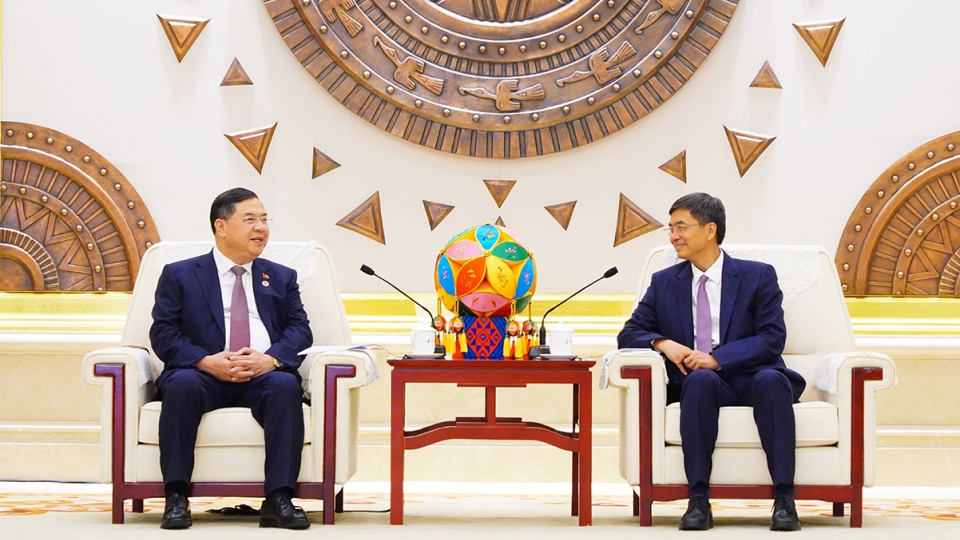
Vietnam, Guangxi step up logistics, border-gate and supply-chain links
VOV.VN - Vietnam and China’s Guangxi Zhuang Autonomous Region will move beyond conventional trade towards deeper economic integration, with a focus on logistics, smart border gates, rail and road connectivity, supply chains, science and technology, and emerging areas of cooperation.
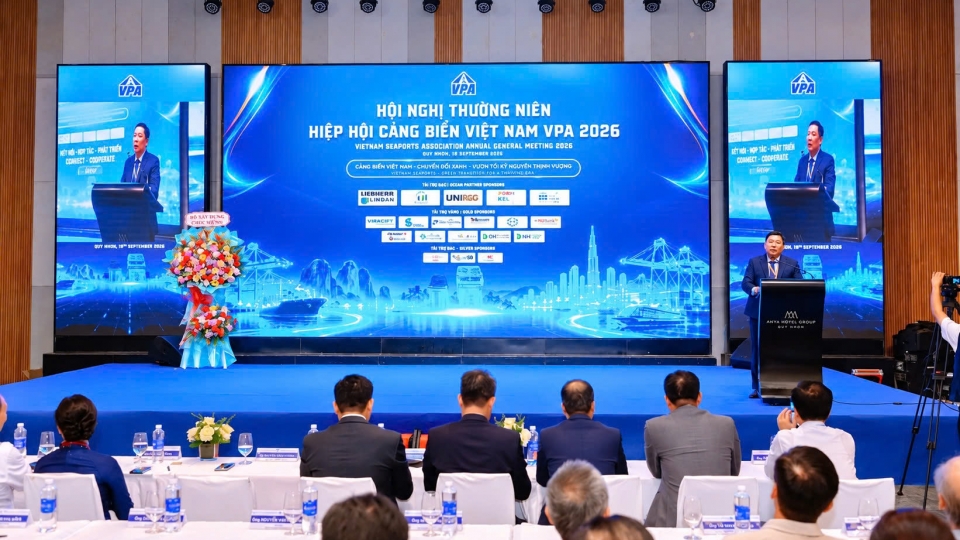
Vietnam promotes green, smart seaports linked to modern logistics
VOV.VN - Green transformation, digitalisation and stronger links with modern logistics systems are emerging as key directions for the seaport sector to improve competitiveness, use resources more efficiently and adapt to changing supply-chain requirements.


