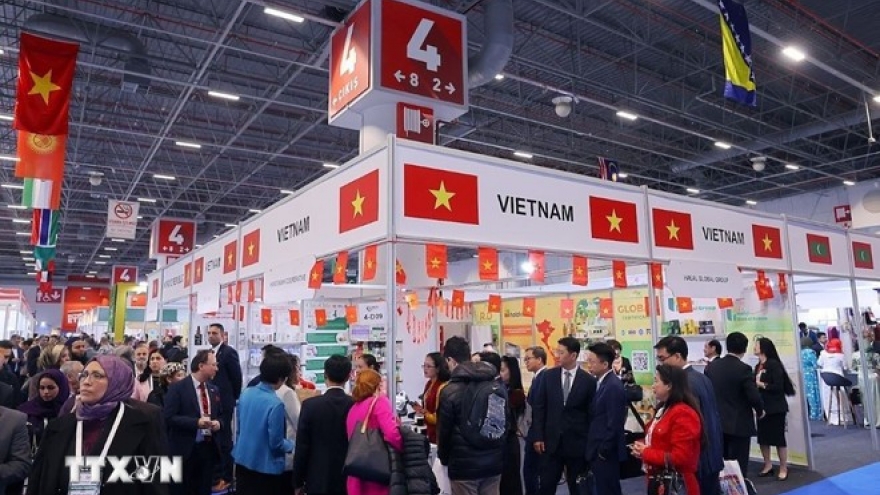
Halal market offers significant growth opportunities for Vietnamese exporters

As the global economy faces growing uncertainty, including geopolitical tensions, persistent inflation, and rising trade protectionism, diversifying export markets has become an urgent priority for Vietnamese businesses.

Against this backdrop, the Halal market in the Middle East is increasingly viewed not as an alternative, but as a strategic pillar for sustaining long-term export growth, said Tran Phu Lu, director of the Investment and Trade Promotion Centre of HCM City (ITPC) at the conference “Export Prospects to the Middle East and Türkiye: Opportunities and Challenges for Vietnamese Enterprises,” held in HCM City on December 18.
According to Lu, the Middle East is among the world’s most dynamic import markets, with annual imports exceeding US$1.2 trillion and GDP growth of 5–6%.
In the first 11 months of 2025, Vietnam’s exports to key markets in the region continued to perform strongly, reaching US$5.4 billion to the UAE, US$1.9 billion to Saudi Arabia, and US$1.6 billion to Türkiye.
Major retailers such as Lulu Hypermarket (UAE), Al Othaim Markets (Saudi Arabia), Choithrams, and Citi Hypermarkets (Kuwait) are also showing growing interest in sourcing quality products from Vietnam, he said.
Türkiye, meanwhile, is regarded as a strategic gateway, enabling Vietnamese goods to reach not only Middle Eastern markets but also a wider Muslim consumer base of more than two billion people worldwide, he added.
Nguyen Phuong Tra, general director of the Middle East and Africa Department at the Ministry of Foreign Affairs, underscored the vast potential of the global Halal economy. Muslims account for around 25% of the world’s population, while the Halal economy is projected to reach US$10 trillion before 2028.
The Halal food sector alone is expected to expand from US$2.7 trillion in 2024 to US$5.9 trillion by 2033, with annual growth of around 9%.
Tra noted that the Middle East, home to about 500 million people and with GDP of US$3.6 trillion, has particularly strong purchasing power. Food imports in the region reached US$132 billion in 2023, while Gulf Cooperation Council (GCC) countries depend on imports for up to 85% of their food needs.
Despite the opportunities, Vietnamese enterprises face challenges in accessing Halal markets, notably the complexity of certification systems. Businesses must navigate multiple standards, including GSO 993:2015 in GCC countries, Indonesia’s HAS 23103:2012, Malaysia’s MS 1500:2019 and OIC/SMIIC 1:2019, recognised by 56 OIC member states, Trà said.
High certification costs, short validity periods and intense competition from established exporters further complicate market entry. She also warned of trade fraud risks, urging enterprises to strengthen partner verification and adopt secure payment terms.
Türkiye positioned as Halal hub and logistics gateway
Nguyen Viet Hang, Vietnam’s Commercial Counsellor in Türkiye, said that despite global volatility, bilateral economic and trade cooperation between Türkiye and Vietnam in 2025 continued to record positive progress.
She identified the Halal market as a key strategic focus for future cooperation, noting that Vietnamese enterprises made a strong impression at the Global Halal Summit and Halal Expo 2025 in Istanbul with products ranging from food and agricultural goods to cosmetics and herbal medicines.
With a Muslim population of nearly 90 million and its role as a key member of the Organisation of Islamic Cooperation, Türkiye offers a valuable entry point for HCM City firms to integrate more deeply into global Halal supply chains, she added.
From a standards perspective, Ramlan Osman, director of the Vietnam Halal Certification Authority (HALCERT), said Halal principles align closely with international frameworks such as the United Nations Global Compact and Environmental, Social and Governance criteria.
As such, adopting Halal practices complements existing industrial standards and benefits both Muslim and non-Muslim consumers, he said.
He outlined a nine-step Halal food certification process to help enterprises prepare for compliance.
Sharing practical insights, Thi Hong Uytun, founder of HM Dragon Logistics and Consulting Company, highlighted Türkiye’s dual role as a consumer market and a gateway to the Middle East and the European Union. Vietnam is currently Türkiye’s third-largest trading partner within ASEAN, with exports reaching US$1.93 billion in 2024, up 9.1% year-on-year.
However, Vietnamese goods still account for only about 0.5% of Türkiye’s total imports.
She recommended enterprises to be mindful of trade defence measures, currency volatility and payment risks when entering the market.
To mitigate risks related to payment practices, she recommended prioritising irrevocable letters of credit confirmed by reputable banks and strengthening financial due diligence before contract signing.
The conference was jointly organised by ITPC, the Ministry of Foreign Affairs’ Middle East and Africa Department and the HCM City Food and Foodstuff Association, as part of the Business Matching and HCM City Products Week 2025 – Food and Beverages, held from December 16–22.
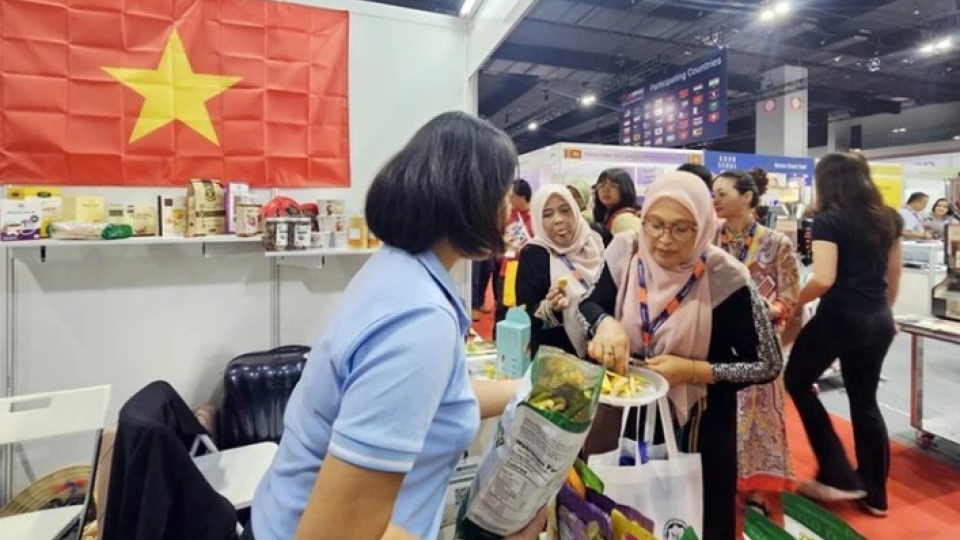
Vietnam taps into Halal market opportunities in Malaysia
VOV.VN - Bilateral trade between Vietnam and Malaysia in the Halal sector has been growing steadily, though challenges remain with trade imbalances and strict Islamic certification requirements.