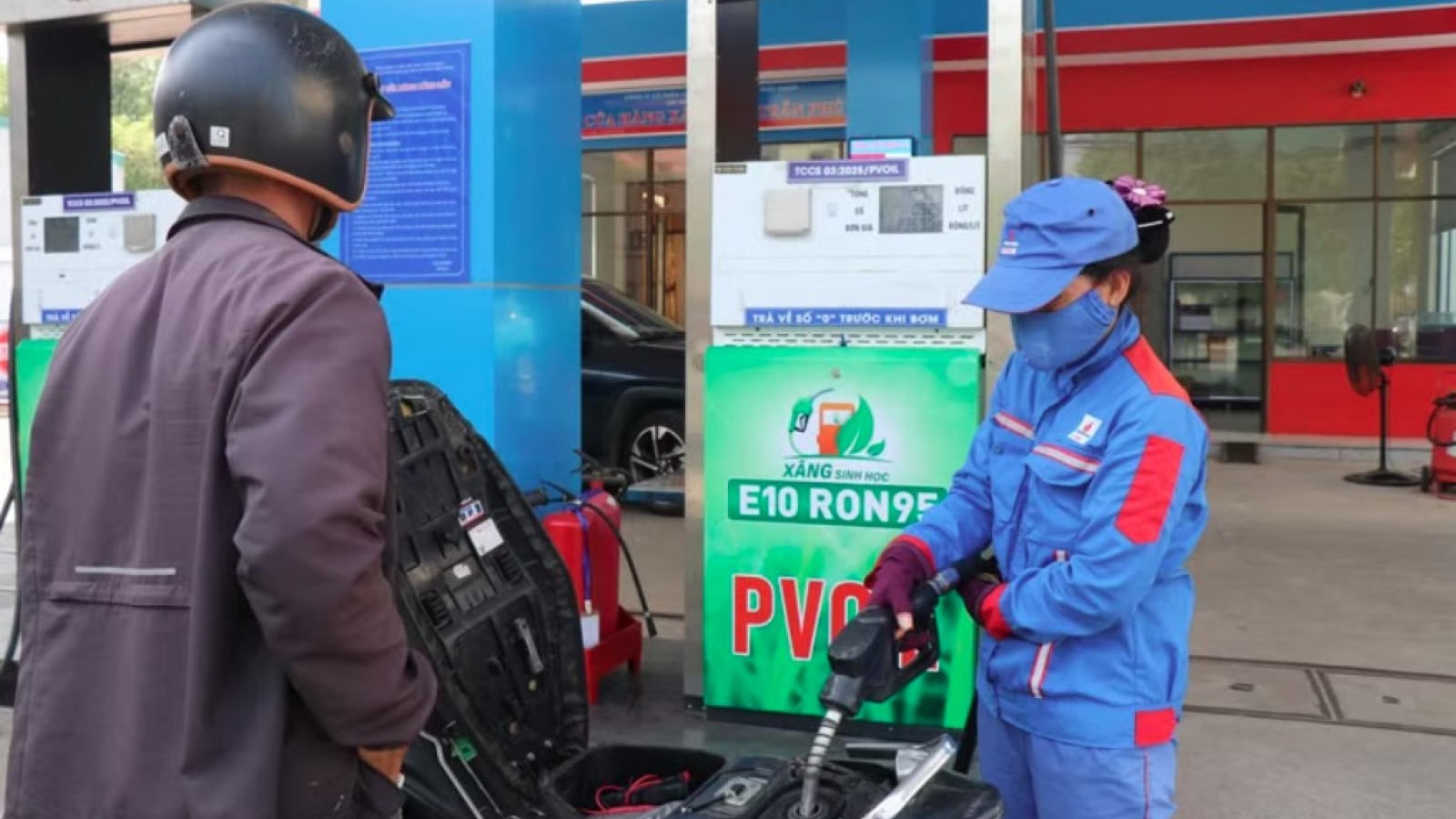
Green fuel transition gains momentum as E10 goes nationwide

Starting June 1, E10 biofuel will officially be distributed nationwide under the Ministry of Industry and Trade (MoIT)’s roadmap, marking a major step in Vietnam’s green energy transition strategy, greenhouse gas emission reduction efforts and commitment to achieving net-zero emissions by 2050.
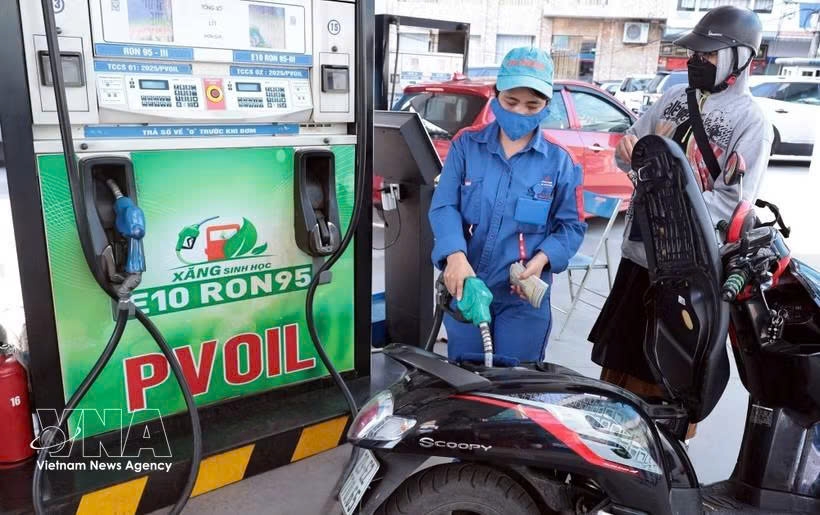
Under the ministry's Circular No. 50/2025/TT-BCT, all unleaded petrol sold on the domestic market from June 1 must be blended with ethanol to produce E10 for petrol-powered vehicles nationwide. Meanwhile, E5RON92 petrol will continue to be available until the end of 2030.
Expectations mixed with concerns
Nguyen Duc Thanh, a ride-hailing driver in Hanoi’s Hoang Mai ward, said he previously used E5 petrol and is not overly concerned about switching to E10. His main concerns are fuel prices and consumption efficiency.
People need sufficient information to feel confident, Thanh said.
Consumer hesitation largely stems from the earlier rollout of E5 as when many users questioned the quality of biofuels.
However, according to MoIT, most vehicles currently operating in Vietnam are compatible with E10. Authorities cited technical studies and international experience showing that around 90% of petrol-powered vehicles can use E10 without requiring engine modifications.
Nguyen Phu Cuong, a resident of Hanoi's Long Bien ward, said transparency and fuel quality control are the most important factors. People will accept the transition if they clearly see the benefits and receive guarantees from authorities. If fuel quality differs between stations, it will be difficult to build trust.
Many vehicle owners in Hanoi also expect E10 adoption to help improve air quality, which remains a major issue in the capital. Environmental experts say ethanol-blended fuel enables cleaner combustion and reduces carbon monoxide and unburned hydrocarbon emissions compared to conventional petrol.
According to authorities, the introduction of E10 will be accompanied by tax and fee adjustments to make it more competitively priced than traditional fossil fuel. The MoIT is proposing revisions to environmental protection and excise taxes to encourage consumers to switch to biofuel.
In Hanoi, many fuel distributors said they have completed upgrades to storage tanks and fuel pumps in preparation for E10 sales from the start of June.
The ministry noted that E10 is already widely used in more than 60 countries, including the US, Japan, the Republic of Korea, Thailand and Brazil.
Preventing speculation and fraud
Representatives from Hanoi’s market surveillance sub-department said market management teams will coordinate with the municipal Department of Industry and Trade, quality standards authorities and economic police to inspect E10 implementation at fuel retail outlets from June 1. Inspections will focus on fuel quality, price listing, supply stability and acts such as hoarding or selling fuel products that do not meet regulations.
Authorities will strictly handle cases involving fuel speculation, improper fuel sales or arbitrary suspension of sales that disrupt market supply.
Market surveillance officers stressed that the transition to E10 must be implemented in a synchronised manner to prevent profiteering during the policy transition period.
Energy experts described the rollout of E10 as an inevitable trend as Vietnam accelerates its emissions reduction and green transition agenda.
Dr. Ngo Tri Long, an economic expert, said E10 carries not only environmental significance but also positive implications for national energy security. By increasing the ethanol ratio in petrol, Vietnam can reduce dependence on imported fossil fuel while promoting domestic ethanol production.
Technical experts also noted that most modern engines can use E10 normally if the fuel meets quality standards. However, owners of older vehicles or cars with deteriorating fuel systems are advised to conduct regular maintenance checks to avoid corrosion of rubber components or the dissolution of residue inside fuel tanks.
According to specialists, E10 offers clear environmental benefits by helping reduce CO2 emissions, fine dust particles and other toxic pollutants from transport exhaust, a major source of urban pollution in cities such as Hanoi and Ho Chi Minh City.
They added that if implemented methodically, E10 could serve as a stepping stone toward wider adoption of higher-ethanol biofuels such as E15 and E20 in the future.
However, analysts stressed that the biggest challenge remains building public confidence. International experience shows that reasonable pricing, stable quality and transparent market management are essential for biofuels to gain broad consumer acceptance.
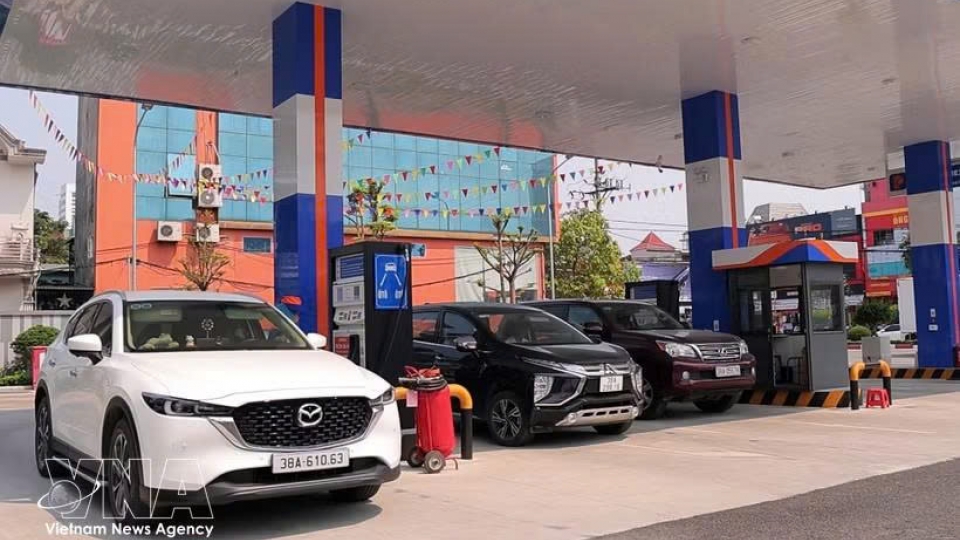
Carmakers confirm compatibility with E10 fuel ahead of nationwide rollout
Major automakers including Honda, Toyota, Hyundai, Ford and Mercedes-Benz have confirmed that most modern vehicles currently operating in Vietnam are compatible with E10 biofuel, easing concerns ahead of the fuel’s nationwide rollout from June 1.