EVFTA opens door for Vietnam’s textiles in Hungary amid tighter standards

VOV.VN - The EU-Vietnam Free Trade Agreement (EVFTA) opens tariff preferences but also sets high requirements on origin and standards, requiring Vietnamese textile and garment enterprises to adjust in order to expand their market share in Hungary.
High demand but intense competition
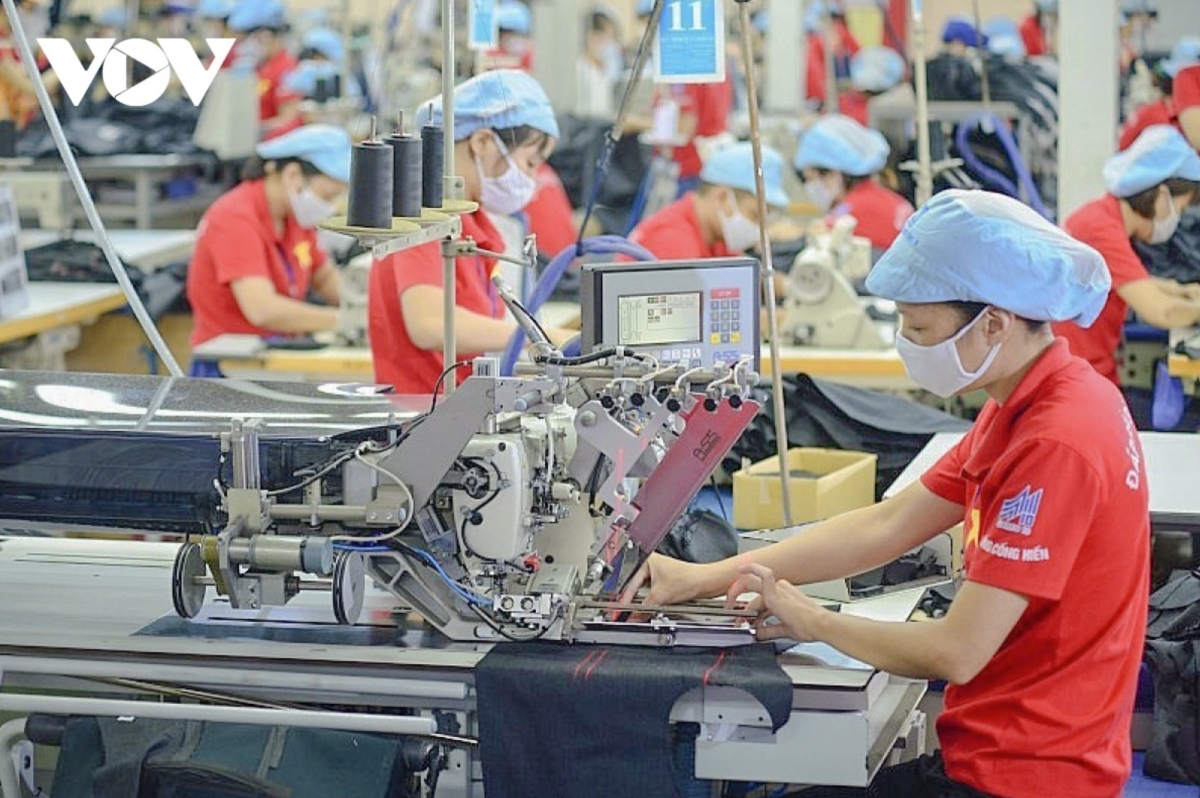
According to a market report by the Vietnam Trade Office in Hungary, Hungary’s textile and garment imports reached US$3.63 billion in 2025, up 13.7%, while exports stood at US$2.01 billion, up 3.9%. Consumer trends for 2025-2026 show demand gradually recovering as inflation eases and real incomes improve.
Growth prospects for Hungary’s textile and garment sector are forecast at 3-5.3%, with clear divergence across segments. The mass segment faces pressure from price competition and tighter spending, while higher value-added niche segments continue to expand.
As a member of the European Union, Hungary applies full EU technical standards to textile and garment products. From 2026, new regulations such as the Digital Product Passport (DPP) require products to carry lifecycle traceability codes and recyclability, requiring firms to ensure transparency across the entire supply chain.
In addition, the REACH Regulation on chemical control in textile production and the Extended Producer Responsibility (EPR) mechanism increase compliance costs. Importers in Hungary tend to favour durable, recyclable products to reduce waste treatment costs, reducing the competitiveness of low-cost, low-quality goods.
Other factors, including high logistics costs due to Hungary being landlocked, a VAT rate of 27% (the highest in the EU), as well as language and business culture barriers, continue to increase market entry costs.
The market structure is also changing clearly. Hungarian consumers increasingly favour green, sustainable and traceable products. Fast fashion is gradually losing its advantage, giving way to more durable products, recycled materials, and specialised segments such as sportswear and seamless garments.
For Vietnam, textile and garment exports to Hungary remain modest in scale but hold a certain position in some categories. In 2025, exports of technical fabrics (HS 5902) reached US$27.3 million, accounting for 28.3% of market share, ranking second after China (43%).
Competition for Vietnamese apparel in Hungary mainly comes from EU countries (accounting for around 75% of imports), along with China and Turkey, creating strong pressure on price and standards for Vietnamese enterprises.
Enterprises need to capitalize on EVFTA
A notable challenge is the rules of origin under the EVFTA. To benefit from tariff preferences, textile products must meet the “fabric-forward” rule (fabric must be produced in Vietnam or the EU), while Vietnam still depends heavily on imported materials, limiting its ability to utilise these preferences.
In this context, the Vietnam Trade Office in Hungary recommends that Vietnamese textile and garment enterprises make full use of EVFTA. They should meet rules of origin by controlling the supply chain from the fabric stage onward; simplify procedures and use the Registered Exporter (REX) system for self-certification of origin to reduce costs and customs clearance time.
At the same time, shifting production towards green and sustainable practices is required, including obtaining certifications such as OEKO-TEX, GOTS and GRS, and applying traceability technologies to meet EU supply chain standards.
Notably, Hungary is a major automotive manufacturing hub, with companies such as Audi, BMW and Suzuki, driving demand for workwear, automotive interior textiles and technical fabrics. Enterprises can focus on niche segments such as technical textiles and protective garments, while promoting digitalisation and participating in B2B e-commerce platforms to expand market access.
In addition, enterprises need to comply with strict EU regulations and technical standards; invest in technology and shift from processing to higher value-added production. They should also study market trends and demand to develop appropriate plans to access, enter and expand the market, as well as visit Hungary to study the market and engage directly with partners.
At the same time, it is essential for enterprises to proactively contact the trade office for support and provide product samples and catalogues for promotion to local partners.
Hungary’s market is shifting from price-based competition to competition based on standards and value addition.
In this context, Vietnamese enterprises that adapt, improve production capacity and meet technical requirements can maintain their market share and expand their position in the EU market.
Textile and garment exports lose momentum as growth remains modest
VOV.VN - Vietnam’s textile and garment exports posted only marginal growth in early 2026, indicating a slower recovery in global demand despite maintaining an overall upward trend.