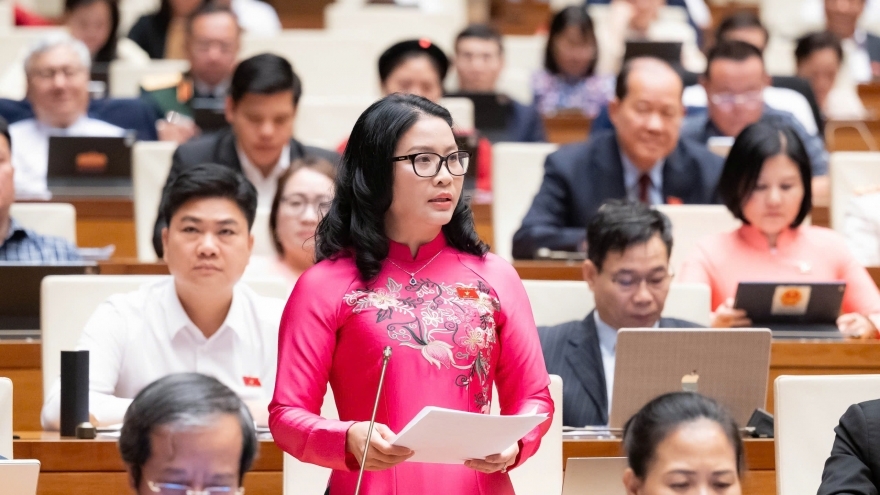
Achieving double-digit growth challenging but essential: Minister

Achieving double-digit growth is highly challenging but essential for meeting Vietnam’s long-term development goals, stated Finance Minister Ngo Van Tuan on April 21 at the ongoing first session of the 16th National Assembly (NA).
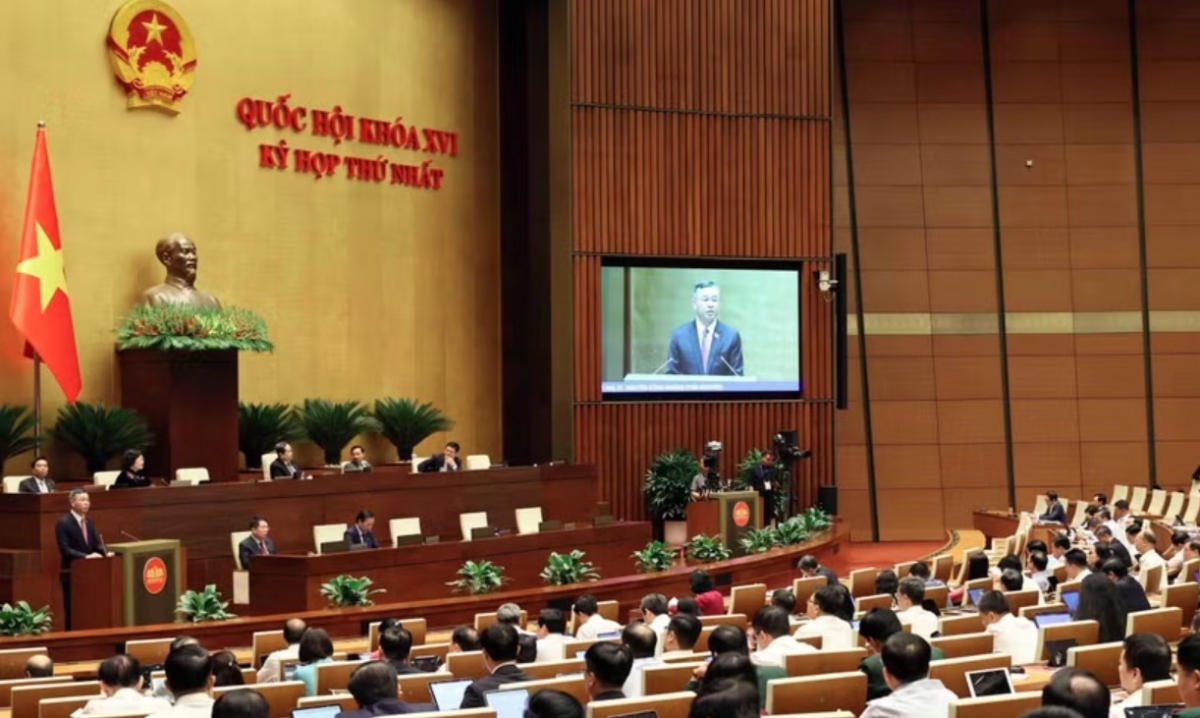
The minister highlighted the country’s twin centenary goals – by 2030, marking 100 years since the Communist Party of Vietnam’s establishment, Vietnam aims to become an upper middle-income developing country; and by 2045, the 100th founding anniversary of the nation, to attain developed, high-income status.
Tuan noted that since 1946, only 13 economies worldwide have sustained double-digit growth for over a decade to transition from low-income and developing to developed status. During Vietnam’s 40 years of renewal, growth has exceeded 9% only twice and has never reached double digits.
Aligned with the Resolution of the 14th National Party Congress and the key Politburo resolutions, the Government has set 59 sectoral targets, 11 groups of tasks and solutions, and 92 specific assignments for 2026, he said.
Initial results are encouraging. In the first quarter of 2026, GDP grew by 7.8%, exports 19%, public investment disbursement 1.2%, and new business registrations more than 31.7%.
However, significant challenges are expected from the second quarter onward, driven by oil price volatility and global geopolitical tensions. Experts estimate that a 10% rise in oil prices could reduce growth by 0.4 percentage points while fuelling inflationary pressures. To achieve annual growth above 10%, remaining quarters would need to record 10–11% expansion.
He said that the Finance Ministry will advise the Government to review and update growth scenarios, assigning tailored targets to ministries, sectors, localities, and enterprises in line with evolving conditions. Close coordination between fiscal and monetary policies will be prioritised to ensure sufficient capital supply while maintaining macroeconomic stability.
The fiscal policy will focus on refining the tax system to ensure accurate, sufficient, and timely revenue collection and, at the same time, create the best possible conditions for business development, particularly small and medium-sized enterprises.
On public investment, Tuan went on, the ministry is accelerating the implementation of tasks assigned by the Prime Minister, with a focus on resolving stalled land-related and other delayed projects. An estimated 200,000 hectares of land, equivalent to around VND3.3 quadrillion (US$125.3 billion) in tied-up resources, remain idle, triple the planned public investment for 2026, highlighting a major bottleneck requiring supervision and resolution.
Regarding capital needs, total investment demand is projected to rise 2.2 times compared to previous periods, with central budget requirements increasing 3.4 times and FDI attraction needing to grow 1.7 times.
The minister stressed that improving investment efficiency is critical. Without lowering the incremental capital output ratio (ICOR), achieving double-digit growth will require total social investment account for up to 70% of GDP. Therefore, the target is to reduce ICOR to 4–4.5.
He also underscored the need to rebalance the financial system, noting Vietnam’s heavy reliance on the monetary market. Developing long-term capital markets, particularly through bonds and stocks, will be key. This will demand institutional reforms, improved market infrastructure, and the development of professional investment institutions to build investor confidence and support sustainable growth.
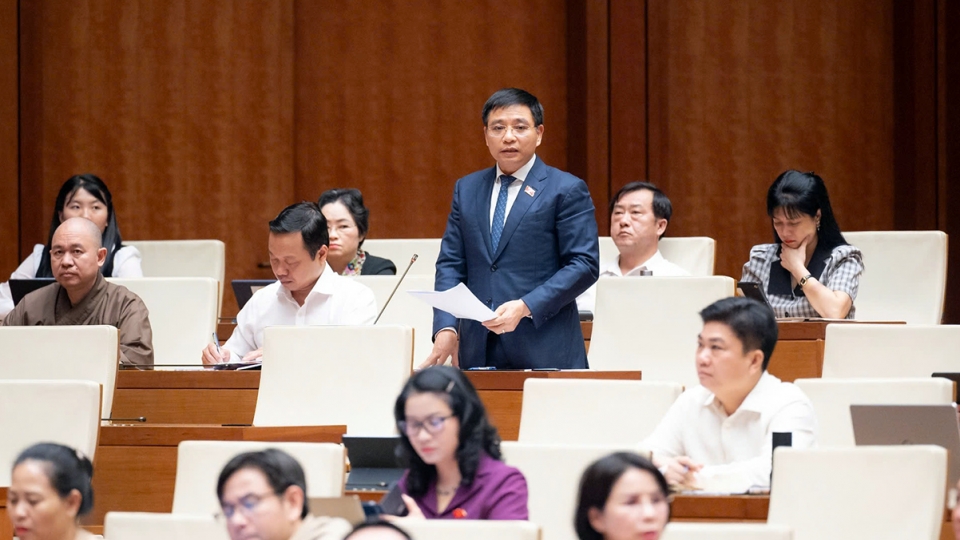
Macroeconomic stability key to sustained high growth, Deputy PM says
VOV.VN - Deputy Prime Minister Nguyen Van Thang, while addressing the National Assembly on April 21, stressed that macroeconomic stability is a prerequisite for Vietnam to achieve high, sustained and long-term growth.