Keeping time alive: Genuine passion for vintage mechanical clocks

VOV.VN - Vietnamese collectors are devoted to restoring and preserving vintage mechanical clocks from Europe and beyond, with their passion for rare designs, original parts, and melodic chimes highlighting a unique cultural movement that honours history while keeping the rhythm of time alive.
Beyond simply telling time, mechanical clocks hold a deeper meaning for collectors. They embody centuries of craftsmanship, engineering mastery and aesthetic refinement. In Vietnam, a growing community of antique clock enthusiasts is quietly preserving these historical timepieces, and the cultural stories they carry.
A passion that favours the dedicated
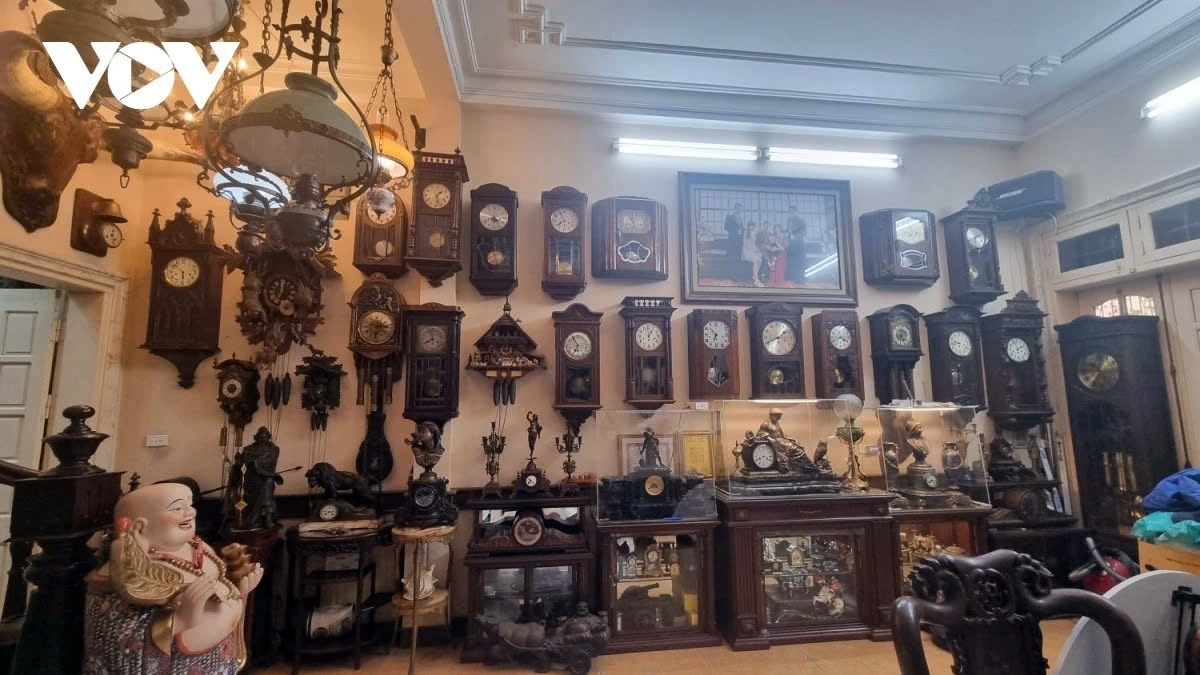
Stepping into Nguyen Manh Tu’s home in Hanoi feels like entering a living museum of vintage mechanical clocks. More than 600 antique clocks line the walls of his 90-square-meter room and staircase, from French figurine mantel clocks and German longcase clocks to enamel-dial wall clocks, cuckoo clocks and rare pendulum designs.
Most of the pieces originate from Germany and France, widely regarded as the cradle of fine clockmaking. Many still retain their original mechanisms.
“Each European clock has its own shape and chime. They rarely repeat,” Tu explains. “If I encounter a truly unique piece, especially one with a rare enamel dial, I will try to acquire it at any cost.”
Among Vietnamese collectors, the most coveted brand is Odo (Odobez), founded in 1708 in Morbier, France. Odo wall and longcase clocks are famous for their distinctive gong chimes that are clear, resonant and lingering. Popular vintage movements such as Odo 36, 54, 57 and 62 (10-rod gong versions) are particularly sought after in Vietnam’s antique clock market.
The sound of craftsmanship
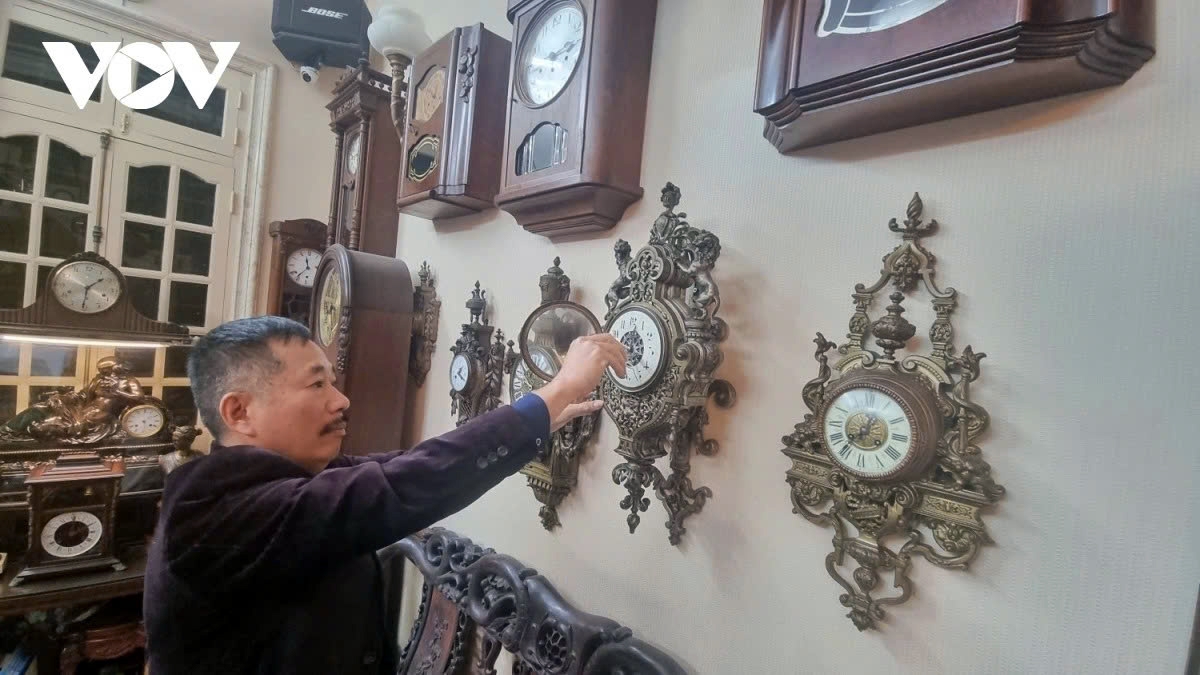
For serious collectors, sound matters as much as appearance. German clocks are known for sturdy construction and mechanical precision, while French clocks are celebrated as artistic masterpieces. Russian clocks, by contrast, often produce a simple two-tone “ding-dong” chime that is modest but nostalgic.
“European clocks are engineered like musical instruments,” Tu says. “The wooden case acts like a sound box. The back panel must be thin and porous enough to create resonance. That’s why the chime sounds so rich.”
Dust and humidity, especially during northern Vietnam’s damp spring season, are the greatest threats to antique mechanical clocks. Tu keeps his collection in a sealed room with dehumidifiers running around the clock and uses low-wattage lighting to protect the aging materials. Before Lunar New Year each year, he spends over a week cleaning, oiling and rewinding every clock so they chime in unison during the holiday.
His passion began in 1987 while working in the former Soviet Union. The simple Russian clock he brought home in 1991 became the first piece of what would grow into a remarkable collection.
“That ‘ding-dong’ sound sparked everything,” he recalls, adding the more he learned, the more captivated he became. What began as curiosity soon turned into passion, and eventually he became a collector of antique mechanical clocks.
“I searched for information, connected with people who share the same interest, and whenever I heard that someone was selling a clock somewhere, I would track it down,” Tu shares. “That’s how I gradually expanded my collection.”
The small café on Vo Thi Sau Street is where he meets friends who share his passion for clocks. Through those gatherings, he has gained deeper knowledge and a true appreciation of antique mechanical timepieces. According to Tu, collecting antique clocks requires understanding their operating principles. By listening to the ticking of the pendulum and the sound of the movement, one can tell whether the pendulum is properly aligned or slightly off balance.
Restoring the soul of a clock
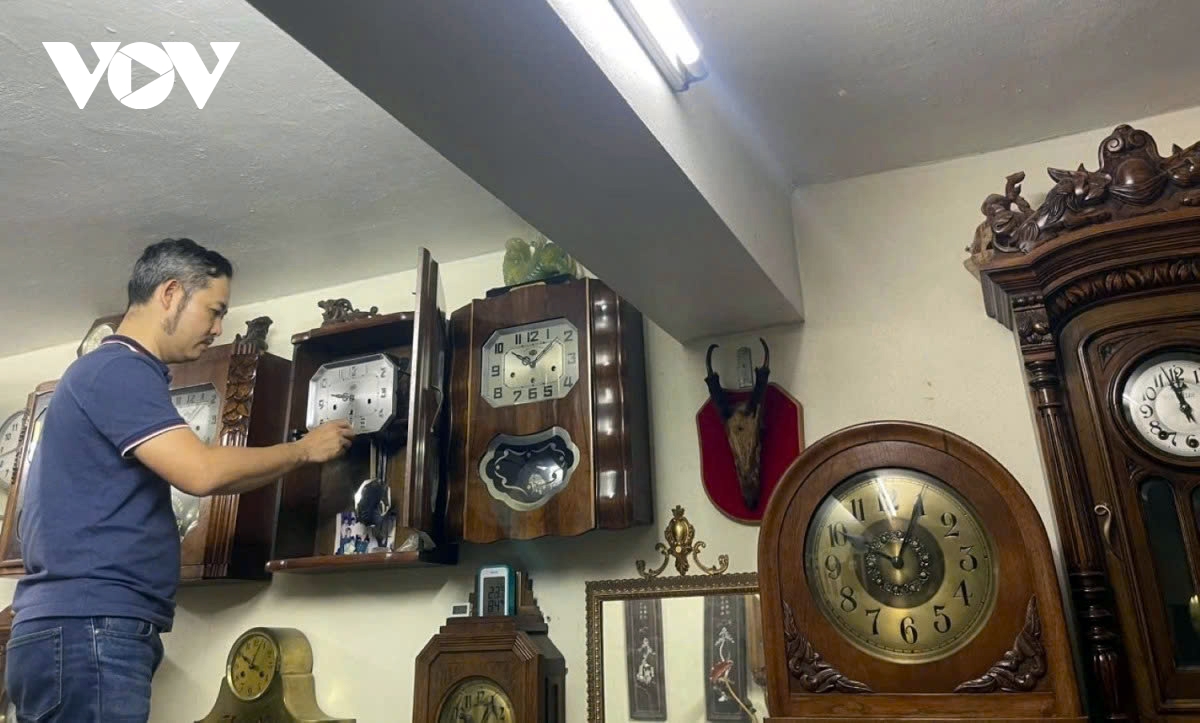
In former Ha Dong district, another collector, Hung, treasures more than 100 antique clocks with some dating back to the 1800s. Unlike many hobbyists, he insists on restoring each piece himself.
“To collect clocks without understanding their mechanism is like raising a child without knowing their personality,” Hung says with a smile.
For collectors, originality determines value. Hung painstakingly searches for period-correct parts - gears, pendulums, cases and even wooden back panels to return clocks to near-original condition while preserving their aged patina.
Personally repairing every clock in his collection today whenever they malfunction, even the most complicated issues involving gears, bent arbors, or broken mainsprings, has been the result of a long learning journey for Hung since he treasured the hobby of collecting antique mechanical clocks in 2005.
“As the hobby of collecting antique clocks has grown, I’ve had access to more and more timepieces. That motivated me to study and learn how to repair them, both from professional clockmakers at repair shops and through social media,” Hung says.
Hung explains that for wall clocks, the back panel of the movement case plays a crucial role, as the sound the clock produces depends greatly on this component. “It’s the wooden panel at the back. Although extremely important, it has to be very thin to achieve the right resonance. That’s also its weakness, it’s fragile, easily damaged, prone to rot or peeling. If the panel is beyond repair, it must be replaced. And replacing it is quite a meticulous process, especially when it comes to finding the right piece of wood,” he says.
Wherever he goes, Hung keeps an eye out for suitable wood to replace clock back panels. “Sometimes I walk past a pile of scrap and spot a beautiful piece of wood. I take it home and try using it for a clock back, surprisingly, it works perfectly. That’s how I earned the nickname ‘Hung the Scrap Collector,’” he laughs.
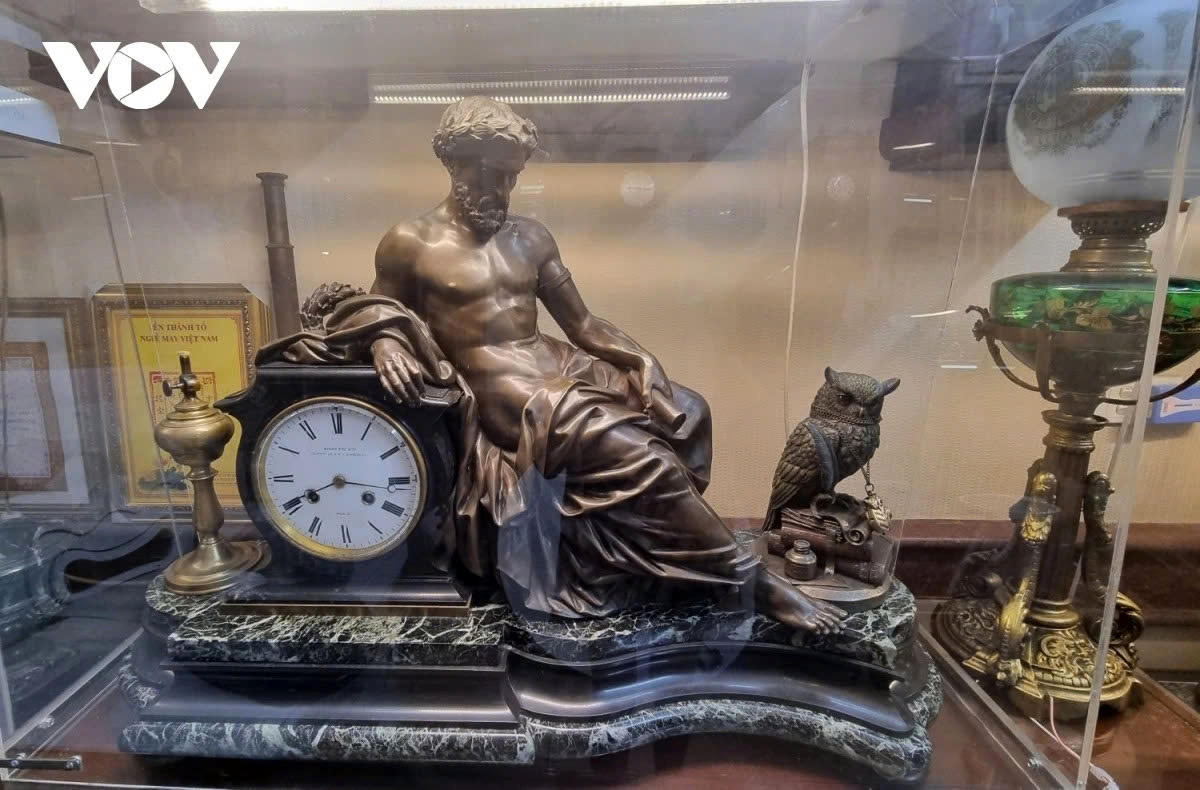
One prized piece is a French Vedette 10-rod gong clock playing “Frère Jacques,” a melody familiar to Vietnamese listeners as “Kìa con bướm vàng.” Another treasured clock bears the name Saint-Étienne - said to have been crafted during wartime as memorial gifts for families of fallen soldiers.
Hung earned the playful nickname “scrap collector” for salvaging rare wood panels from discarded furniture. For him, finding the right acoustic wood is as important as repairing gears or springs.
More than a hobby
Vietnam’s antique clock collectors say the hobby is not about status or profit. It is about safeguarding craftsmanship, understanding history and finding stillness in a fast-moving world.
When all of Hung’s clocks run simultaneously, his home fills with layered ticking and chiming like soft rain. “My family is used to it,” he laughs. “We even enjoy the sound.”
In an era dominated by digital devices, these vintage mechanical clocks stand as reminders of patience, artistry and human ingenuity. For collectors, keeping time is also a way of preserving cultural memory - one chime at a time.

Spring glows in Hoa Lu Old Town - Vietnam’s former imperial capital
VOV.VN - Beneath shimmering lanterns and vibrant spring colors, Hoa Lu Old Town in northern Vietnam welcomed thousands of visitors during the 2026 Lunar New Year (Tet) holiday, as its signature cuisine, traditional folk games and nightly street performances brought the former imperial capital vividly back to life.