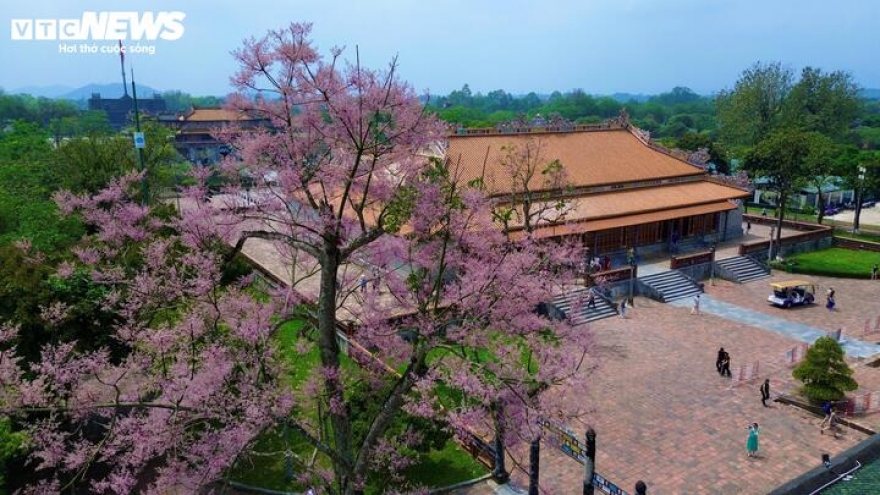
French museum transfers materials to support Hue palace restoration

VOV.VN - French museum Quai Branly – Jacques Chirac will transfer a valuable collection of archival materials to the former imperial city of Hue in central Vietnam, providing important references for the restoration of Can Chanh Palace.
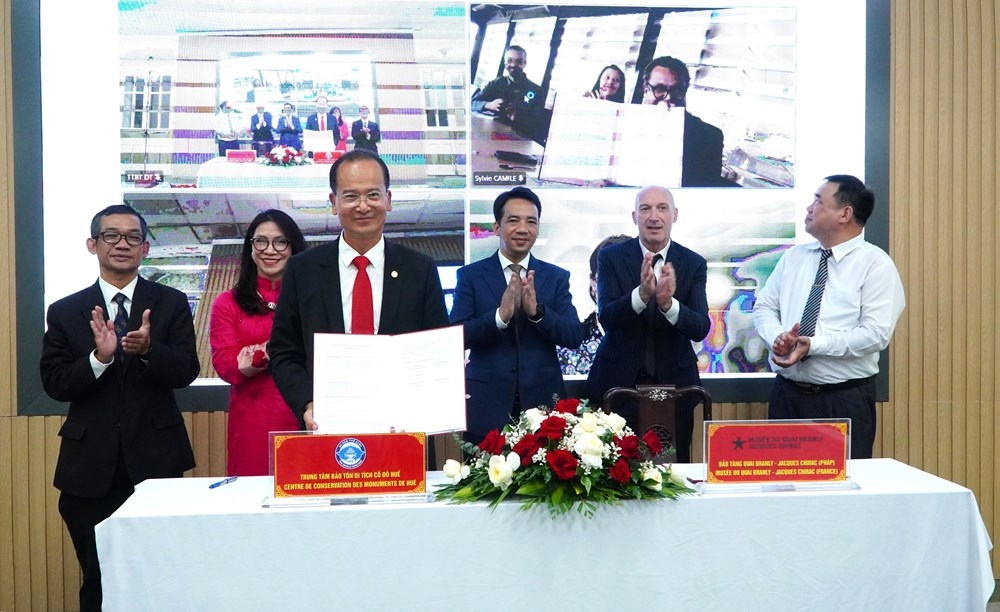
The transfer is part of an agreement on scientific and cultural cooperation signed online on April 24 between the Hue Monuments Conservation Centre and the Paris-based museum. The signing ceremony was attended by leaders of Hue city, representatives of the French Embassy in Vietnam, and relevant agencies.
Under the agreement, the museum will provide a digitised archive consisting of 101 photographs and 38 graphic artworks depicting the Imperial Citadel of Hue (Annam), accompanied by detailed scientific annotations.
The collection offers valuable visual documentation of architectural structures, spatial layouts, and decorative details of royal buildings within the citadel. It is expected to serve as an important reference for conservation, restoration, and preservation efforts within the Complex of Hue Monuments, particularly the restoration project of Can Chanh Palace.
The materials will support cross-checking and verification processes, helping improve historical accuracy and authenticity in restoration work. They are also expected to contribute to the preservation and reconstruction of ceremonial costumes of the Nguyen Dynasty.
Beyond archival transfer, the agreement opens up opportunities for enhanced professional exchange, data sharing, and joint research, as well as the use of digital materials in exhibitions and public outreach activities.
Vice Chairman of the Hue People’s Committee Tran Huu Thuy Giang highlighted that the five-year cooperation agreement (2026–2030) aims to expand collaboration in research, academic exchange, and digitalisation of materials related to the Nguyen Dynasty. He also emphasised cooperation in restoration, conservation, and communication to promote the cultural heritage of both Vietnam and France.
He expressed hope that the museum would continue to support Hue and act as a bridge connecting the city with major museums in France, Europe, and beyond, while extending an invitation for its leadership to visit Hue for further discussions.
The agreement marks a significant milestone in international cooperation on heritage conservation, helping mobilise global knowledge resources to preserve and promote the value of Hue’s world cultural heritage.
Can Chanh Palace, located within the Imperial Citadel of Hue, was one of the principal halls of the Nguyen dynasty, serving as the emperor’s main working space and a venue for court audiences and state affairs.
The building was constructed in the early 19th century, primarily during the reign of Emperor Minh Mang. Positioned directly behind the Throne Palace, it formed part of the administrative core of the imperial court.
Like many structures in the imperial city, the hall followed traditional Vietnamese wooden architecture and was richly decorated in accordance with royal aesthetics. Although it was destroyed in 1947 during wartime, it remains an important element in the historical and cultural landscape of the Complex of Hue Monuments.
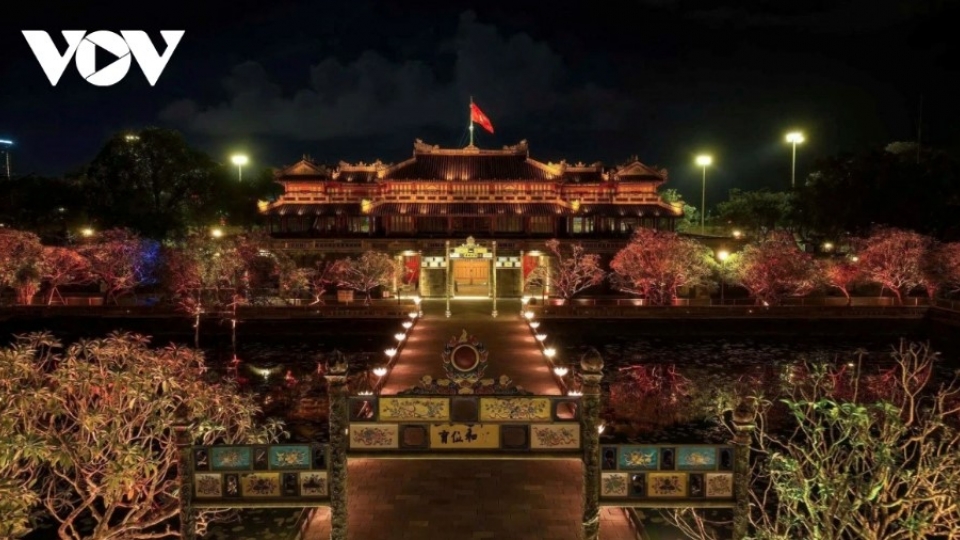
Hue opens Imperial Citadel for night tours during upcoming holiday peak
VOV.VN - The central city of Hue will roll out a series of major cultural and tourism activities during the upcoming April 30–May 1 holiday period, led by the “Mystical Imperial Palace” programme scheduled for April 25–28.