Jarai community revives rice worship ritual in Central Highlands

VOV.VN - Before each planting season, the Jarai ethnic community in Vietnam’s Central Highlands holds a traditional rice worship ceremony to pray for favourable weather, abundant crops and peaceful life.
Though farming today relies less on natural conditions, the ritual remains a cultural anchor, expressing gratitude to nature and encouraging harmony with the environment.

At dawn in Dun De village of Ia Grai district, village elder Ro Cham Hyă led gong players and dancers to the communal water source, where a tall bamboo ceremonial pole decorated with forest leaves had been erected.
Men carried jars of rice wine while women brought offerings, followed by excited children. The offerings included grilled chicken, pork and new rice. Dressed in traditional attire, the village elder recited prayers to mountain, water and rice spirits, asking for good health, abundant harvests and prosperity.
After drinking the first sip of rice wine, the elder passed the straw to senior villagers and then to young men and women. As the jar of wine circulated, gongs and drums resounded, and villagers formed a growing circle dance around the pole, with women in brocade skirts moving gracefully and men beating gongs with energetic rhythms.
“We treat rice as life itself,” said village resident Puih GAi. “This ritual asks permission from the spirits before planting. We are preserving it so younger generations won’t forget our culture.”

The ceremony was revived in October 2025 by Gia Lai’s Department of Culture, Sports and Tourism as part of broader efforts to restore Jarai cultural heritage and develop cultural tourism. Local authorities say more rituals, such as rain prayer ceremonies and water source worship, will be revived to strengthen community bonds and create tourism income.
Nguyen Van Dinh, Vice Chairman of the Ia Grai Commune People’s Committee, said the commune would continue to restore other festivals such as the rain-praying ceremony, the water-jar worship ritual, and the grave-house ceremony on a larger scale.
“This will create momentum for other villages to join in reviving traditional festivals of ethnic minority communities, fostering social cohesion within the commune, promoting tourism, and generating income for local people,” noted Dinh.

Deputy director of the provincial Department of Culture, Sports and Tourism Le Thi Thu Huong stated the revival programme helps reinforce traditional values, raise awareness among young people and highlight the role of respected elders and artisans. The province is preparing a 2026–2030 conservation scheme for gongs, which are recognised by UNESCO.
“Through these revival initiatives, local people are very delighted. From 2023 to 2025, the province has carried out several conservation activities. At present, the Department continues to advise the Provincial People’s Committee on developing a conservation plan for gong culture for the 2026–2030 period, which includes restoring traditional festivals. I hope that in the coming years, the ethnic culture of Gia Lai will become more widely known,” said Huong.
For the Jarai, these rituals are not simply remnants of the past; they are lifelines that bind the community together and keep cultural identity alive amid modern life.
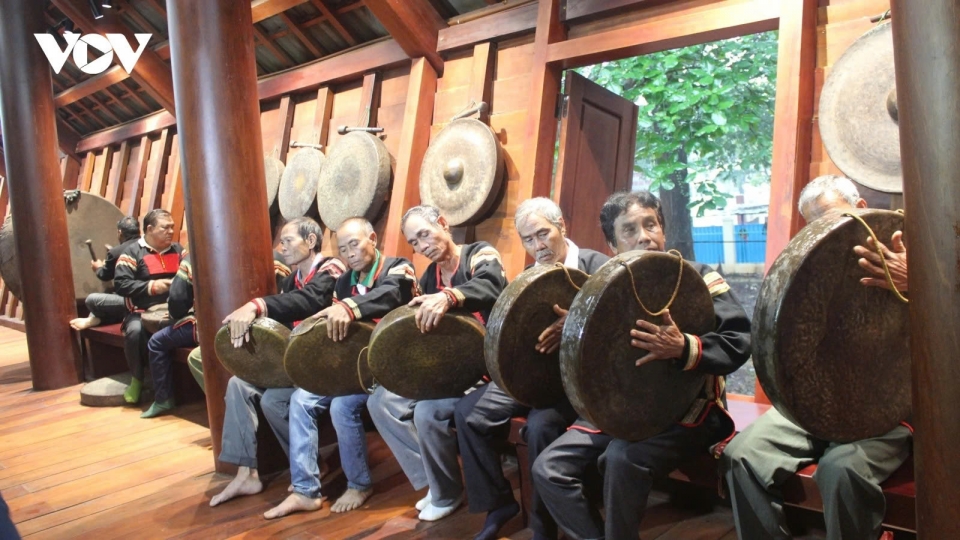
New house ritual of the Ede people preserves centuries-old traditions
VOV.VN - For many, especially Ede ethnic people, in the Central Highlands, the new long house ritual is considered an important event, as the house serves as the witness to numerous milestones in a family’s life.