Visa reforms aim to boost Vietnam’s tourism competitiveness

VOV.VN - Vietnam is considering broader visa exemptions, more flexible entry arrangements and pilot policies for selected groups of foreign visitors to attract high-spending, long-stay travellers, increase tourism’s economic contribution and sharpen its competitiveness.
Broader visa policies target high-potential markets
Minister of Culture, Sports and Tourism Lam Thi Phuong Thanh, on behalf of the Government, recently submitted to the National Assembly a draft resolution on special mechanisms and policies for tourism development. Among its policy groups, special visa arrangements for international tourists are intended to make entry and residence procedures more convenient and strengthen Vietnam’s competitiveness as a destination.
The Government’s proposal seeks to make visa, entry, exit and residence policies more open and flexible. The focus is not only on expanding the number of countries eligible for visa exemptions, but also on adjusting visa validity, permitted stays, multiple-entry arrangements, fees and administrative procedures to suit different visitor markets.
Specifically, the draft proposes expanding bilateral visa exemptions for ordinary passport holders from key source markets with strong growth potential, high spending power and convenient air connectivity. It also envisages more flexible visa arrangements tailored to individual markets, prioritising high-spending visitors, long-stay travellers, repeat visitors and those combining tourism with business trips, conferences and international meetings.
Another notable proposal is a controlled pilot scheme for foreign nationals working remotely, who may stay for extended periods and contribute to the tourism economy.
For medical tourism, foreign visitors travelling to Vietnam for medical examinations, treatment, rehabilitation, long-term holidays or healthcare services, together with accompanying persons, could be considered for more favourable visa and residence arrangements suited to their purposes and length of stay. Such arrangements would be linked to confirmation from eligible receiving institutions and competent authorities.
The draft also proposes facilitating work permits, visas and temporary residence for highly qualified foreign experts and technical workers, as well as artists and performers holding valid professional licences in their home countries and employed by domestic businesses at eligible tourism projects.
The target groups therefore extend beyond conventional holidaymakers to include visitors and professionals who can generate demand for longer-term services, contribute expertise and skills, and create additional economic value for the tourism sector.
The proposed changes would go hand in hand with simplified and digitalised procedures, while maintaining requirements on national defence, security, public order, social safety and national interests.
Visa access goes beyond border procedures
From the business perspective, convenient visa arrangements can directly influence travellers’ choice of destination, while also affecting airlines’ route planning and tourism companies’ ability to develop products and enter new markets.
Vo Viet Hoa, director of International Tourism at Saigontourist Travel Service Company, told Thanh Nien newspaper that visa convenience is a direct driver of international air connectivity. For independent travellers, complicated application procedures or lengthy processing times can discourage bookings and prompt them to choose alternative destinations.
One practical challenge concerns cruise tourism. Due to the particularities of port operations, cruise passengers can face difficulties accessing the e-visa system, while travel companies must carry out procedures to obtain approval for passenger lists travelling in groups. This adds time and costs to tour operations, Hoa noted.
Another issue affects international visitors seeking to combine several countries in one trip. Travellers from distant markets such as Europe and the United States often spend several weeks travelling across Vietnam, Laos, Cambodia and other regional destinations. Under a single-entry visa, they must apply for a new visa if they wish to return to Vietnam after visiting neighbouring countries.
These examples show that visa barriers are not limited to whether visitors can enter a country. They also affect itinerary planning, flexibility and the overall travel experience.
A representative of Sun Group said favourable visa policies could generate wider benefits across several sectors, beginning with air connectivity, followed by the attraction of international events and, ultimately, improvements in tourism growth quality.
Easier entry procedures could give airlines more confidence to consider new routes and increase flight frequencies. Travel companies would also be better placed to develop longer itineraries covering multiple destinations and countries, rather than focusing mainly on short trips.
Policies targeting remote workers, medical tourists and long-stay healthcare visitors could also create opportunities for new tourism products. These groups have diverse and sustained demand for accommodation, food, transport, healthcare and cultural experiences.
The effectiveness of visa policies should therefore be measured not only by increases in international arrivals, but also by length of stay, visitor spending, repeat visits and the wider economic benefits generated for localities and businesses.
Destination competition calls for targeted policies

As Southeast Asian countries step up efforts to attract international visitors, visa arrangements have become an important tool in competition among destinations.
Thailand offers a notable example of how visa policies can be adjusted to balance tourism development with economic and management objectives. It recently revised its visa exemption and visa-on-arrival schemes following a review. The changes revoked the 60-day visa exemption scheme and introduced a 30-day tourism exemption for citizens of 60 countries and territories, alongside a new 15-day exemption for two countries and revised visa-on-arrival eligibility. The measures took effect on September 15, 2026.
The Thai government said the review considered national security, tourism and economic interests, reciprocity, the need to avoid overlapping visa privileges and the convenience offered by its e-visa system.
The case illustrates that visa competition is not simply a race to offer longer visa-free stays or extend exemptions to more countries. More importantly, it involves designing arrangements that match the characteristics of target markets, development objectives and each country’s management requirements.
For Vietnam, the draft resolution signals a move towards a more targeted approach based on the characteristics and potential of individual markets. Prioritising markets with high spending power, strong growth prospects and convenient air links places visa policy more directly within the country’s strategy for developing international visitor markets.
However, broader exemptions need to be accompanied by improvements across the entire entry experience. Processing times, fees, multiple-entry options, convenience at border gates and policy stability can all influence travellers’ decisions.
A market being granted visa-free access does not necessarily mean that every obstacle along a visitor’s journey has been removed.
From easier entry to greater economic value
Expanding visa access is particularly important as Vietnam seeks to develop tourism into a leading economic sector with higher added value and stronger regional and international competitiveness.
Politburo Resolution No. 26-NQ/TW dated August 22, 2026, on developing Vietnam’s tourism into a leading economic sector in the new era, calls for a stronger focus on high-quality, smart, green, creative and culturally distinctive tourism.
In this context, attracting more international visitors is important, but increasing the value generated by each visitor is equally significant. Long-stay travellers can generate greater demand for accommodation, dining, transport, shopping and experiences. Medical tourists can contribute to hospitals, healthcare facilities and related services, while business travellers, conference delegates and international experts can promote investment links, knowledge exchange and event organisation.
Vietnam’s hosting of APEC 2027 in Phu Quoc also offers an opportunity to promote the country and attract international visitors. Making entry procedures more convenient during major international events could help turn global interest into actual trips, while encouraging delegates and visitors to combine business with sightseeing and leisure.
Nevertheless, visa policy is only one link in the tourism value chain. To translate easier entry into tangible revenue, Vietnam also needs to improve infrastructure, services, human resources and air connectivity, while diversifying its tourism products. Coordination among management agencies, travel companies, airlines, accommodation providers and other service businesses will be essential to meeting the needs of different visitor segments.
Policy expansion should also be accompanied by clear eligibility criteria, pilot mechanisms, monitoring and evaluation to ensure that incentives serve tourism development objectives without creating gaps in management.
The proposals submitted to the National Assembly reflect a broader understanding of visa policy as more than an administrative procedure. They position it as a tool for developing visitor markets, attracting resources and strengthening national competitiveness.
By making entry easier in a targeted and effective manner, Vietnam could attract more suitable visitor segments, encourage longer stays and increase tourism’s contribution to the economy. This would help make visa policy an important lever for more sustainable, higher-value tourism growth and stronger competitiveness in the region.
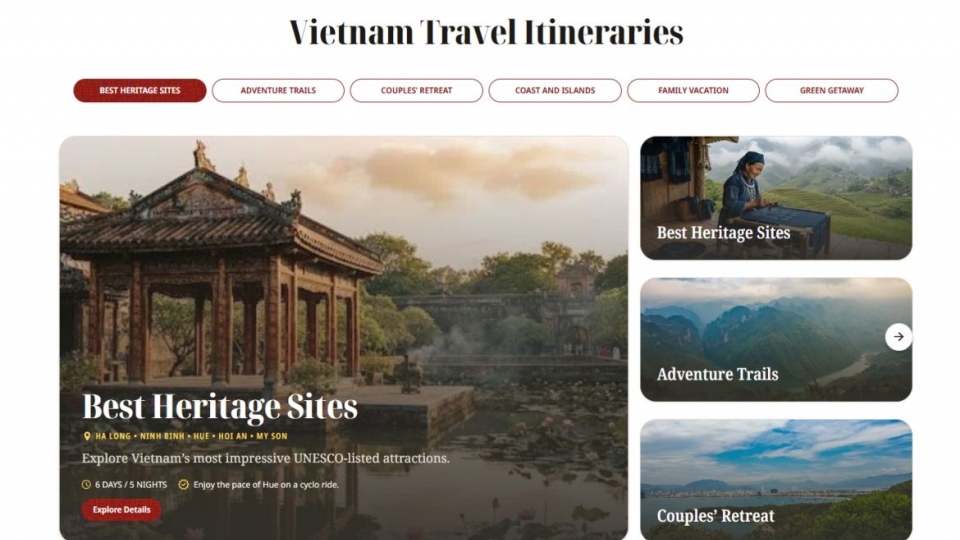
Vietnam's tourism portal overtakes Thailand to rank second in South East Asia
VOV.VN - Vietnam's official tourism website, vietnam.travel, posts a 19.4% traffic increase in October 2026, overtaking its Thai counterpart to rank second in Southeast Asia behind Singapore.